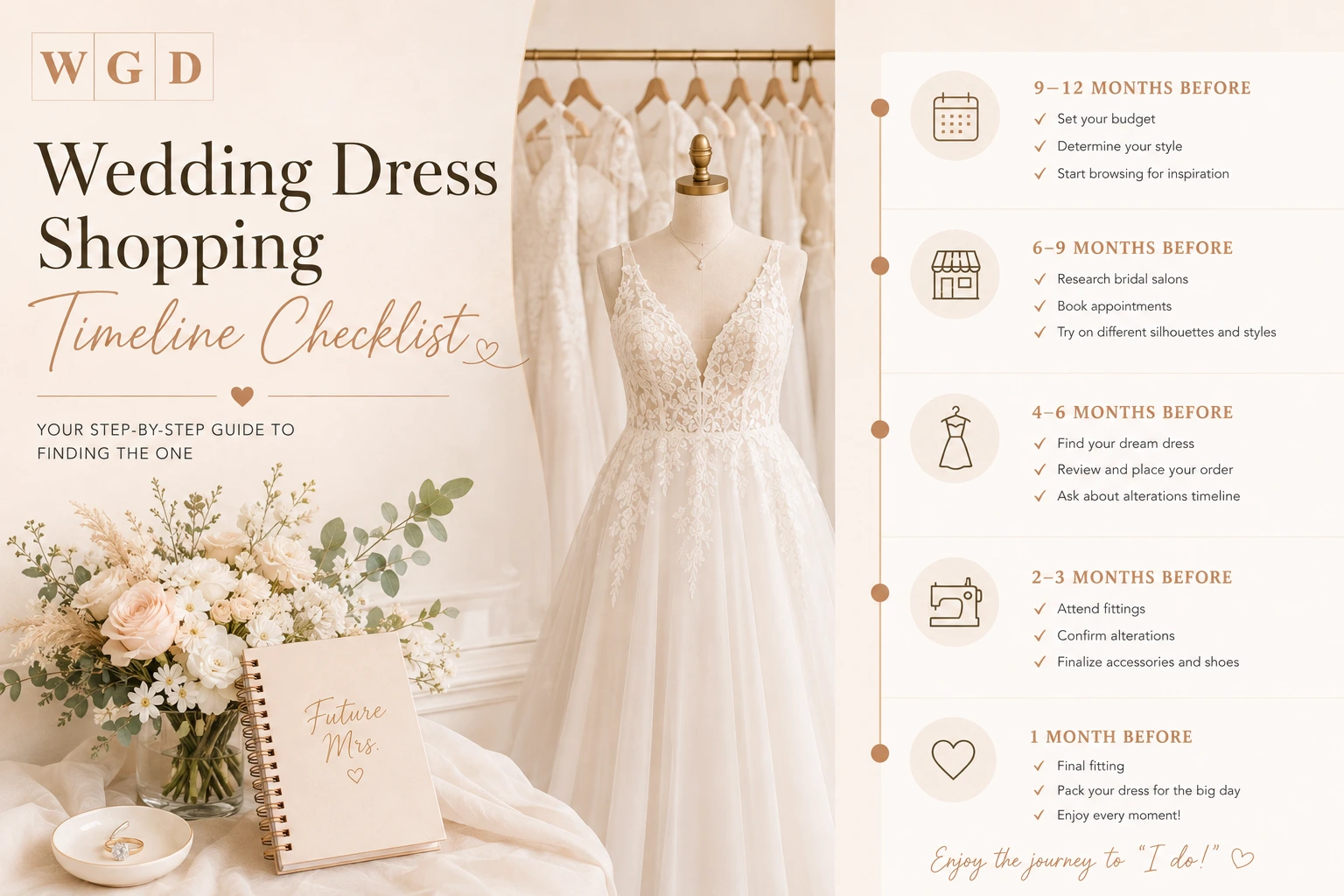
Brides who follow a structured wedding dress shopping timeline order their gown 8 to 10 months before the wedding. This 12-month wedding dress checklist maps every appointment, fitting, and alteration to a specific month so no deadline gets missed. The dress shopping timeline below works for standard bridal gowns ordered through a salon. Rush orders and off-the-rack purchases follow compressed schedules covered in later sections.
Most brides feel overwhelmed by conflicting advice about when to start shopping and how many appointments to book. This wedding dress month by month guide delivers an exact action plan with specific deadlines, budget benchmarks, and alteration timelines used by bridal consultants in US salons.
- Start shopping 12 months before the wedding.
- Order the gown by month 10.
- Book alterations 8 to 10 weeks out.
- Bring 2 guests, nude undergarments, and wedding heels to every appointment.
- Budget $1,900 to $2,400 for the gown plus $500 to $800 for alterations.
When Should You Buy Your Wedding Dress?
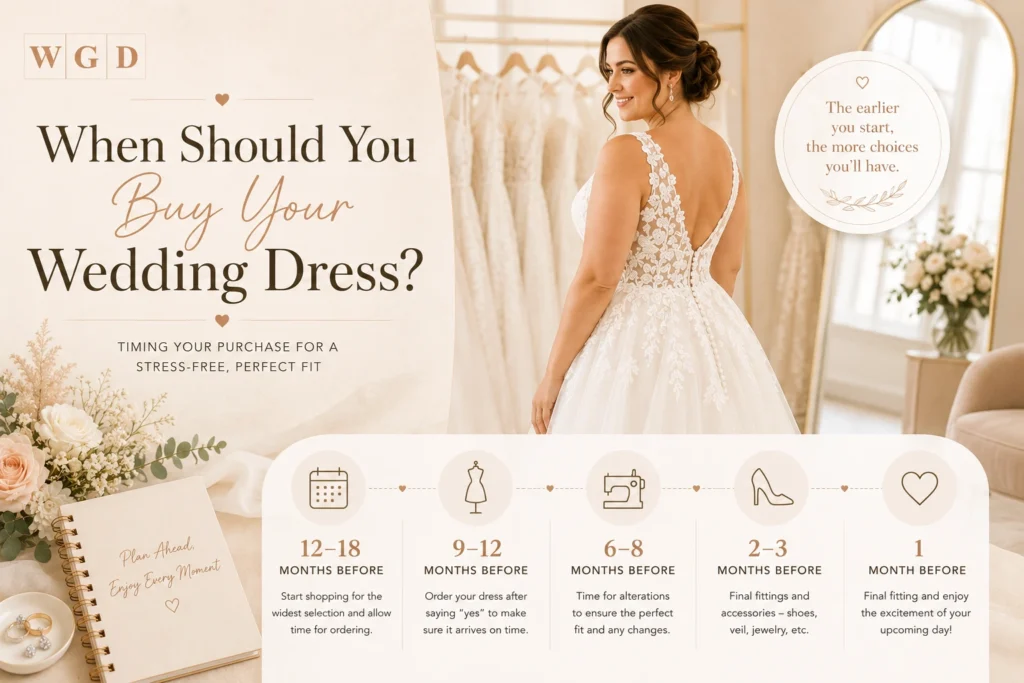
The wedding dress order timeline depends on production and alteration lead times. Standard bridal gowns require 6 to 8 months for production after you order the wedding dress. Alterations require 2 to 3 months minimum after the gown arrives at the salon. The 12-month mark is the optimal start date for brides ordering a standard designer gown. Rush orders compress the dress delivery timeline to 3 to 4 months but limit style and size availability. Off-the-rack purchases allow 1 to 2 months but restrict the bride to in-stock inventory.
The Knot’s 2024 Real Weddings Study reports that brides who ordered their gown 8 to 10 months before the wedding reported the highest satisfaction with fit and customization options. This data confirms that the best time to start dress shopping is 12 months before the wedding date.
Rush Order vs Standard Order Timelines
Rush fees add 20% to 30% to the gown price. Rush orders eliminate the option for custom length or neckline changes. Standard orders allow full customization of silhouette and neckline and include a guaranteed delivery window.
Safety Note: Rush orders carry non-refundable deposits and limited alteration windows. Brides who need a rush order wedding dress confirm the exact delivery date and alteration deadline in writing before signing the contract.
The 12-Month Wedding Dress Shopping Timeline Checklist
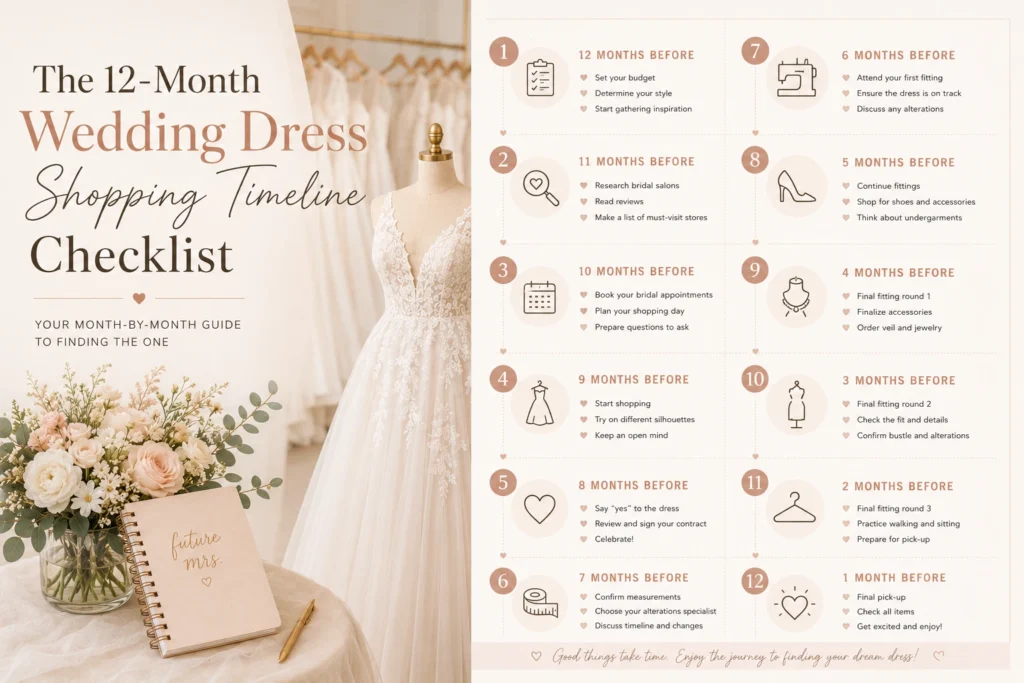
Set the wedding dress budget, research wedding dress styles and silhouettes, create a Pinterest board, and book 3 to 4 boutique appointments.
Attend first dress appointments, try 5 to 7 gowns per salon, and photograph favorites for comparison.
Order the wedding dress, confirm the dress delivery timeline with the salon, and purchase undergarments for fitting.
Schedule the first bridal gown fitting for hem and bustle evaluation.
Attend the second fitting for bodice adjustments and strap alterations.
Complete the final fitting with shoes and veil to confirm length and movement.
Pick up the gown, arrange preservation packaging if needed, and store it in a breathable garment bag.
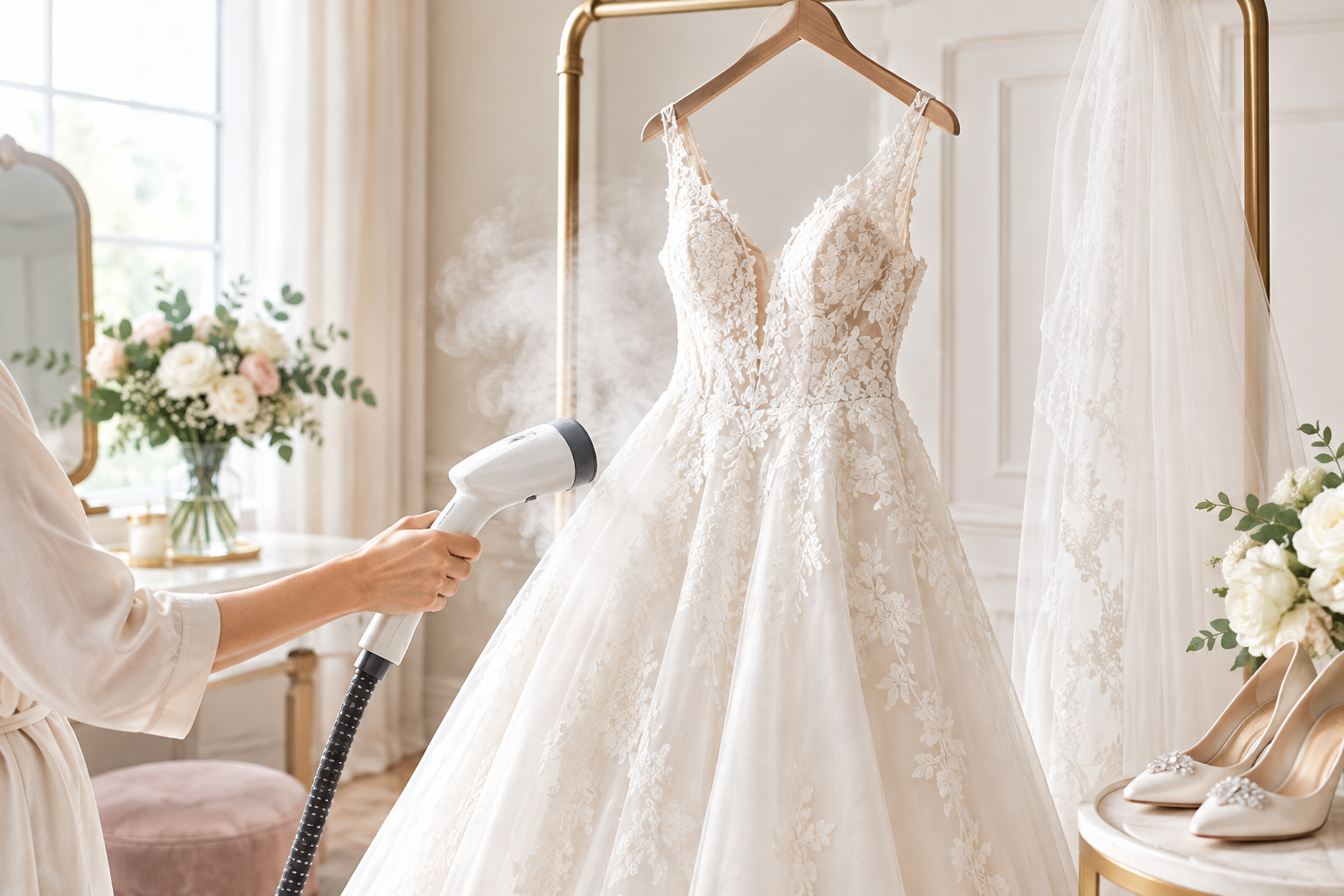
Week of wedding: Steam or press the gown, pack an emergency kit, and assign a bridesmaid to manage the bustle.
What to Bring to Your First Dress Appointment
Bring a nude strapless bra, shapewear, heels at your expected wedding height, hair ties, and a trusted 2-person entourage. Avoid heavy makeup. Lipstick and foundation stain sample gowns. A bridal boutique visit produces the best results when brides know what to wear to a dress fitting. Nude undergarments and wedding-height heels create the most accurate silhouette preview.
Salon lighting changes how ivory reads against skin tone. Warm fluorescent bulbs in fitting rooms cast a yellow tint that makes ivory gowns appear darker than they read in natural daylight. Brides notice this color shift most when comparing the same ivory gown across two different boutiques.
Wedding Dress Budget Breakdown: What US Brides Actually Spend
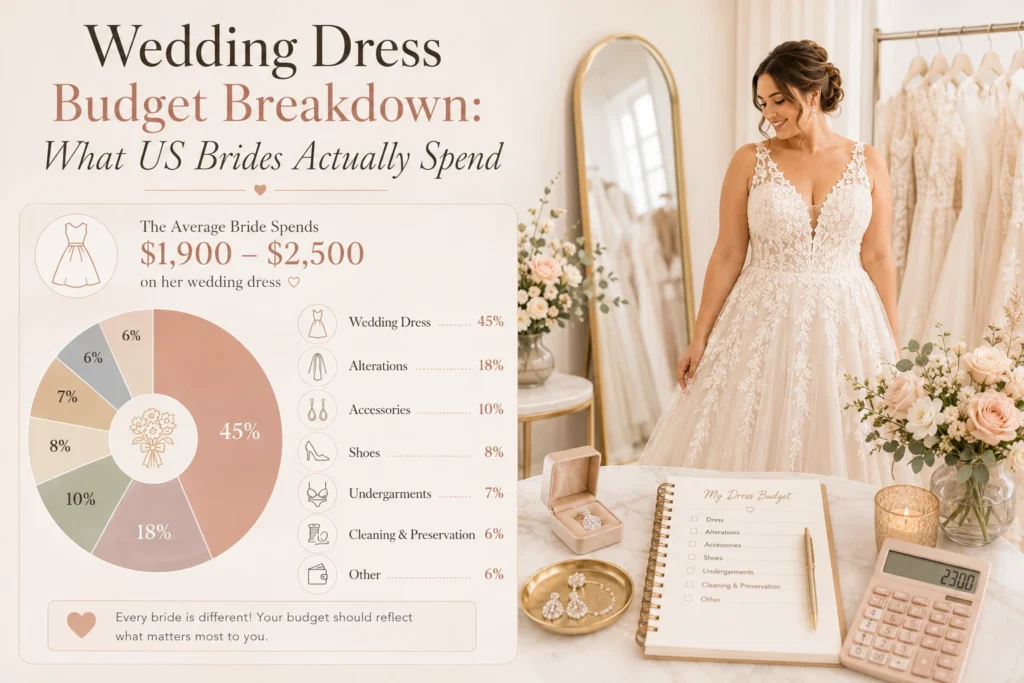
The average wedding dress in the US costs $1,900 to $2,400 before alterations. Alterations add $500 to $800 for standard adjustments and $1,000 or more for structural changes. Veil and accessories range from $150 to $400 for veils and $100 to $250 for shoes. Sales tax applies to the full gown price in most states and adds 6% to 9%. Sample sales offer 20% to 70% discounts but sell gowns as-is with no size exchanges.
| Price Tier | Gown Cost | Alterations | Total Estimated Cost |
| Budget | $800 – $1,200 | $300 – $500 | $1,100 – $1,700 |
| Mid-Range | $1,900 – $2,400 | $500 – $800 | $2,400 – $3,200 |
| Luxury | $3,500+ | $800 – $1,500+ | $4,300+ |
The 2024 Brides American Wedding Study reports that US brides spend an average of $2,100 on their wedding gown before alterations.
Hidden Costs First-Time Shoppers Miss
Rush fees, preservation boxing ($250 to $400), shipping from overseas designers, and insurance for the gown during transport add $400 to $800 to the total. Silk and lace fabrics cost 30% to 50% more than polyester blends.
Disclaimer: Prices vary by region and designer. Brides confirm all fees in writing before signing the order contract.
Dress Alterations Timeline: How Long They Actually Take
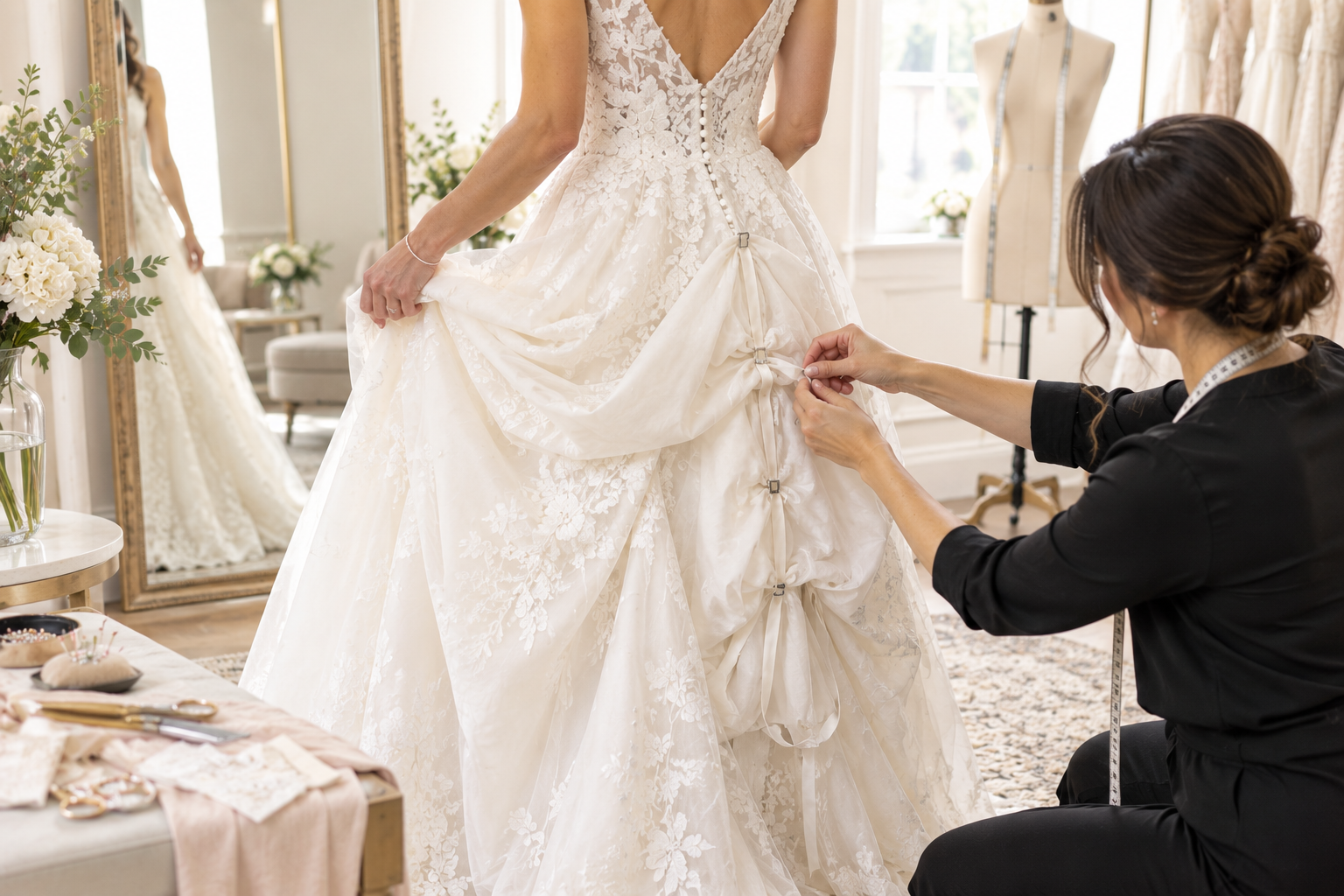
First fitting occurs 8 to 10 weeks before the wedding for hem and bustle pinning. Second fitting happens 4 to 6 weeks before the wedding for bodice tightening and strap adjustments. Third fitting is scheduled 2 weeks before the wedding for final length confirmation. Each fitting requires 2 to 3 weeks of seamstress work between appointments. Complex gowns with beading or lace appliqué require 1 additional fitting and 2 extra weeks. Structural adjustments involving boning or corset modification add 1 week.
When to Schedule Dress Alterations
Book the seamstress the same week you order the gown. Top seamstresses book 3 to 4 months out in peak wedding season from May through October. The dress fitting schedule wedding planners recommend includes 3 fittings minimum.
Safety Note: Alterations booked less than 6 weeks before the wedding risk incomplete work or emergency surcharges. Brides who book late face a 40% to 60% surcharge and limited availability.
Common Wedding Dress Shopping Mistakes Brides Make
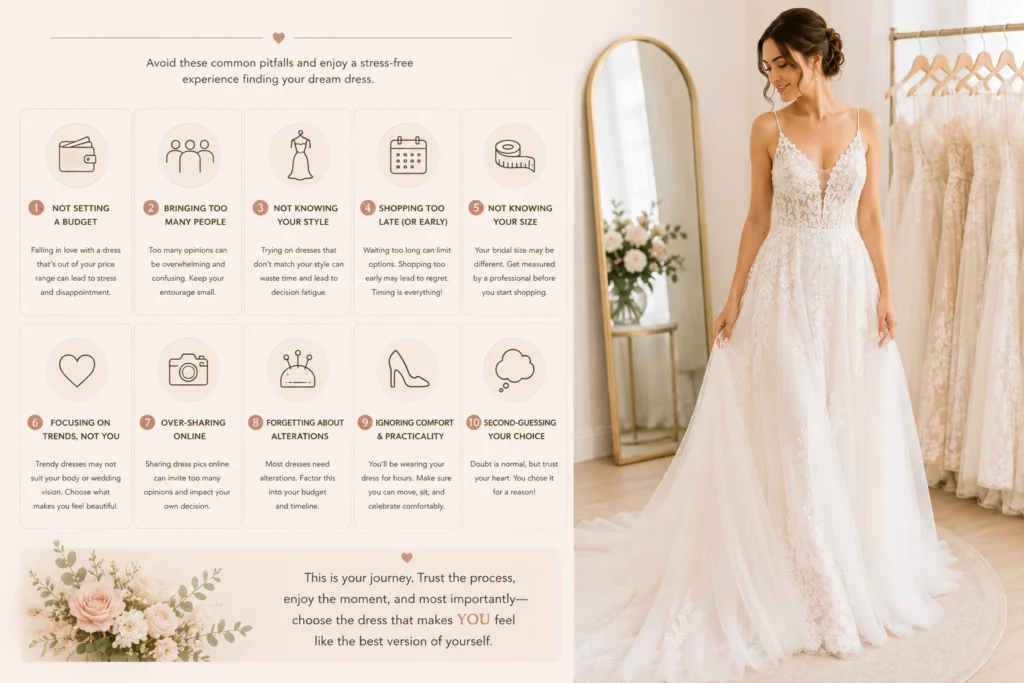
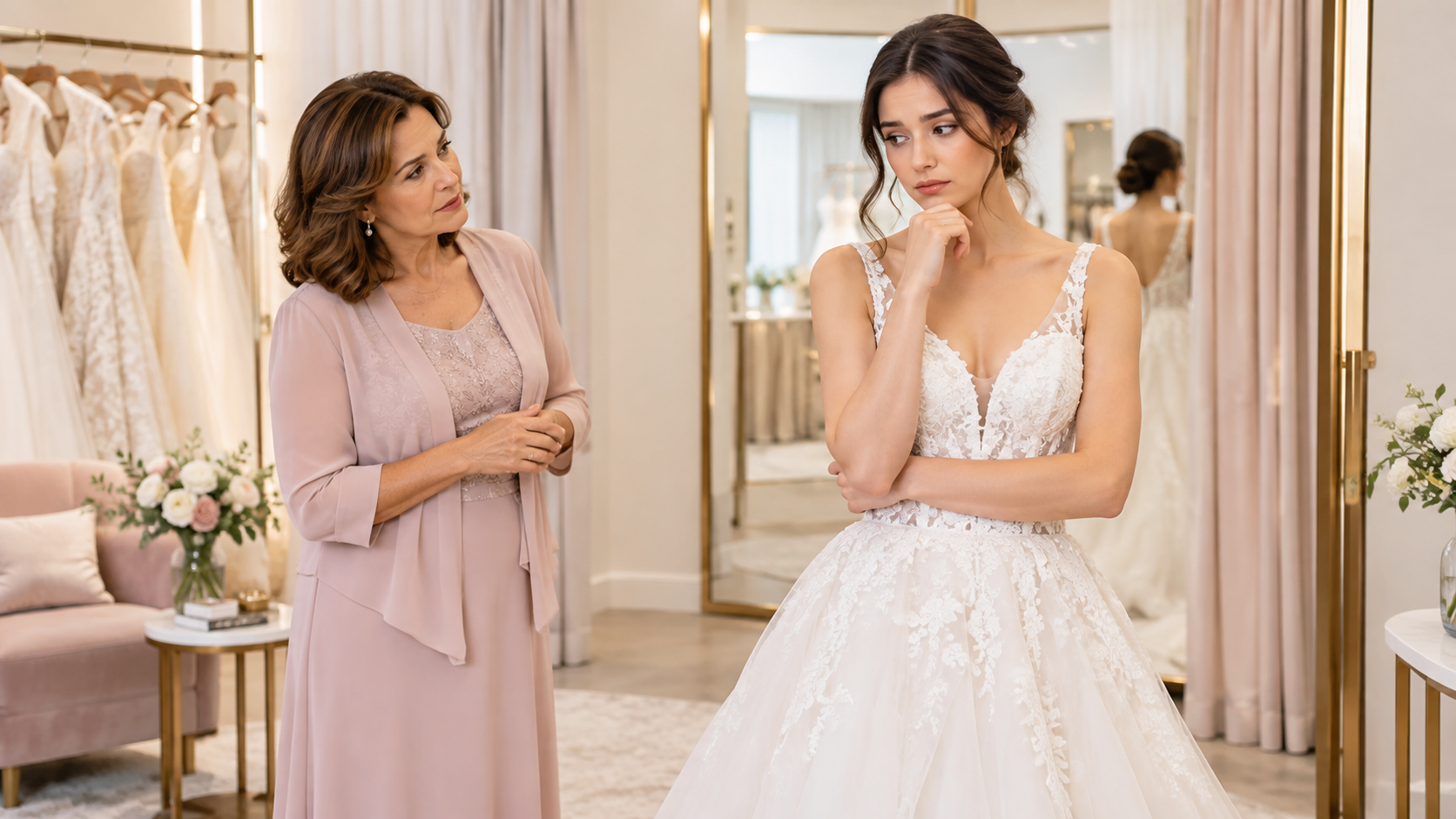
Mistake 1: Shopping with a 6-person entourage creates conflicting opinions and decision paralysis. Limit the group to 2 trusted guests. Shopping with bridesmaids works best when you bring 1 maid of honor and 1 neutral friend.
Mistake 2: Buying a gown 2 sizes smaller as motivation guarantees expensive and sometimes impossible alterations. Order the size that fits your current measurements.
Mistake 3: Skipping the veil and shoe purchase before the final fitting causes length miscalculations. Purchase these items by month 4.
Mistake 4: Assuming all salons allow photography leads to disappointment. 40% of designer boutiques prohibit photos until purchase.
Mistake 5: Waiting until 3 months before the wedding eliminates 90% of designer gown options.
These mistakes apply most commonly to first-time brides shopping at full-service bridal salons, not off-the-rack or secondhand buyers.
How Many Wedding Dress Appointments Should You Book?
Book 3 to 4 appointments across 2 to 3 weekends. More than 5 appointments produce diminishing returns and gown confusion. Each appointment lasts 60 to 90 minutes. Ask what questions to ask a bridal consultant before your first visit. Top consultants provide silhouette recommendations based on body type and venue style.
Bridal Trunk Shows and Sample Sales: Worth the Detour?

Trunk shows bring the full designer collection to a local salon for 1 to 3 days and offer 10% to 15% discounts on orders placed during the event. Sample sales sell the floor model at 20% to 70% off but the gown is sold as-is with no returns. Trunk shows require appointments booked 2 to 4 weeks in advance and fill within 48 hours of announcement. Sample sale inventory is size-dependent. Most samples are bridal size 8 to 12, equivalent to street size 4 to 8.
Brides with non-standard sizing or specific silhouette needs find trunk shows more valuable than sample sales. Budget-conscious brides with standard sizing benefit most from sample sale shopping.
| Feature | Trunk Show | Sample Sale |
| Discount | 10% – 15% | 20% – 70% |
| Return Policy | Standard salon policy | Sold as-is, no returns |
| Sizing | Order any size | Limited to sample size |
| Appointment Required | Yes, 2-4 weeks ahead | Often walk-in |
| Best For | Designer-focused brides | Budget-focused brides |
Frequently Asked Questions
When should I buy my wedding dress?
Brides ordering a standard designer gown purchase the dress 8 to 10 months before the wedding. This timeline allows 6 to 8 months for production and 2 to 3 months for alterations. Rush orders are available at most salons for an additional 20% to 30% fee.
How far in advance should I order my wedding dress?
Order the gown 10 months before the wedding for standard production. Off-the-rack gowns require 1 to 2 months. Rush orders need 3 to 4 months but limit customization options and style availability.
What should I bring to my first wedding dress appointment?
Bring nude strapless underwear, shapewear, heels at your expected wedding height, hair ties, and a maximum of 2 trusted guests. Heavy makeup stains sample gowns.
How long do wedding dress alterations take?
Alterations take 6 to 8 weeks across 3 fittings. The first fitting occurs 8 to 10 weeks before the wedding. Each fitting requires 2 to 3 weeks of work between appointments. Heavily beaded gowns add 2 extra weeks.
When is it too late to buy a wedding dress?
3 months before the wedding is the practical cutoff for standard orders. Off-the-rack or sample gowns work up to 4 to 6 weeks before the wedding. Less than 4 weeks requires a ready-to-wear department store option or borrowing.
Conclusion
Brides who start shopping 12 months out and book alterations 8 weeks before the wedding eliminate 95% of dress-related stress. The timeline is non-negotiable. The style is flexible.
Following this exact month-by-month checklist prevents rush fees, sizing errors, and last-minute panic.
Download the printable 12-month wedding dress shopping timeline checklist and tape it to your wedding planner so every deadline stays visible.