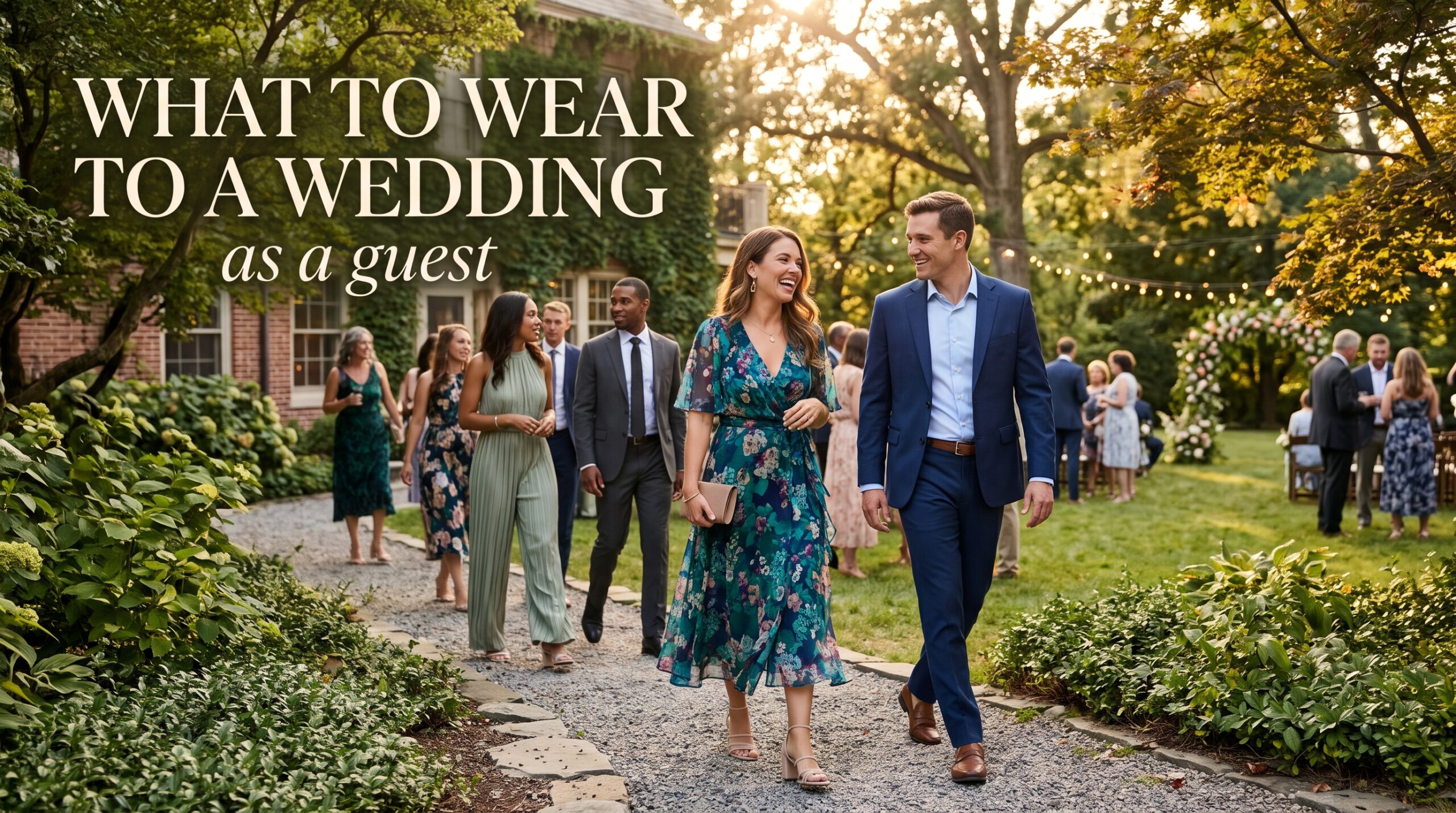
- The Core Rule: Match the invitation wording, venue terrain, and start time without ever wearing shades of white or competing with the couple.
- The Evening Default: Evening celebrations starting at 6:00 PM or later without a stated dress code require cocktail attire.
- The Daytime Default: Daytime ceremonies starting before 4:00 PM without a stated dress code call for dressy casual or daytime semi-formal attire.
- The Universal Footwear Rule: Outdoor lawn venues require block heels measuring at least 1.5 inches wide to prevent sinking into turf.
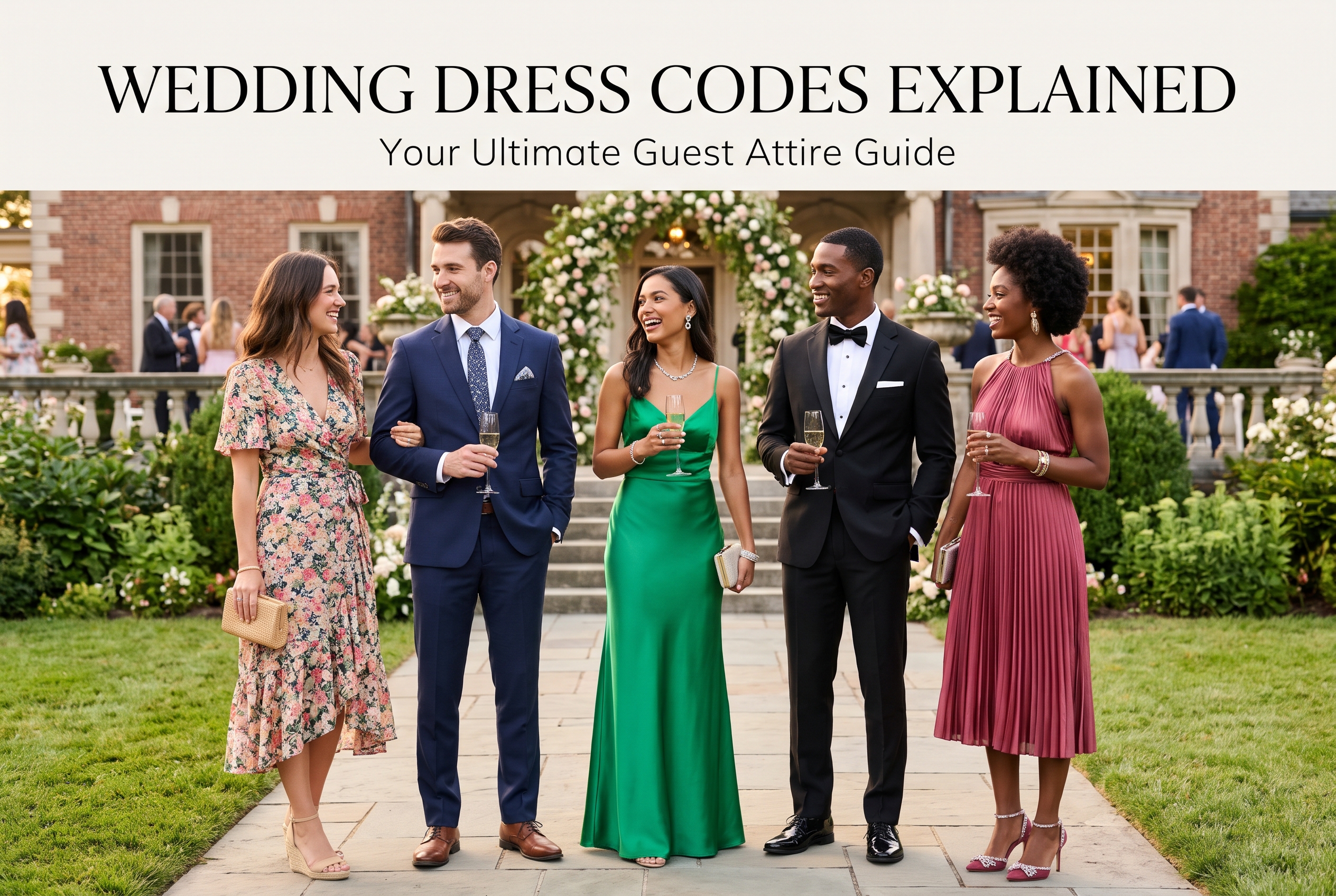
Wedding guest attire depends strictly on the invitation dress code, the ceremony time, and the physical venue environment. Guests must adhere to the couple’s designated formality level while never outshining the wedding party or wearing white.
When deciding what to wear to a wedding as a guest, the time of day establishes the baseline formality whenever hosts omit a formal designation. Daytime ceremonies held before 4:00 PM call for dressy casual or daytime semi-formal attire. Evening celebrations starting at 6:00 PM or later mandate cocktail attire or dark suits. If you are starting your wardrobe search from scratch, exploring the curated collections at weddingguestdresses.fashion provides a foundational look at current silhouettes. This decision guide establishes concrete fabric metrics, hemline lengths, tailoring standards, and shoe profiles across every tier of formality.
Decoding the Wedding Dress Code: The Formality Scale
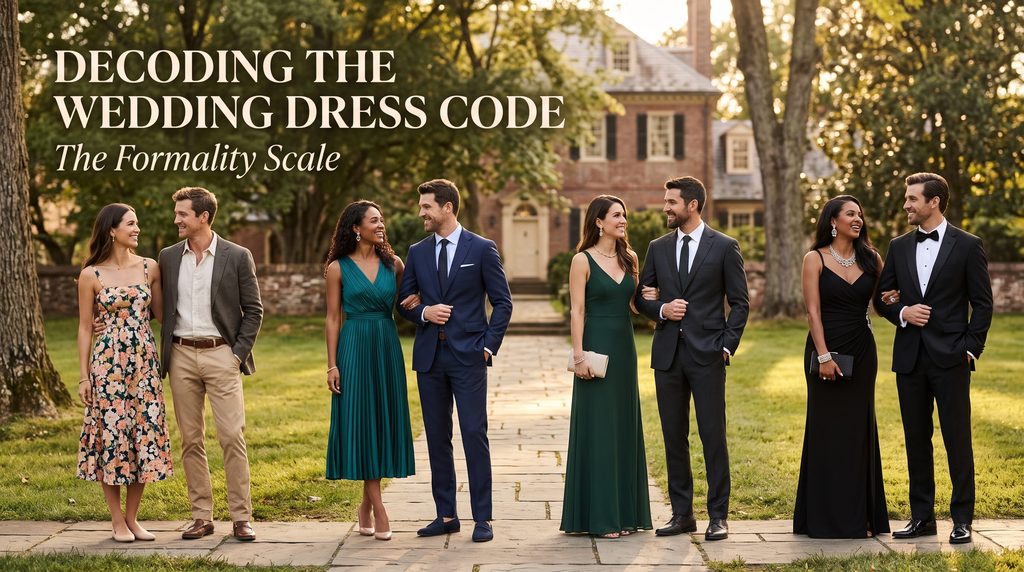
Invitation wording establishes the baseline standard of guest formality. Couples typically place these instructions on the lower right corner of the primary invitation card or print them directly on the reception enclosure card. The formality scale descends systematically from White Tie down to Dressy Casual:
Guest garments must also reflect the time of day specified on the invitation envelope. An event commencing at 6:00 PM automatically demands garments one tier higher in formality than a celebration taking place at 1:00 PM at the exact same location. Morning ceremonies call for lighter suitings and matte dresses, whereas evening celebrations prioritize structured, light-reflecting fabrics and dark wool tailoring.
Black Tie and Black Tie Optional Protocols
Black tie designations require traditional eveningwear constructed from structured textiles. Knowing the boundary between mandatory black tie and optional styling ensures appropriate execution:
- Black Tie: Mandates conservative evening formalwear. Men wear a tailored tuxedo crafted from midnight-blue barathea wool or standard black wool with satin or grosgrain facing on the lapels, a black silk bow tie, a white pique-front tuxedo shirt with French cuffs, matching cufflinks, and black patent leather oxfords. Women wear floor-length evening gowns touching the top of the shoe toe box; hemlines must not rise above ankle bone level during movement. Elevated, structured fabrics like silk faille, silk mikado, and heavy crepe maintain the required formal drape.
- Black Tie Optional: Male guests may choose between a tuxedo and a dark charcoal or navy worsted wool suit paired with a crisp white dress shirt, a conservative silk necktie, and polished black leather dress shoes. Female guests select between a full floor-length gown, an ornate dressy pantsuit, or an ankle-grazing formal midi dress constructed from opulent, evening-appropriate textiles.
Mid-Tier Dress Codes: Cocktail, Semi-Formal, and Dressy Casual
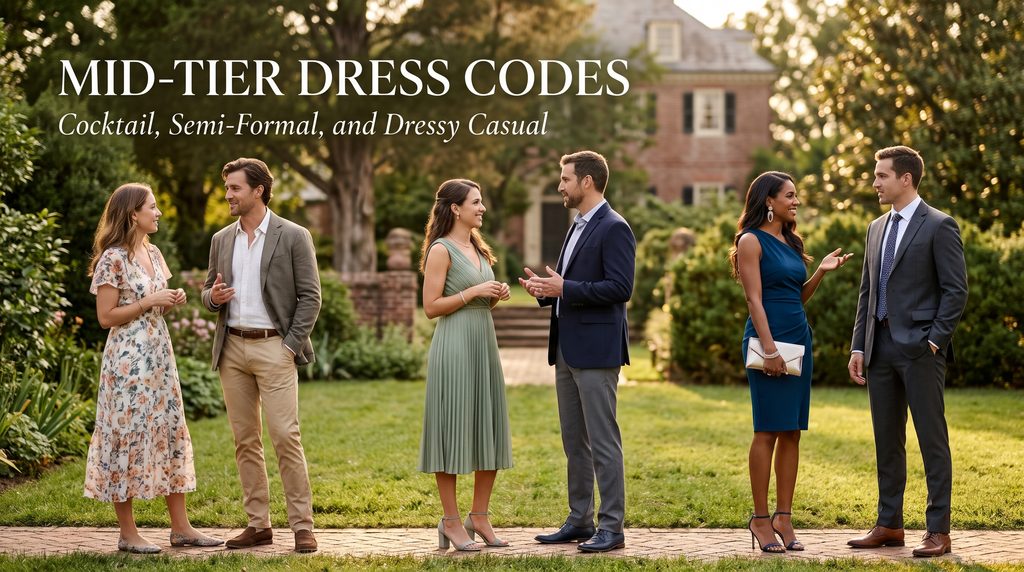
Mid-tier dress codes comprise more than 70 percent of contemporary wedding invitations. Selecting garments within this spectrum requires identifying the exact structural boundaries separating cocktail, semi-formal, and casual attire.
| Formality Tier | Women’s Garments | Men’s Garments | Excluded Pieces |
| White Tie | Floor-length ballgowns, white opera-length gloves, fine jewelry | Black tailcoat, matching trousers with double side stripes, white pique vest, white bow tie | Tuxedos, short hemlines, colored bow ties, daytime wristwatches |
| Black Tie | Floor-length evening gowns touching shoe toe box | Black or midnight-blue tuxedo, satin lapels, black silk bow tie, patent oxfords | Two-piece business suits, neckties, open-toed casual sandals, loafers |
| Cocktail | Midi dresses, tea-length dresses, structured crepe jumpsuits | Charcoal or navy suit, white or pale blue dress shirt, silk necktie, dress oxfords | Tuxedos, daytime sundresses, sports coats without ties, denim, polo shirts |
| Semi-Formal | Knee-length dresses, refined wrap dresses, tailored separates | Two-piece suits in light or medium gray, navy, or tan; necktie optional | Floor-length ballgowns, athletic sneakers, distressed clothing, t-shirts |
| Dressy Casual | Breathable midi sundresses, tailored culottes, linen jumpsuits | Tailored chinos, long-sleeve collared button-down shirts, optional blazer, leather loafers | Blue denim, flip-flops, athletic wear, graphic t-shirts, cargo pants |
Mid-Tier Garment Standards
- Cocktail Attire: Skirt hemlines should sit between 2 inches below the kneecap down to lower calf level. High-stretch jersey knits and casual sundress cuts remain unacceptable. Fabrics like silk charmeuse, matte crepe, and structured jacquard project understated elegance without rivaling a formal gown. Men wear a tailored two-piece suit in charcoal gray or deep navy with a white Egyptian cotton dress shirt, woven silk necktie, complementary silk pocket square, and lace-up calfskin oxfords.
- Semi-Formal Attire: Daytime semi-formal invites medium gray, tan, or steel blue suitings worn with leather monk straps or dress loafers. Women select tailored wrap dresses, pleated midi skirts, or structured jumpsuits with clean necklines.
- Dressy Casual Attire: Replaces formal wools with structured cottons and linens while maintaining clean boundaries. Tailored dress chinos paired with an ironed Oxford cloth button-down shirt establish the menswear baseline. Women select breathable midi sundresses or silk-blend blouses paired with wide-leg cropped trousers.
Wedding Guest Attire by Season: Fabric and Palette Specifications
Ambient venue temperatures and meteorological shifts dictate textile weight and weave density. Selecting the wrong textile compromises personal posture and thermal comfort over an extended wedding schedule.
| Season | Recommended Fabric Weight | Key Textiles | Ideal Color Palette |
| Summer | 120–180 GSM (Open Weave) | Linen-silk blends, chiffon, georgette, habotai silk, Bemberg cupro linings | Pastels, soft sky blue, sage green, light coral |
| Fall | 240–300 GSM (Medium Weave) | Wool crepe, heavyweight satin, long-sleeve knit blends | Emerald green, burnt copper, plum, deep rust |
| Winter | 320+ GSM (High Density) | Wool flannel, silk velvet, heavy brocade jacquard | Midnight blue, burgundy, forest green, deep jewel tones |
| Spring | 180–240 GSM (Light-Mid Weave) | Lightweight crepe, structured poplin, raw silk | Lavender, blush, butter yellow, eucalyptus |
Seasonal Considerations
- Summer Heat Management: Silk chiffon, cotton voile, and rayon georgette release trapped body heat effectively during outdoor daylight services. Open-weave natural fabrics prevent heat exhaustion during daylight ceremonies. For men, a 60% linen and 40% silk blend mitigates creasing while maintaining breathability. Unlined jackets finished with Bemberg cupro lining protect the outer fabric from perspiration. Avoid non-breathable polyester weaves, which trap heat within 15 minutes of direct sun exposure.
- Winter Cold Protection: Heavyweight wool flannel, silk velvet, and brocade jacquards block cold winds during venue transitions. Pair gowns with tailored wool topcoats, 100% cashmere wraps, or lined faux-fur stoles. Casual puffers, down parkas, and athletic windbreakers compromise the visual integrity of formal event attire.
Venue Considerations and Footwear Practicalities
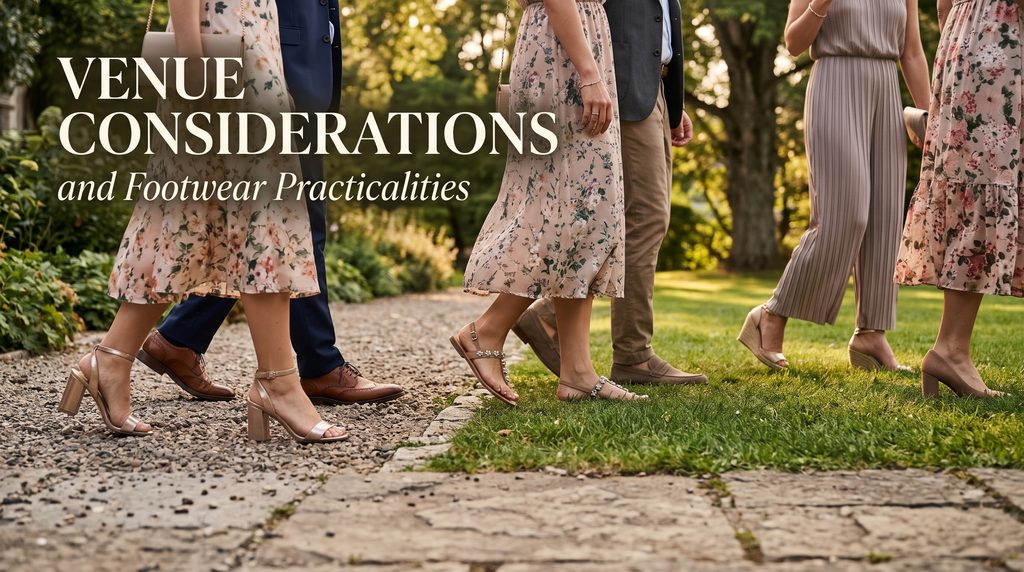
Physical terrain dictates shoe architecture, hemline elevation, and foundation layers. Uneven ground undermines thin shoes and delicate fabrics within minutes of arrival.
| Terrain Type | Mandated Footwear Construction | Hazard Profile |
| Lawn / Estate | Block heel ($\ge$1.5″ base) or continuous wedge | 8mm stiletto tips sink 2 inches within 3 paces, damaging leather and risking trips. |
| Gravel Pths | Lugged or hard-leather soles (min. 5mm thickness) | Thin dress soles cause foot fatigue and bruising from sharp stones. |
| Sand / Coastal | Flat leather dress sandals or unlined suede loafers | Fine sand scuffs patent leather; heels sink completely into dry sand. |
| Polished Marble | Buffed outsoles or applied non-slip rubber grip pads | Extreme fall risk on historic cathedral stone or wet outdoor terraces. |
Outdoor Venue Safety Advisory
- Boardwalk Entrapment: Narrow boardwalk gaps at waterfront venues trap heels under 1 inch wide, causing severe ankle sprains.
- Coastal Winds: Coastal breezes exceeding 10 knots lift light, unweighted skirts. For shoreside ceremonies, prioritize drop-waist silhouettes, heavier crepe textiles, or weighted hem tapes engineered to withstand coastal gusts.
- Direct Sun Exposure: For daylight temperatures above 85°F (29°C), prioritize light-colored natural fibers, hydrate with 8 ounces of water per hour, and bring a compact parasol or brimmed hat for open lawn ceremonies.
Strict Etiquette Rules: What Not to Wear
Wedding guest etiquette focuses on non-competing presentation. The guest ensemble must support the celebration without commanding primary visual focus.
| Do Wear | Do Not Wear |
| Subdued jewel tones, pastels, and refined earth tones | Solid white, ivory, cream, alabaster, eggshell, beige, or champagne |
| Tailoring matching the specified invitation tier | Neon pigments, reflective metallics, or loud animal prints |
| Midi, tea-length, or floor-length hemlines | Clubwear silhouettes, micro-minis, or deep midriff cutaways |
| Coordinated, understated accessories | Garments matching the bridal party’s specific palette |
| Polished dress shoes suited to the venue terrain | Athletic sneakers, distressed denim, graphic tees, or rubber flip-flops |
The Truth About Wearing Black or Red
- Black: Solid black garments are fully acceptable for modern evening cocktail, semi-formal, and black tie celebrations when tailored from refined textiles like silk, velvet, or wool crepe. Avoid black attire during morning religious ceremonies or traditional cultural celebrations where black signifies mourning.
- Red: Red garments are appropriate when the shade is muted and understated. Bright scarlet, fire-engine red, and crimson command direct focus in group portraits and distract from the couple. Deeper shades such as wine, burgundy, rust, and berry integrate smoothly into guest palettes.
Tailoring Guidelines: Proportion and Fit Specifications
Improper proportions diminish even the highest-grade fabrics. Ensure garments conform to these tailoring benchmarks before attending:
Menswear Tailoring
- Jacket Sleeves: Expose precisely 0.25 to 0.5 inches of shirt cuff above the wrist bone.
- Trouser Break: Tailored with a clean single break or slight break skimming the top laces of the dress shoe.
- Jacket Hem: Length should fully cover the curvature of the buttocks.
- Collar Fit: Hugs the dress shirt collar cleanly with zero gap behind the neck.
Womenswear Tailoring
- Floor-Length Hem: Floats precisely 0.5 inches above the finished dance floor while wearing the planned event shoes.
- Midi Hem: Aligns with the narrowest taper of the calf, roughly 2 inches below the bottom of the knee.
- Jumpsuit Torso: Tailored with 1 inch of vertical ease to prevent shoulder pulling or bunching while seated.
- Strapless Necklines: Anchored with internal boning and silicone grip tape to eliminate slippage during movement.
Frequently Asked Questions
What should a wedding guest wear if there is no dress code?
Analyze the ceremony time and venue location immediately. Morning and afternoon ceremonies before 4:00 PM call for dressy casual or daytime semi-formal attire, such as a tailored midi dress or chinos with a blazer. Evening celebrations starting at or after 6:00 PM require a dark suit and tie or a cocktail dress.
Can a guest wear black to a wedding?
Yes. Guests can wear black to evening, cocktail, and black-tie celebrations without violating modern etiquette. Black creates a sleek, formal aesthetic when constructed from evening textiles like velvet, crepe, or silk. Avoid black garments for morning ceremonies, warm-weather beach destinations, and cultural weddings where black signifies mourning.
What does “black tie optional” mean for guests?
Black tie optional indicates the hosts and wedding party will wear formal tuxedos and evening gowns, encouraging guests to match that formality level. Male attendees select either a classic tuxedo or a dark navy or charcoal wool suit paired with a tie. Female guests select a floor-length gown, formal jumpsuit, or dark midi dress.
Can you wear red to a wedding as a guest?
Yes, provided the shade is muted and understated. Bright scarlet, fire-engine red, and crimson command direct focus in group portraits and distract from the couple. Deeper shades such as wine, burgundy, rust, and berry integrate seamlessly into guest palettes without creating visual competition.
What is dressy casual wedding attire?
Dressy casual bridges the gap between everyday casual wear and semi-formal tailoring. Appropriate selections include midi dresses, refined jumpsuits, and skirts with silk blouses for women. Men wear pressed chinos or dress trousers, a collared button-down dress shirt, and leather loafers, with an optional blazer. Denim, graphic shirts, and athletic shoes remain excluded.
Conclusion
Selecting what to wear to a wedding as a guest resolves to honoring the couple’s designated formality level, matching your textiles to seasonal weather, and choosing footwear engineered for the venue terrain. Adhering to these sartorial benchmarks guarantees personal comfort and visual elegance throughout the entire celebration.