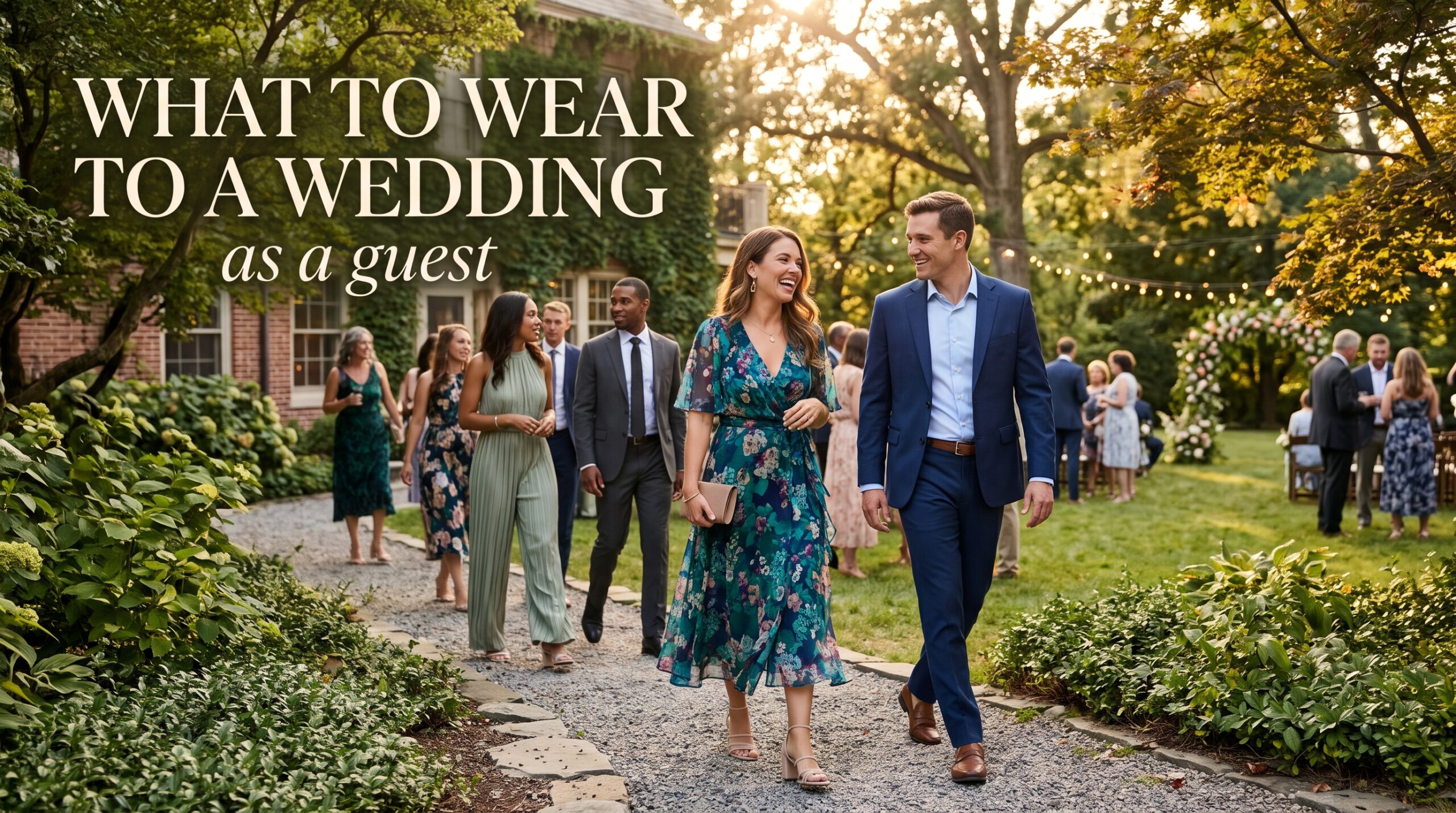
- White Tie: Dictates a floor-sweeping hemline ballgown or a black tailcoat paired with a white piqued cotton vest and matching bow tie.
- Black Tie: Requires a formal floor-length gown or a tuxedo equipped with satin- or grosgrain-faced peak lapels.
- Black Tie Optional: Permits a tailored tuxedo or a dark lounge suit cut from charcoal or midnight navy worsted wool, alongside elegant dresses for wedding guests.
- Cocktail Attire: Specifies a knee-length sheath, midi dress, or tailored dark suit and necktie combination.
- Casual & Dressy Casual: Permits tailored separates, linen trousers, and woven day dresses, while strictly barring athletic wear and denim.
INTRODUCTION
Wedding dress codes explained clearly remove the friction of selecting appropriate wedding guest attire for any ceremony. If you need immediate guidance on selecting an outfit from scratch, check our complete breakdown on what to wear to a wedding as a guest. White tie and black tie dictate floor-sweeping evening gowns and tailored tuxedos, whereas cocktail and semi-formal codes mandate midi dresses, tailored jumpsuits, and dark lounge suits. Vague invitation wording creates unnecessary wardrobe anxiety and risks social embarrassment on the wedding day.
This guide details exact fabric requirements, skirt lengths, suiting rules, and footwear protocols for every formal tier. Readers will identify the precise outfit required for their specific venue, start time, and ceremony requirements.
MAIN BODY
The Universal Wedding Dress Code Hierarchy
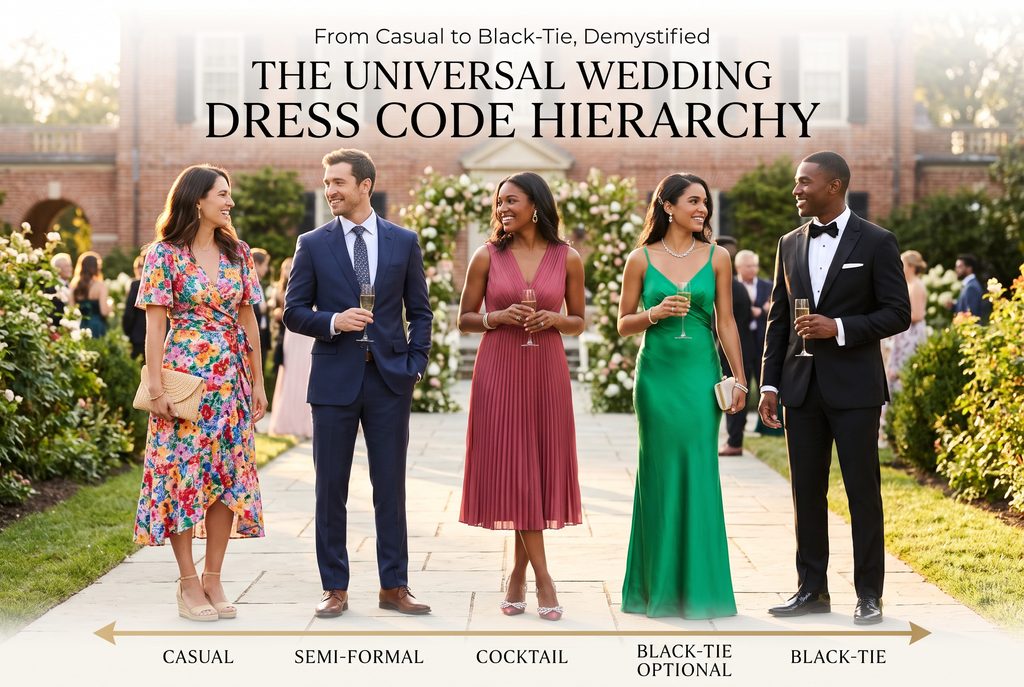
Wedding dress codes establish the baseline formality required by the hosts based on venue architecture and reception timing. Adhering to this wedding attire guide prevents guest wardrobe errors across all standard tiers:
- White Tie: Mandates a black formal tailcoat, matching trousers with a double outer stripe, a white piqued cotton vest, a white bow tie, and a full-skirted ballgown touching the floor.
- Black Tie: Mandates a tuxedo featuring satin or grosgrain facing, formal black patent leather shoes, and an evening gown with a floor-sweeping hemline.
- Black Tie Optional: Permits a tailored tuxedo or dark lounge suit in navy or charcoal paired with a conservative silk necktie, or a floor-length to structured midi dress.
- Cocktail Attire: Designates a knee-length or midi-length dress, a structured pantsuit, or a dark wool suit worn with a necktie.
- Dressy Casual: Permits pressed chinos, sports coats, tailored linen trousers, and woven day dresses, excluding blue denim and athletic sneakers.
Guests selecting footwear for turf surfaces must evaluate stability before arrival. Pointed heels ruin sod and destabilize the wearer on soft soil.
Formal Traditions: Decoding White Tie, Black Tie, and Black Tie Optional
Evening events starting after 6:00 PM adhere to formal protocol established by the Emily Post Institute, designating dark formal evening wear over lighter daytime suiting. Midnight navy and true black represent the two permissible suiting base shades for these gatherings. Daytime morning coats give way to specialized evening tailoring the moment twilight begins.
Black tie weddings require specific textile and construction choices for both men and women. Men wear a tailored tuxedo with a solid white formal shirt featuring French cuffs and stud closures. Women select an evening gown with a floor-sweeping hemline that fully conceals the ankles while walking. Short dresses remain unacceptable for standard black tie gatherings.
A black tie optional invitation introduces flexibility for attendees who do not own a tuxedo. Guests select between a formal dinner jacket or a dark lounge suit constructed from 100% worsted wool. Men choosing the lounge suit option pair the garment with a solid white broadcloth dress shirt, polished black calfskin oxfords, and a non-patterned silk necktie. Women wear either a floor-length gown or an ornate midi-length dress constructed from heavy silk, brocade, or velvet.
Tuxedo vs. Dark Lounge Suit Criteria
A ventless dinner jacket with grosgrain-faced peak lapels or a curved shawl collar establishes true black tie formality. Lounge suits feature notched lapels and dual rear vents, which dilute formal severity. Dinner jackets omit belt loops entirely, requiring interior suspender buttons and a matching silk cummerbund or low-cut waistcoat.
Lounge suit fabric requires a minimum 250-gram poplin weave weight in charcoal grey or midnight navy. Light grey flannel, brown tweed, and patterned glen plaids violate the formal threshold. Men must pair black tie optional suits with black leather dress shoes featuring a clean cap toe.
+-----------------------------------------------------------------------------------+
|                         FORMAL EVENING WEAR PROTOCOL                              |
|                                                                                   |
|  [6:00 PM Threshold: Emily Post Institute Dark Formal Protocol Commences]        |
|                                                                                   |
|         +-----------------------+           +-----------------------+             |
|         |       BLACK TIE       |           |  BLACK TIE OPTIONAL   |             |
|         +-----------------------+           +-----------------------+             |
|         | Tuxedo with           |           | Tailored Tuxedo OR    |             |
|         | Grosgrain Lapels      |           | Midnight Navy Suit    |             |
|         |                       |           |                       |             |
|         | Floor-Sweeping        |           | Floor-Length Gown OR  |             |
|         | Hemline Gown          |           | Heavy Brocade Midi    |             |
|         +-----------------------+           +-----------------------+             |
+-----------------------------------------------------------------------------------+
Modern Standards: Cocktail Attire and Semi-Formal Wedding Attire
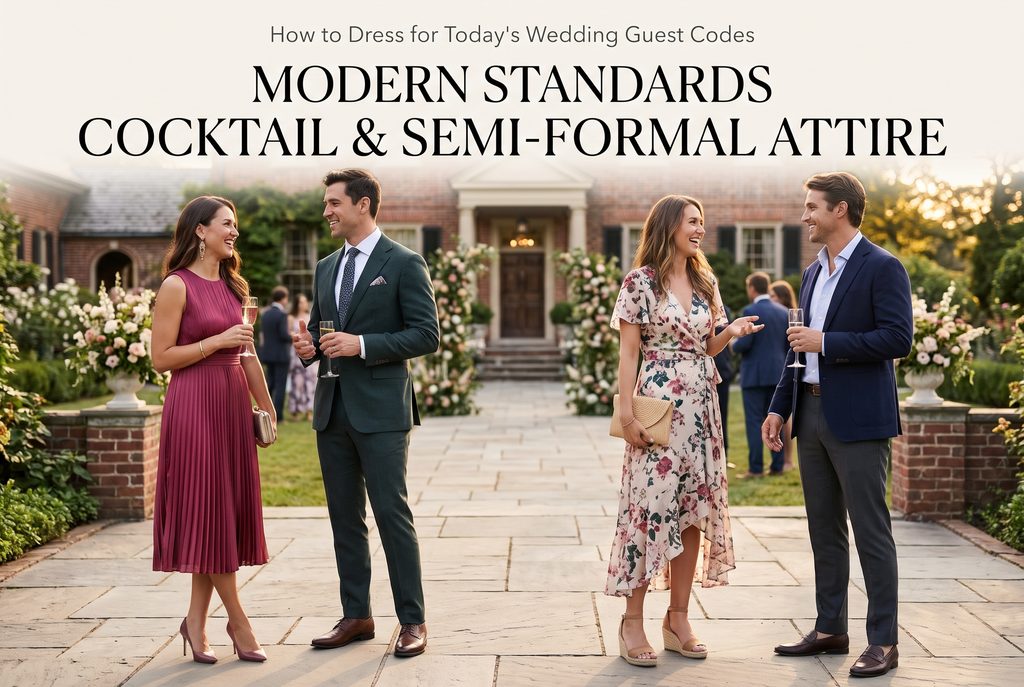
A cocktail attire wedding balances celebratory visual flair with sharp tailoring. Women select midi dresses, structural jumpsuits, or separates constructed from silk or lace. Men wear a tailored suit with a silk necktie and leather dress shoes. Semi-formal wedding attire relaxes these expectations slightly while maintaining structured garments.
The time of day dictates the color palette for semi-formal events. Afternoon ceremonies prior to 4:00 PM favor soft grey, French blue, and pale sage tones. Receptions starting after 5:00 PM demand deep forest green, plum, navy, and rich charcoal tones.
| Dress Code Tier | Women’s Hemline & Garments | Men’s Suiting & Neckwear | Approved Fabrics | Prohibited Garments |
| White Tie | Floor-sweeping ballgown | Tailcoat, piqued vest, white bow tie | Silk faille, duchess satin, pique | Cocktail hemlines, lounge suits |
| Black Tie | Floor length gown | Tuxedo, black bow tie, cummerbund | Silk crepe, velvet, satin | Exposed ankles on dresses, standard neckties |
| Cocktail | Knee-length, midi, or dressy jumpsuit | Dark suit with silk necktie | Crepe, satin, lace, jacquard | Casual cotton sundresses, denim |
| Semi-Formal | Midi dress, tailored separates, wrap dress | Suit or blazer with dress trousers; tie optional | Chiffon, lightweight wool, linen | T-shirts, polo shirts, sneakers |
| Dressy Casual | Elevated sundress, midi skirt and blouse | Chinos with collared shirt and blazer | Cotton poplin, linen, rayon | Distressed jeans, flip-flops, athletic wear |
What qualifies as cocktail attire in terms of dress length requires exact boundary lines. Hemlines must hit between 2 inches below the patella and 3 inches above the ankle bone. Micro-mini skirts, cotton jersey sundresses, and unlined maxi coverups fail the cocktail threshold. Women selecting separates must balance structural wide-leg palazzo trousers with a tailored silk blouse or embellished jacket.
Crepe de chine drape provides the structural fluidity necessary for warm-weather semi-formal dresses. Men attending warm daytime semi-formal ceremonies select unstructured wool-silk-linen sport coats paired with pressed trousers. Neckties remain mandatory for evening cocktail events, whereas afternoon semi-formal affairs permit open collars when anchored by a pocket square.
Common Wedding Attire Mistakes and Color Myths Debunked
Outdated wedding guest etiquette myths continue to confuse modern guests regarding color selection. Historical traditions designated black clothing as a symbol of mourning, yet contemporary protocols fully embrace black cocktail garments for evening receptions. Women wearing black to evening events avoid funeral aesthetics by selecting textured fabrics, asymmetrical necklines, and metallic jewelry.
The question of whether guests can wear black resolves positively for all evening events, but white clothing remains strictly banned. White, alabaster, eggshell, ivory, and champagne gowns belong exclusively to the couple. Guests avoid pale pastel hues that photograph as white under natural daylight or camera flashes.
Questions regarding red guest attire require nuanced color differentiation. Bright scarlet, fire-engine red, and neon crimson dresses draw visual attention away from the married couple in group photography. Guests wear deeper tones such as burgundy, wine, and deep bordeaux to satisfy dress code requirements without dominating photographs.
+-----------------------------------------------------------------------------------+
|                         GUEST PALETTE PERMISSIBILITY                              |
|                                                                                   |
|  [PERMITTED]                                                                      |
|  * Midnight Navy, Forest Green, Charcoal                                          |
|  * Bordeaux, Burgundy, Deep Wine                                                  |
|  * Textured Black (Evening Receptions)                                            |
|                                                                                   |
|  [PROHIBITED]                                                                     |
|  * Stark White, Ivory, Cream, Champagne (Reserved for Couple)                     |
|  * Neon Crimson and Saturated Scarlet (Disrupts Visual Focus)                     |
|  * Distressed, Frayed, or Casual Washed Textiles                                  |
+-----------------------------------------------------------------------------------+
An invitation RSVP card provides the primary indicator of celebration tone. Invitations lacking an explicit dress code statement require guests to inspect the physical venue and card typography. Heavy cardstock with engraved script signals a dark lounge suit or formal dress, whereas digital invitations signal dressy casual attire. Couples’ wedding website details clarify specific footwear and outerwear recommendations for unique reception spaces.
Environmental and Cultural Contexts: Outdoor, Beach, and Religious Ceremonies
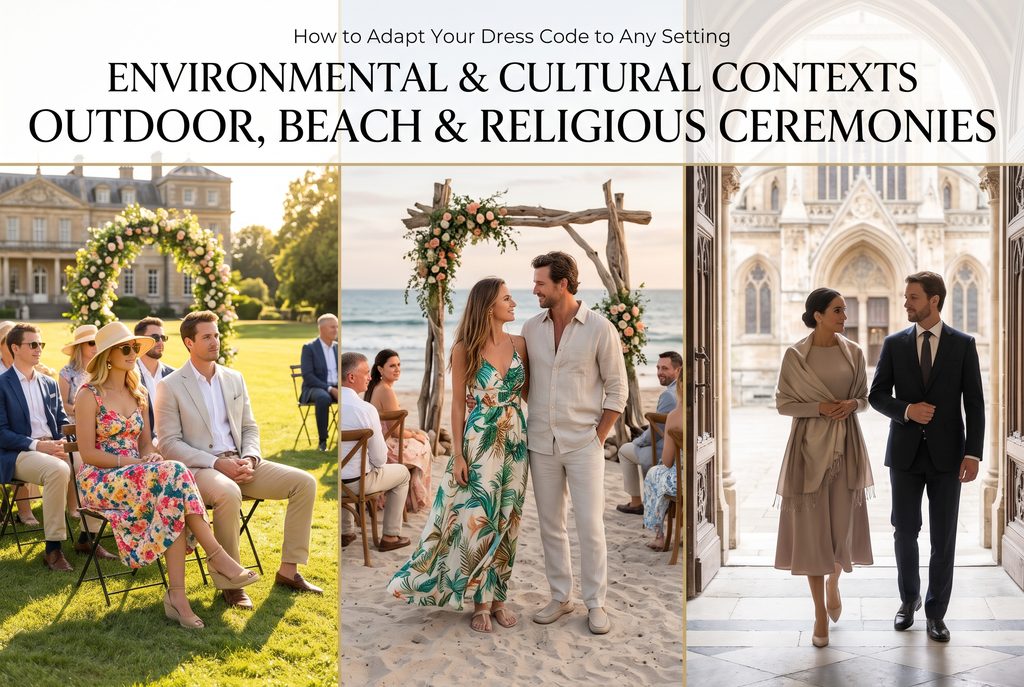
Outdoor environments dictate specific mechanical adjustments to wedding wardrobes. During a field-test trial on damp coastal turf, a guest wearing 3-inch stiletto heels sank 2.5 inches into the sod within 4 minutes of the processional, permanently staining the leather heels with soil. Women attending garden and lawn ceremonies must select 2-inch block heels, platform wedges, or attach broad heel protectors to prevent sinking.
Beach wedding attire balances warm-temperature management with sharp presentation. Men wear pressed linen trousers, a cotton poplin button-down shirt, and an unlined linen sport coat. Women select airy maxi dresses or midi-length slip dresses paired with dressy flat leather sandals. Sand ruins standard patent leather shoes and causes water damage to untreated calfskin soles.
Religious sanctuaries and historic houses of worship enforce specific modest presentation rules. Guests must conceal exposed shoulders, upper arms, and deep necklines during traditional religious services. Women carry a woven pashmina, cashmere shawl, or structured bolero jacket to drape over sleeveless dresses during church ceremonies. Men must retain their suit jackets and neckties until arriving at the reception venue.
Safety Note on Footwear and Heat Exposure
Outdoor summer ceremonies exceeding 85 degrees Fahrenheit create direct thermal hazards for attendees wearing heavy synthetic textiles. Synthetic 100% polyester weaves trap perspiration against the skin, elevating body temperature and precipitating heat exhaustion. Guests select breathable 100% natural fibers, including linen, cotton sateen, and lightweight wool.
New leather-soled dress shoes possess minimal surface friction on polished hardwood dance floors. Wearers must apply textured rubber grip adhesives to new shoe outsoles or score the slick leather surface to prevent slip-and-fall injuries during the reception.
FAQ SECTION
Frequently Asked Questions About Wedding Dress Codes
What is the difference between black tie and black tie optional?
Black tie requires a formal tuxedo with satin or grosgrain facings for men and a floor-sweeping gown for women. Black tie optional permits men to wear a dark charcoal or navy lounge suit with a necktie, while women select either a full-length gown or an ornate midi dress.
What should a woman wear to a cocktail attire wedding?
A woman attending a cocktail attire wedding must wear a knee-length sheath, midi dress, or a structured jumpsuit. High-end fabrics like crepe, satin, velvet, and lace provide the appropriate celebration standard. Explore curated cocktail dresses for wedding guests to find compliant silhouettes paired with tailored accessories.
Can wedding guests wear black to a wedding?
Wedding guests can wear black to modern evening, black tie, and cocktail celebrations without violating etiquette standards. Guests must select celebratory silhouettes with intentional styling, avoiding somber suiting that resembles traditional mourning attire. Traditional cultural ceremonies that explicitly bar dark colors represent the sole exception to this standard.
What is acceptable for semi-formal wedding attire?
Semi-formal wedding attire requires tailored separates, wrap dresses, or midi silhouettes for women, and a structured suit or sports coat with trousers for men. Afternoon weddings favor pastel tones and lightweight weaves, while evening events mandate darker charcoal or navy tones. Neckties remain optional during daylight celebrations.
What do you wear when an invitation has no dress code?
An invitation lacking an explicit dress code requires analyzing the ceremony start time and venue architecture. Review our foundational guide on what to wear to a wedding as a guest for step-by-step decoding when invitations omit instructions. Events starting after 6:00 PM at ballrooms or hotels require cocktail attire or dark suits, whereas daytime outdoor celebrations indicate dressy casual apparel.
CONCLUSION
Balancing respect for the couple’s declared formality level with the physical constraints of the venue guarantees sartorial success at any ceremony. Guests choosing between two levels of formality must select the higher degree of tailoring to avoid appearing underdressed. For broader styling strategies across venues and seasons, consult our overview on what to wear to a wedding as a guest before finalizing your look. Proper attention to fabric weights, hemline lengths, and footwear hardware protects personal comfort through the final dance.
Arriving in precisely calibrated attire ensures full etiquette compliance, optimal presence in wedding photography, and confidence throughout the celebration. Download the printable Wedding Dress Code Matrix PDF to reference specific fabric, shoe, and jewelry pairings for your upcoming event.