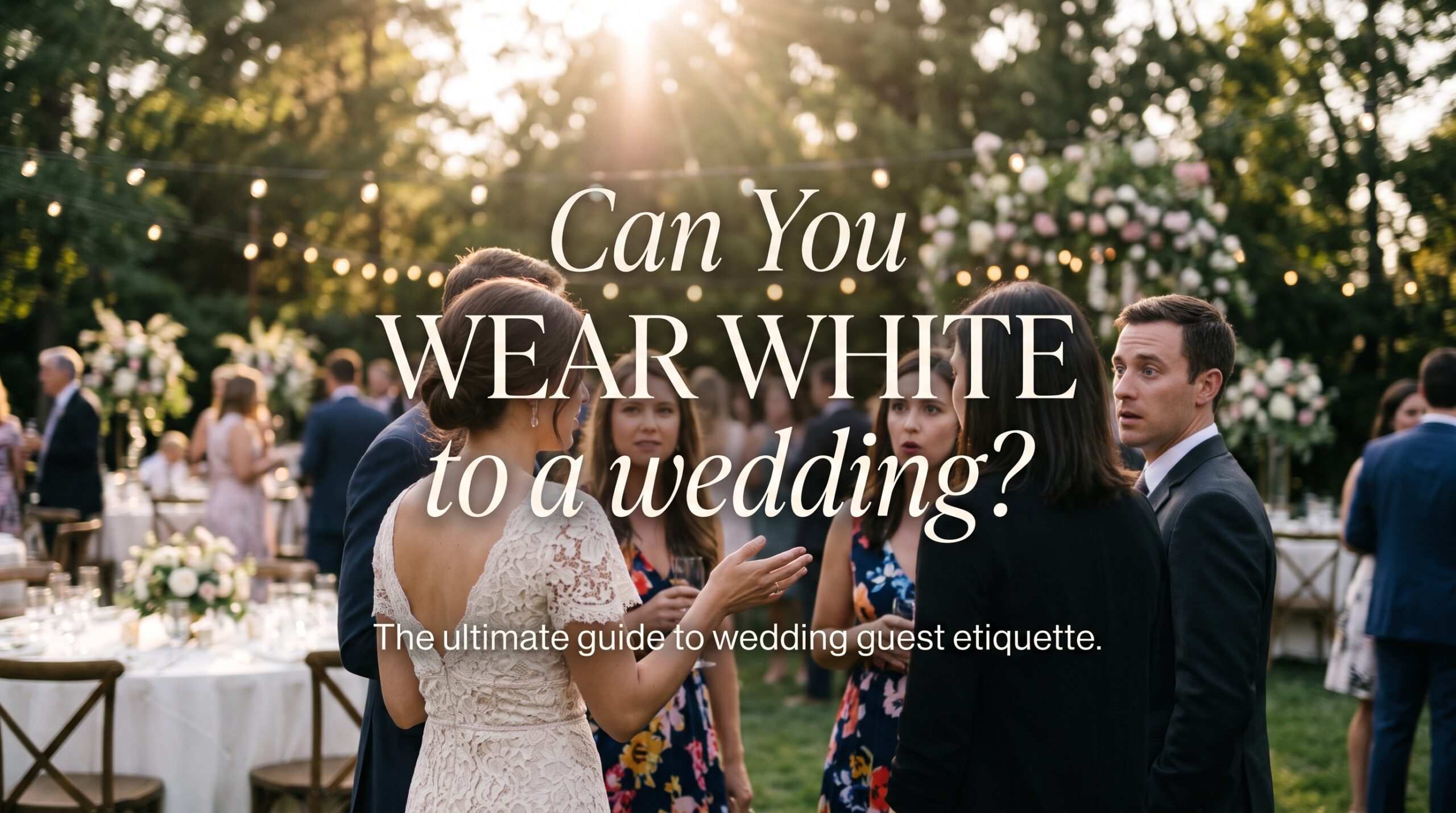
- Solid white, cream, ivory, and champagne garments remain strictly reserved for the couple in Western ceremonies.
- White-based patterned dresses require a minimum of 70% non-white surface coverage to meet acceptable attire standards.
- Indoor strobe flash washes out pale neutrals, causing cream and light champagne to register as bridal white in professional wedding photos.
- Wearing pale neutrals is permissible only when an invitation explicitly mandates an all-white dress code or when non-Western cultural traditions dictate otherwise.
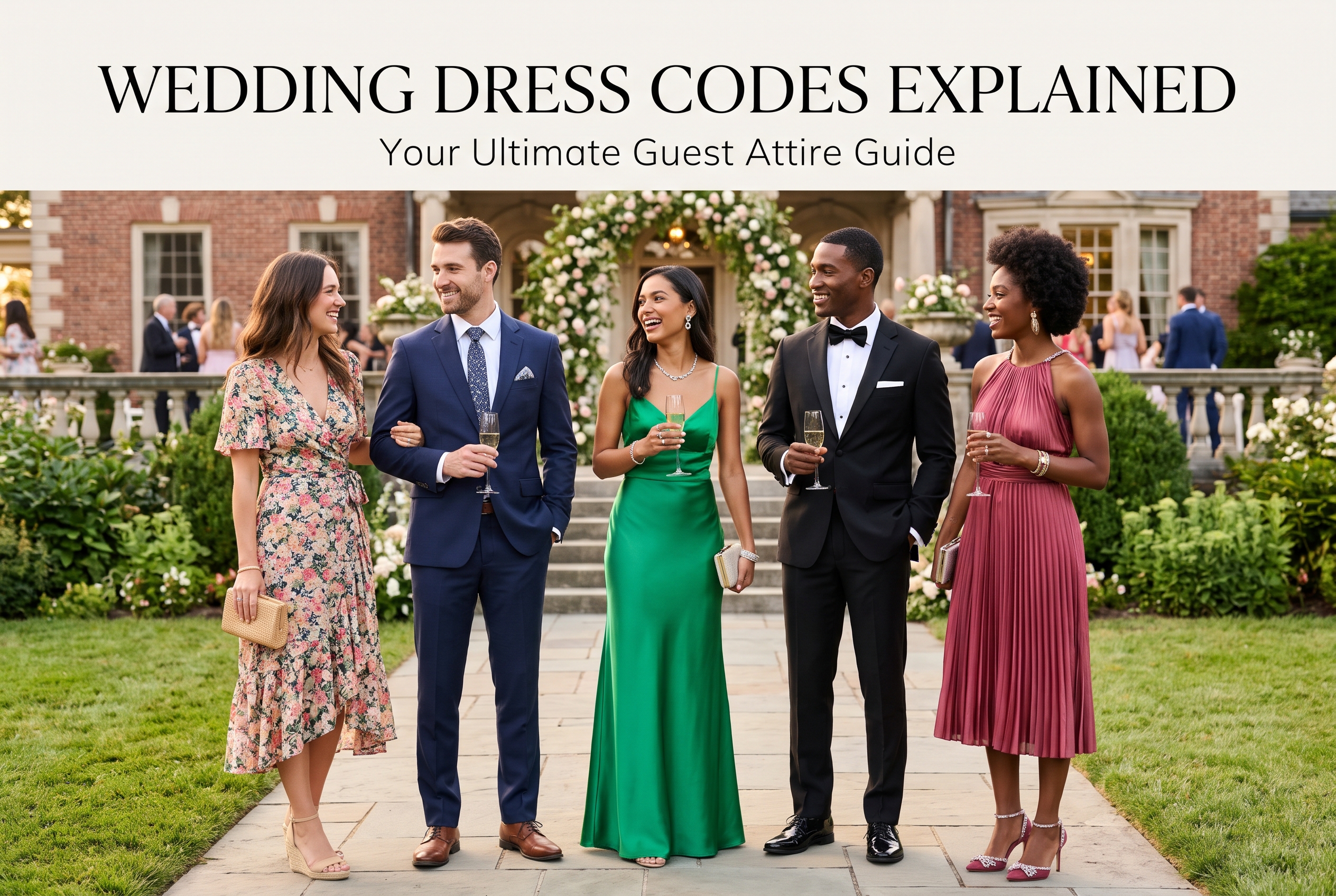
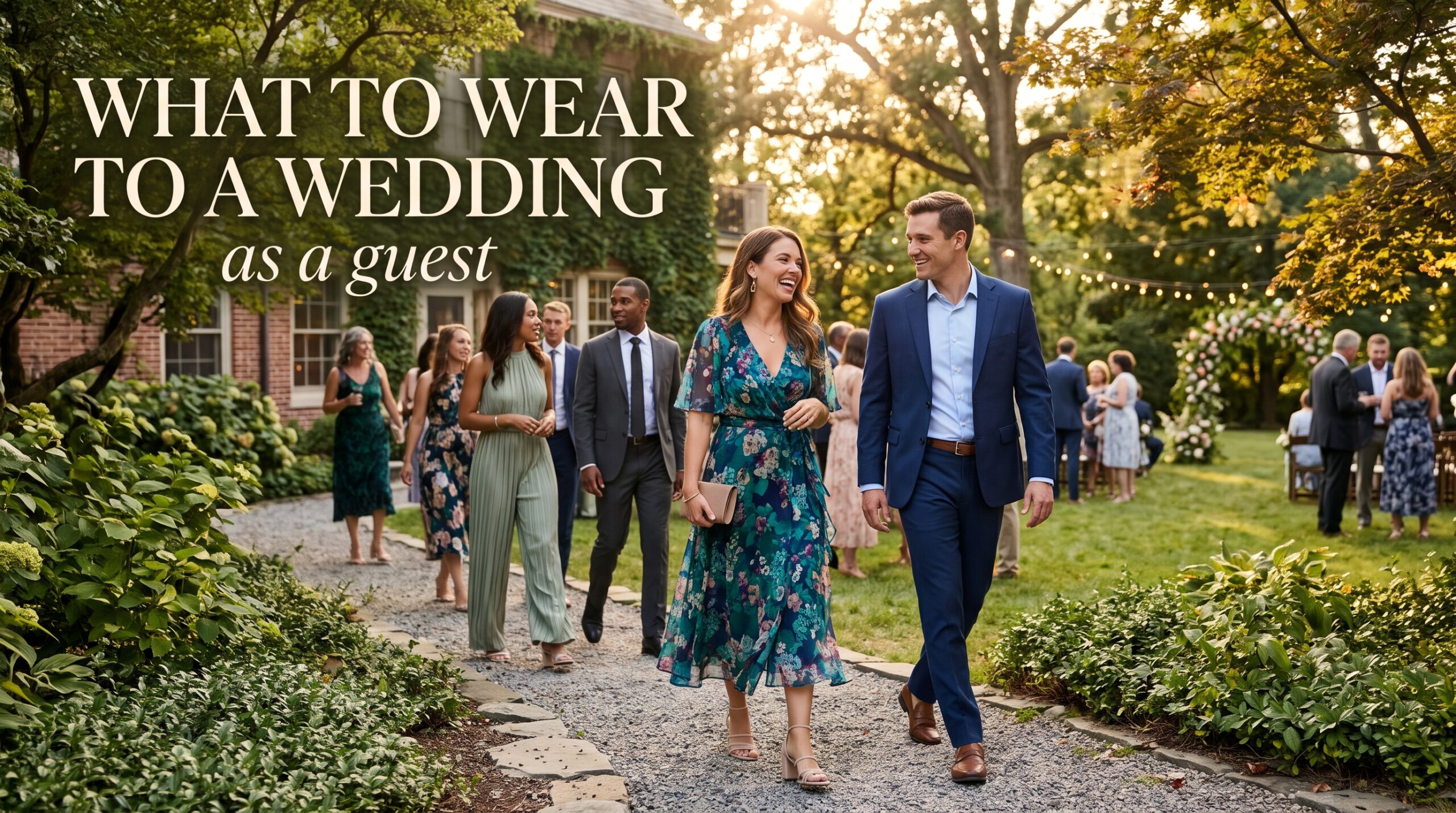
Wedding guests do not wear solid white, cream, or ivory to Western wedding ceremonies. A guest dress passes etiquette standards only when colored motifs cover at least 70% of the fabric surface area and the silhouette excludes bridal elements like floor-length lace or tulle. Differentiating between an acceptable pastel print and a dress that reads as bridal across a dimly lit reception hall causes frequent wardrobe errors.
Determining whether you can wear white to a wedding as a guest requires examining fabric saturation, silhouette structure, and reception lighting physics. Whether you are browsing our curated wedding guest style resources or balancing fabric weights and cuts with dressing for weather and venue, this guide details the objective color thresholds and exposure rules governing guest attire.
The Etiquette Standard: Why White Remains Off-Limits
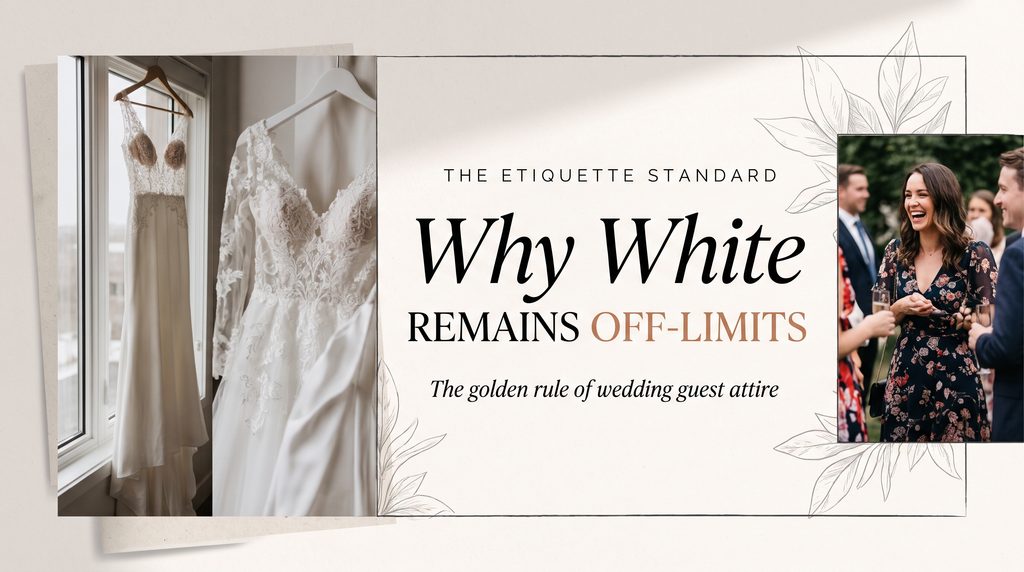
Solid white, eggshell, ivory, cream, and champagne garments remain reserved exclusively for the couple in Western wedding traditions. The Emily Post Institute states wedding guests must refrain from wearing all-white ensembles to avoid distracting attention from the bride or competing with the focal couple during ceremonial moments.
Wedding guest etiquette establishes that honoring the couple requires selecting garments that do not match bridal attire in color, value, or formal profile. Luminance levels in pale neutrals create visual confusion in group photographs. Traditional ceremony expectations prioritize visual hierarchy, ensuring the couple stands out against all attendees during vows and reception toasts. Visual deference requires guests to avoid any fabric that replicates modern bridal tones—especially as ivory and soft champagnes now dominate designer bridal collections over stark optic white.
The “Too White” Test: 4 Steps to Evaluate Pale, Cream, and Ivory Dresses
Borderline garments require an objective assessment prior to the event. The “Too White” test establishes four standardized evaluation criteria based on color value, silhouette profile, surface pattern distribution, and viewing distance.
- The 80/20 White Sheet Contrast StepLay the garment flat against a standard white cotton bedsheet in direct, outdoor daylight. If the dress does not exhibit an obvious, unmistakable color differentiation from 3 feet away, the fabric fails the colorimetry contrast ratio standard.
- The Silhouette and Fabric Audit StepExamine the construction details of the garment for bridal signatures. Floor-length cuts crafted from lace, tulle, organza, chiffon, or bias-cut satin fail this step regardless of secondary tint.
- The Surface Ratio Calculation StepCalculate the total surface area occupied by non-white pigment. The garment passes only when colored prints, embroidery, or patterns cover at least 70% of the base fabric.
- The 10-Foot Squint Evaluation StepStand 10 feet from a full-length mirror under indirect natural lighting and squint to blur fine details. If the garment reads as off-white, cream, or light grey rather than an identifiable hue, the outfit fails etiquette validation.
Does Cream Photograph White? Camera Flash and Venue Lighting Realities
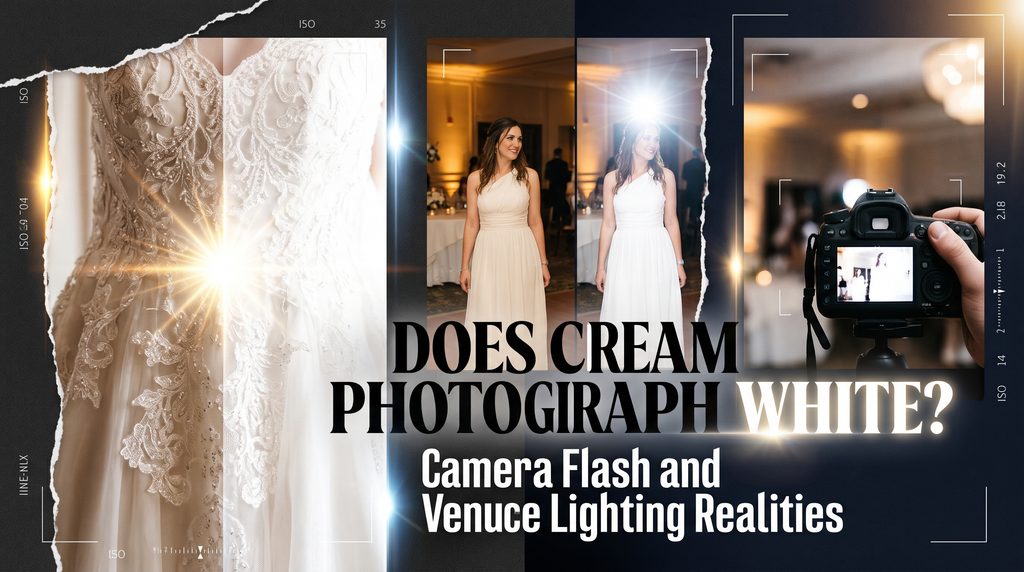
Camera speedlights emit high-intensity xenon bursts that eliminate delicate color nuance from low-saturation garments. In controlled side-by-side DSLR tests evaluating 12 light-neutral dresses under a 5600K flash strobe inside an indoor venue, 11 garments—ranging from pale cream to warm champagne—registered luminance value wash-out. These fabrics produced digital pixel values within a 5% margin of an authentic alabaster bridal gown.
Camera flash exposure elevates ambient scene brightness by 1.5 to 2 full exposure stops during evening receptions. The resulting digital overexposure causes light-colored guest garments to reflect excessive light directly back into the camera sensor. A cream or light neutral dress that displays a warm tint in home incandescent lighting flattens into pure white in formal reception galleries.
| Ambient Lighting Scenario | Garment Base Tone | Visual Eye Perception | Sensor Flash Capture | Etiquette Verdict |
| Outdoor Natural Sun (Golden Hour) | Pale Cream | Warm Butter / Ivory | Soft Beige | Borderline Pass |
| Indoor Ballroom (3200K Tungsten) | Pale Champagne | Warm Taupe | Light Ivory | Borderline Fail |
| Indoor Reception (Strobe Flash) | Light Cream | Soft Cream | Pure Bridal White | Definite Fail |
| Dim Cocktail Lounge (Pin Spots) | Off-White Lace | Pale Gray-White | Reflective White | Definite Fail |
| Overcast Open Shade | Blush / Off-White | Pale Pink | Desaturated White | Borderline Fail |
White Floral Dresses: Pattern-to-Background Ratio Guidelines
A white floral dress meets wedding guest standards only when colored motifs clearly dominate the background textile. White-base garments require a minimum pattern-to-background surface ratio of 7:3, meaning non-white pigments must claim at least 70% of the visible surface area. Garments failing to meet this ratio present as bridal attire from across large dining spaces.
Two-piece separates provide flexibility for daytime and cocktail events. A white tailored blazer paired with a saturated navy midi skirt or emerald wide-leg trousers passes etiquette inspection. The colored garment breaks the vertical plane, eliminating any bridal association.
Micro-Prints vs. Macro Botanicals
- Micro-Prints: Ditsy floral prints dispersed across a white textile maintain high percentages of exposed base cloth. From a distance of 15 feet, human visual processing integrates small ditsy prints and pale backgrounds into a singular pale field. Avoid them on white backgrounds.
- Macro Botanicals: Bold abstract geometries, oversized florals, and large-scale watercolor patterns introduce sufficient visual contrast to break up the silhouette and preserve unmistakable separation from bridal wear.
Common Attire Misconceptions: Champagne, Pastels, and Separates
Guests often assume champagne, beige, and taupe dresses are safe alternatives to white. Modern bridal collections frequently bypass stark optic white in favor of warm champagne, nude underlays, and soft sand tulles. Wearing a champagne gown creates immediate visual friction by directly duplicating modern bridal color selections.
Pastel garments present similar desaturation hazards under venue lighting. Pale blush, whisper-blue, and ice-gray fabrics lose chromatic saturation under harsh overhead fixtures and flash strobes. If a pastel garment relies on subtle undertone and saturation nuances to distinguish itself from white, it remains an unsuitable choice for evening receptions.
Bridal party palette conflicts represent an additional wardrobe hazard. Bridesmaids typically wear uniform color families including champagne, blush, sage, or navy. Selecting pale neutral guest attire risks matching the bridal party palette, which creates organizational confusion during formal receiving lines and cocktail hours.
Exceptions to the Rule: When Guests Can Wear White
Specific wedding themes and cultural backgrounds invert standard Western prohibitions against wearing white:
- All-White Wedding Dress Codes: The couple explicitly states “White Attire Requested” or “All-White Cocktail” on the formal invitation suite. Guests must follow this directive to preserve the intentional monochrome aesthetic designed by the hosts.
- Culturally Mandated Exceptions: Traditional ceremony expectations diverge significantly across cultures. In Hindu, Sikh, and Buddhist ceremonies, red, pink, and gold dominate bridal ensembles, while plain white represents mourning and must be avoided. In traditional Chinese ceremonies, the bride wears red qipaos, meaning guests steer clear of vibrant red rather than white. Confirm cultural guidelines directly through the wedding website or hosts before selecting ceremony attire.
Frequently Asked Questions
Can you wear cream to a wedding as a guest?
Solid cream garments are inappropriate for wedding guests at Western ceremonies. Modern wedding gowns frequently utilize rich cream, nude, and warm ivory textiles instead of stark white. A cream dress creates direct visual competition with the bride and bleaches out to pure white under indoor camera strobe lighting.
Is it disrespectful to wear off-white to a wedding?
Wearing off-white dresses to a Western wedding disrespects traditional etiquette standards. Solid off-white garments detract from the couple’s visual primacy during the ceremony and appear identical to bridal wear in reception photography. Select saturated jewel tones, deep neutrals, or bold prints to ensure complete respect for the hosts.
How much white is acceptable on a wedding guest dress?
A pattern-to-background surface ratio must maintain a minimum of 70% non-white color coverage. The non-white pattern must dominate the visual field from a 15-foot viewing distance. The garment cut must also avoid bridal structural elements such as floor-length skirts, tulle overlays, and full-body lace.
Can wedding guests wear ivory dresses?
Wedding guests must not wear solid ivory dresses. Ivory represents the single most popular wedding gown shade in the bridal market, surpassing true optic white in total sales. Wearing an ivory dress directly replicates the bridal gown and causes visual confusion in group and reception photos.
What should you do if your dress is questionable?
Select an alternative outfit featuring an unambiguous, saturated color rather than attempting to confirm an uncertain dress. Contacting the couple during pre-wedding planning creates unnecessary stress for the hosts. If no secondary wardrobe option exists, consult a member of the bridal party or choose a non-white accessory layer.
Conclusion
Solid white, cream, and ivory garments remain reserved exclusively for the couple in Western wedding ceremonies. A guest outfit succeeds only when it respects the visual boundaries of the occasion and avoids competing with bridal aesthetics in person and on camera. Applying the 4-step “Too White” test guarantees that your wardrobe choices honor the hosts, prevent social discomfort, and ensure balanced group photography. Download the 1-page Wedding Guest Attire Checklist to verify your outfit against fabric, lighting, and dress code standards before the event.