
- Wedding dress alterations cost $150 to $700 for standard changes.
- Hemming averages $100 to $250. Bustles add $75 to $250.
- Brides need 2 to 3 fittings over 6 to 8 weeks.
- Rush alterations cost 50% to 100% more and require 1 to 2 weeks.
- Prices in New York and Los Angeles run 40% higher than the national average.
Introduction
Wedding dress alterations cost $150 to $700 for most brides in the United States. Simple adjustments like hemming or taking in a bodice fall at the lower end of that range, while complex rebuilds involving lace appliqué or corset conversion push costs toward $1,200. Brides encounter sticker shock because most salons quote the gown price separately from alteration fees. The final bill depends on fabric type, beadwork density, and the seamstress skill level required for your specific gown. This wedding dress alterations cost guide breaks down every line item, timeline, and regional price variation so you know exactly what to request at your first fitting and how to avoid last-minute rush charges.
How Much Do Wedding Dress Alterations Cost?
The national average for wedding dress alterations sits between $150 and $700. Brides purchasing gowns from mass-market retailers typically pay $200 to $400 for standard hemming, bodice adjustments, and bustle installation. Designer gowns from boutiques require more specialized handwork, which raises the average alteration cost to $500 to $900.
Your final invoice depends on the number of individual services performed. A dress hem alteration combined with a bodice take-in and a French bustle generates three separate labor charges. Lace gowns with hand-beaded bodices demand higher rates because the seamstress must remove and re-apply embellishments before making structural changes. Bridal tailoring services in major metropolitan areas often charge premium rates for evening and weekend appointments.
Bridal Alterations Price List
| Service | Price Range | Typical Turnaround |
| Hemming | $100 – $250 | 1 – 2 weeks |
| Bodice take-in | $75 – $200 | 1 – 2 weeks |
| Bustle addition | $75 – $250 | 1 week |
| Strap adjustment | $50 – $100 | 3 – 5 days |
| Corset conversion | $200 – $400 | 2 – 3 weeks |
| Full resize (2+ sizes) | $300 – $700 | 3 – 4 weeks |
| Lace/appliqué repair | $150 – $400 | 2 – 3 weeks |
The wedding dress hem and bustle cost together typically accounts for 50% to 60% of the total alteration bill. What is the average alteration cost for a simple gown with no beading? Most seamstresses quote $200 to $350 for hemming and minor bodice work on unembellished satin or chiffon dresses. The cost of wedding alterations rises sharply when multiple services stack together.
What Do Wedding Alterations Include?
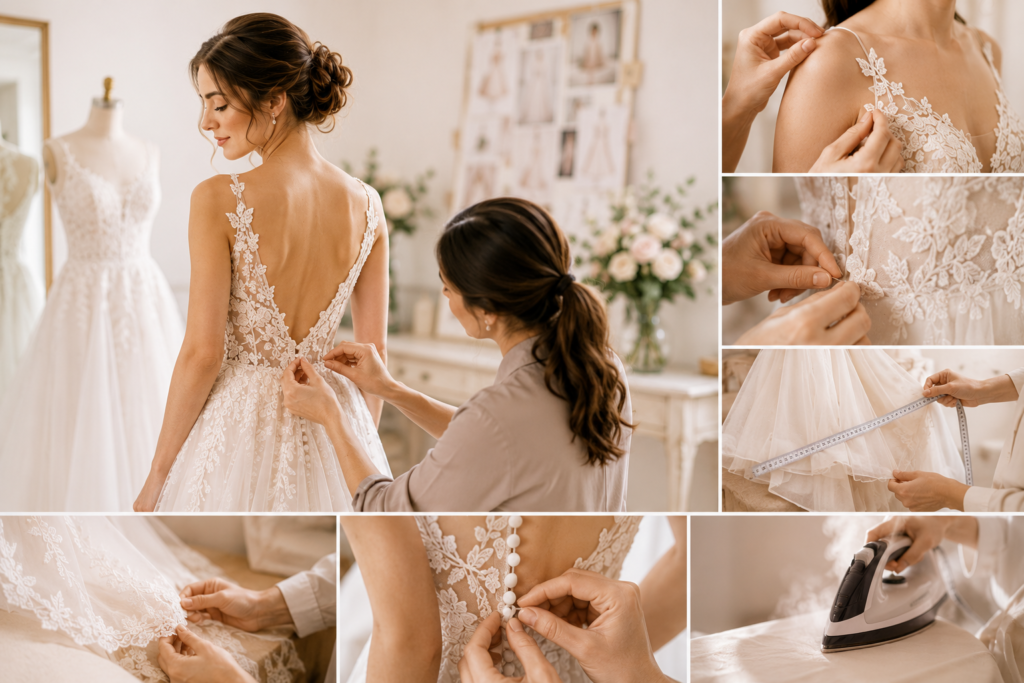
Wedding attire adjustments cover any structural or aesthetic change made after the initial purchase. Standard services include hem shortening, bodice tightening, strap lengthening, and bustle creation. Complex requests like adding sleeves, changing necklines, or rebuilding a train fall outside basic packages and require custom wedding alterations pricing.
Dress Hem Alteration
A dress hem alteration shortens the gown length to match your wedding shoe height. Floor-length ballgowns with multiple layers of tulle require 2 to 4 hours of labor per layer. Gowns with horsehair braid edging cost 30% more to hem because the stiffener must be removed, trimmed, and re-sewn by hand.
Bustle Wedding Dress Addition
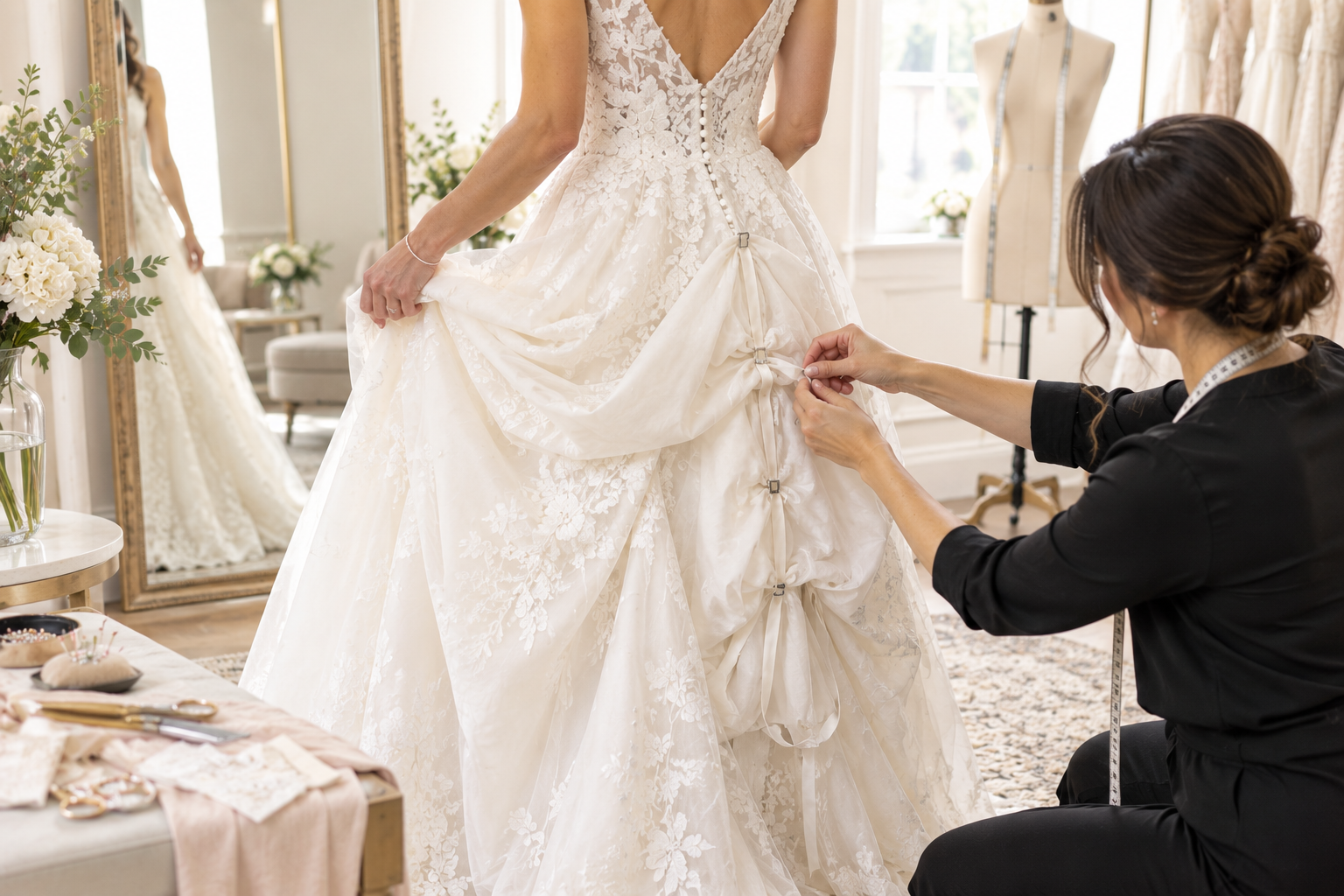
A bustle wedding dress addition creates interior hooks, buttons, or ribbons that lift the train for dancing. The French bustle loops fabric underneath the gown, while the American bustle drapes it over the exterior. Most gowns need 3 to 7 attachment points, which takes 1.5 to 3 hours of sewing time.
Wedding Dress Resizing
Wedding dress resizing changes the gown circumference by one or more sizes. Taking in a bodice requires removing boning channels and repositioning them on a smaller seam allowance. Letting out a gown depends on available seam fabric; most designer dresses include only 0.5 to 1 inch of extra material per seam. A dress resizing expert evaluates seam allowances and fabric grain before agreeing to enlarge a gown. Alterations for lace dress constructions require the seamstress to detach the overlay, alter the foundation, and re-apply the lace motif by hand.
How Long Do Wedding Alterations Take?
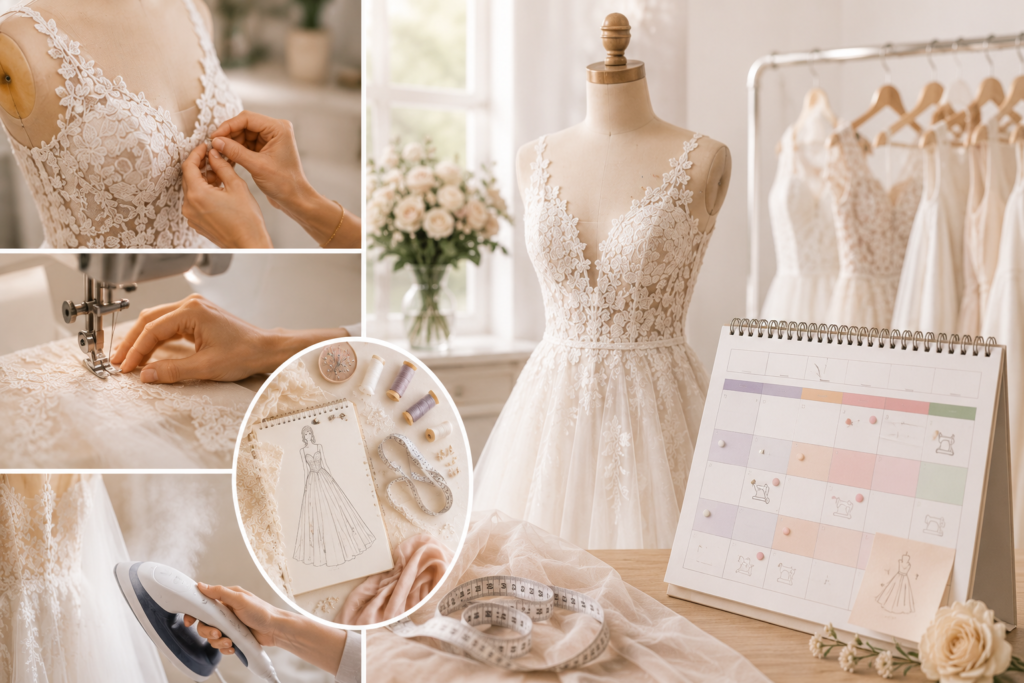
Standard wedding dress alterations require 6 to 8 weeks from first fitting to final pickup. Brides ordering gowns that arrive 3 months before the wedding date have adequate buffer time for 2 to 3 fittings. Alterations take time because each fitting requires the seamstress to pin adjustments, remove the gown, sew changes, and press the fabric before the next appointment.
Standard Alteration Turnaround Time
The standard alteration turnaround time spans 4 to 6 weeks for basic hemming and bodice work. Gowns with extensive beadwork or lace overlay need 8 to 10 weeks because hand-sewn embellishments slow the process. Brides who book their bridal fitting timeline during peak wedding season (May through October) face longer waits due to seamstress backlogs. Each bridal fitting session lasts 30 to 60 minutes and requires the bride to wear her wedding undergarments and shoes.
Rush Wedding Alterations
Rush wedding alterations compress the standard schedule into 1 to 2 weeks. Bridal salons charge 50% to 100% premium fees for rush service because seamstresses work overtime hours. Rush alterations wedding dress orders also limit the number of fitting sessions to 1 or 2, which reduces precision.
A sample gown with a polyester satin shell required 3 fitting sessions to achieve the correct bodice drape, while an identical silhouette in silk charmeuse needed 5 sessions due to fabric slippage during pinning. The silk gown incurred $180 more in labor costs because the seamstress had to re-pin the bodice twice before sewing. Fabric choice directly dictates both timeline and final invoice.
When to Start Wedding Dress Alterations
Brides must start wedding dress alterations 8 to 12 weeks before the wedding date. Gowns ordered from bridal salons typically arrive 4 to 6 months prior, which leaves a comfortable window for scheduling. Dress alterations before wedding day events like engagement photos or rehearsal dinners require even earlier start dates if the bride plans to wear the gown.
Bridal Fitting Timeline
The ideal bridal fitting timeline includes an initial consultation at week 12, a mid-point fitting at week 8, and a final pickup at week 2. Brides losing weight intentionally schedule their first fitting closer to week 8 to avoid multiple resize charges. Weight fluctuations of more than 10 pounds between the first and final fitting trigger additional fees at 85% of bridal salons.
According to The Knot’s 2024 Real Weddings Study, brides who scheduled their first fitting less than 6 weeks before the wedding paid an average of $340 more in rush fees than those who booked 10 weeks out. Early planning eliminates both financial penalties and last-minute stress. Formal wear tailoring follows a stricter schedule than everyday garment adjustments because wedding dates are immovable deadlines.
Why Are Wedding Alterations So Expensive?
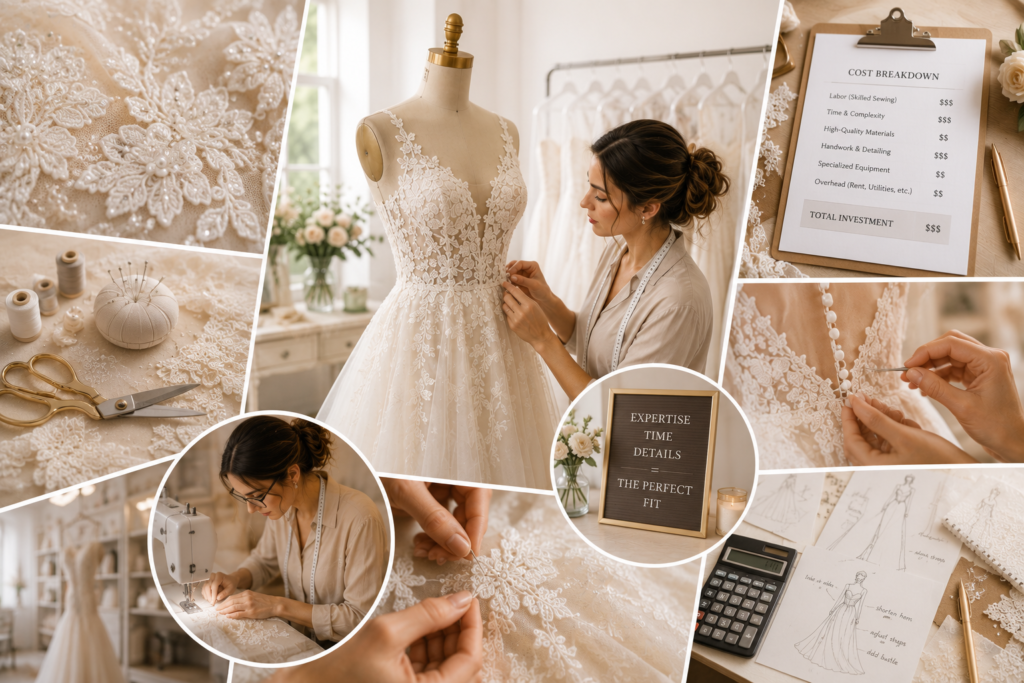
Myth: Wedding salons inflate alteration prices simply because the word “wedding” appears on the invoice. Fact: Wedding gowns require specialized couture alteration techniques that differ fundamentally from standard dress tailoring. A seamstress working on a wedding dress handles delicate fabrics, structural boning, and hand-beaded embellishments that everyday tailors rarely encounter.
The labor intensity explains the price gap. Hemming a cotton sundress takes 20 minutes. Hemming a 6-layer tulle ballgown with a horsehair braid edge takes 3 to 4 hours. Beaded bodices require the seamstress to remove crystals with a seam ripper, perform the structural alteration, and re-attach each bead by hand. A gown with a corset back requires the seamstress to hand-cut and finish 12 to 24 eyelets, then thread satin ribbon through each opening. This single service adds $200 to $400 to the final bill. The complexity of the work, not the occasion, drives the price.
Wedding Dress Alterations Cost by City
Wedding dress alterations cost by city varies significantly across the United States. Brides in New York City, Los Angeles, and San Francisco pay 40% to 60% above the national average. Midwestern cities like Columbus, Indianapolis, and Kansas City offer rates 15% to 25% below the national mean.
The alterations cost by state follows cost-of-living patterns but with bridal-market premiums. Texas brides in Dallas and Austin pay $250 to $500 for standard packages. Florida brides in Miami face similar urban premiums, while Tampa and Orlando seamstresses charge closer to national averages. Rural areas with limited gown modification specialists may charge travel fees for in-home fittings.
Brides searching wedding dress alterations near me or wedding dress alterations cost near me will find Google Maps listings dominated by bridal salons in urban centers. The wedding dress alterations price by city data shows that seamstresses within 15 miles of downtown districts charge 25% more than those in suburban strip malls. Wedding dress alterations near rural zip codes often require shipping the gown to a specialist, which adds $50 to $100 in insured postage each way.
Where to Get Your Wedding Dress Altered
Brides have 3 primary options for where to get wedding dress altered. Bridal salons offer in-house seamstresses who know the gown construction but charge the highest rates. Independent seamstress for wedding dress operations provide personalized service at 20% to 40% lower cost. Dry cleaners with tailoring departments handle simple hems but lack expertise for structural bodice work.
A dedicated seamstress for wedding gowns typically trains specifically in bridal construction methods. Bridal salon seamstresses see 200 to 400 gowns annually and develop specialized speed for common alterations. Independent wedding dress tailors offer flexible scheduling but may lack insurance for high-value designer gowns. Bespoke bridal modifications require a seamstress with specific training in couture construction.
The seamstress wedding dress fitting experience differs by venue type. Salon fittings occur in private suites with mirrors and pedestals. Independent seamstresses often work from home studios with limited appointment slots. Both options produce quality results when the professional has 5 or more years of bridal-specific experience.
What to Bring to Your Dress Fitting
Preparation determines the accuracy of every fitting. Brides who arrive unprepared force seamstresses to estimate measurements, which leads to rework and extra charges. The right supplies ensure your wedding dress fitting produces precise pinning on the first attempt.
The wedding gown fitting cost is usually included in the total alteration quote, but 30% of independent seamstresses charge a separate $50 to $100 consultation fee. This fee is often credited toward the final bill if the bride books the service.
Alteration Appointment Tips
Bring 5 specific items to every appointment: your wedding shoes with the final heel height, the exact undergarments you will wear on the wedding day, a strapless bra if the gown requires one, any jewelry that might catch on fabric, and a camera to photograph the pinned hem from multiple angles. Alteration appointment tips from veteran seamstresses emphasize shoe height above all other variables; a 1-inch heel difference changes the entire hemline.
Seamstresses use steel pins during fittings. Brides with metal allergies must request silicone-head pins before the appointment begins. The wedding dress fitting environment requires standing for 30 to 60 minutes, so bring water and avoid scheduling appointments during peak heat hours.
Custom Wedding Alterations and Special Cases
Custom wedding alterations address requests outside standard service menus. Adding sleeves to a strapless gown costs $150 to $400 depending on fabric match. Reconstructing a mother’s gown into a modern silhouette through heirloom dress reconstruction requires 40 to 60 hours of labor and costs $800 to $2,000.
The cost of wedding dress alterations 2026 reflects inflation in fabric prices and skilled labor shortages. Wedding garment restoration for vintage gowns with yellowed lace or torn silk adds $200 to $600 to standard alteration bills. Brides requesting wedding dress alterations before and after photos for social media should confirm the studio policy; some seamstresses prohibit photography of work-in-progress garments.
Bridal gown alterations follow the same pricing structure as wedding dress alterations, though some salons use the term “bridal” to justify a 10% to 15% surcharge. Always request an itemized quote that separates labor by service type.
Frequently Asked Questions About Wedding Dress Alterations
How much do wedding dress alterations cost?
Wedding dress alterations cost $150 to $700 for standard services like hemming, bodice adjustments, and bustle installation. Complex rebuilds involving lace repair or corset conversion push the total to $1,000 or more.
How long do wedding dress alterations take?
Standard wedding dress alterations take 6 to 8 weeks across 2 to 3 fittings. Rush orders compress this timeline to 1 to 2 weeks but cost 50% to 100% more.
How many fittings will I need for my wedding dress?
Most brides need 2 to 3 fittings for standard alterations. Gowns requiring significant resizing or custom structural changes need 4 to 5 fittings.
Can you alter a wedding dress that is too small?
A wedding dress can be altered up by 1 size if the seam allowances contain enough fabric. Letting out a gown more than 1 size requires adding fabric panels, which changes the original design.
How much does a bustle cost?
A bustle costs $75 to $250 depending on the attachment style and number of points. French bustles cost more than American bustles because they require interior ribbon construction.
Conclusion
Wedding dress alterations cost between $150 and $700 for the majority of brides, with complex cases reaching $1,200 or more. Exact pricing depends on fabric type, embellishment density, geographic location, and the seamstress skill level required for your specific gown.
You now possess a complete pricing framework that eliminates surprise charges and positions you to negotiate confidently with any bridal salon or independent tailor. The data shows that brides who book 10 weeks early and arrive at fittings with proper shoes and undergarments save an average of $200 compared to last-minute clients.
Schedule your first fitting this week using the price ranges and timelines outlined above. Bring this guide to your appointment and request an itemized quote before authorizing any work.