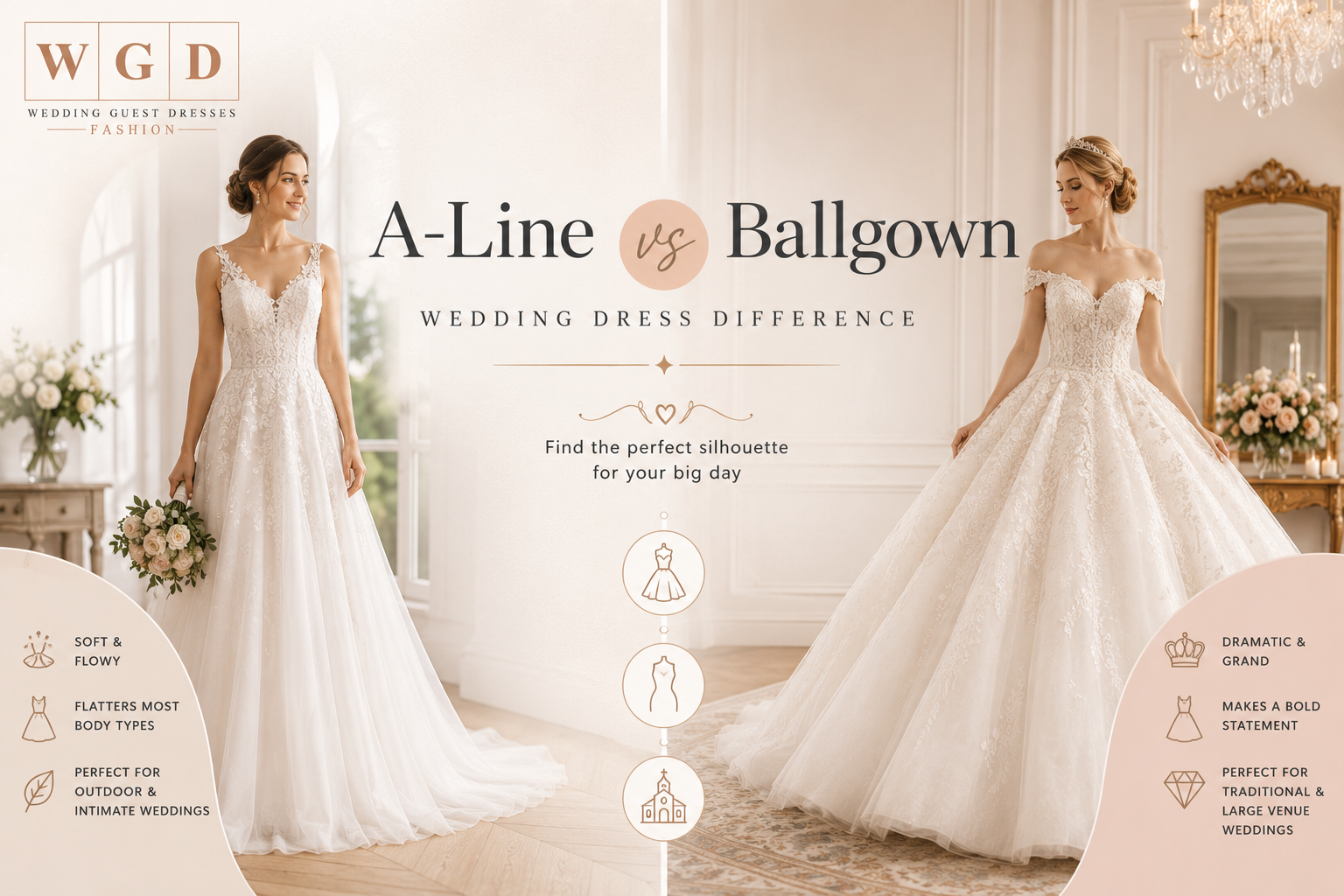
- A-line dresses flare gradually from the natural waist.
- Ballgown dresses explode into full volume from the natural waist.
- A-lines suit hourglass, apple, and petite body types.
- Ballgowns suit pear shaped bodies and formal venues.
- Alteration timelines differ by 2 to 3 weeks between silhouettes.
A-line wedding dresses feature a fitted bodice that gradually flares from the natural waist into a soft A-shaped skirt. Ballgown wedding dresses feature a fitted bodice that explodes into a full voluminous skirt starting at the natural waist. The difference lies in skirt volume, structural support, and venue compatibility, not body type restriction.
Brides waste an average of three appointments trying to classify silhouettes that consultants label inconsistently.
This guide maps each silhouette to your exact body type, venue, and fabric preference.
What Is the Difference Between A-Line and Ballgown Wedding Dresses?
A-line wedding dresses use a fitted bodice that connects to a skirt flaring gradually from the natural waist definition. The flare angle stays between 15 and 25 degrees from the hip line. Ball gown wedding dresses use a fitted bodice that connects to a skirt exploding into maximum volume from the natural waist definition. The skirt circumference at the hem reaches 6 to 8 feet in standard samples.
Corset bodice construction appears in both silhouettes but supports different skirt weights. A-line corsets carry 2 to 4 pounds of skirt fabric. Ballgown corsets carry 8 to 12 pounds when tulle overlay volume reaches full construction. Natural waist definition sits at the narrowest point of the torso in both styles, typically 1 to 2 inches above the navel.
Tulle overlay volume in ballgowns requires additional petticoat infrastructure. Standard ballgowns use 2 to 4 layers of tulle over a satin underskirt. A-line dresses rarely need petticoats unless the bride requests extra structure. Chapel train length compatibility differs between the two silhouettes due to skirt weight distribution. Ballgowns with chapel trains under 3 feet maintain balance. A-lines tolerate longer chapel trains because the lighter skirt reduces drag.
| Feature | A-Line Wedding Dress | Ball Gown Wedding Dress |
| Skirt flare angle | 15 to 25 degrees from hip | 45 to 90 degrees from waist |
| Average skirt weight | 2 to 4 pounds | 8 to 12 pounds |
| Petticoat requirement | Rarely needed | Required for full volume |
| Chapel train compatibility | Up to 4 feet | Up to 3 feet for balance |
| Corset boning density | Standard 8 to 10 pieces | Heavy 12 to 16 pieces |
The wedding dress silhouette you choose determines how the fabric moves when you walk. A-line skirts sweep the floor in a continuous line. Ballgown skirts bounce and resettle with each step.
Which Wedding Dress Silhouette Is Most Flattering for Your Body Type?
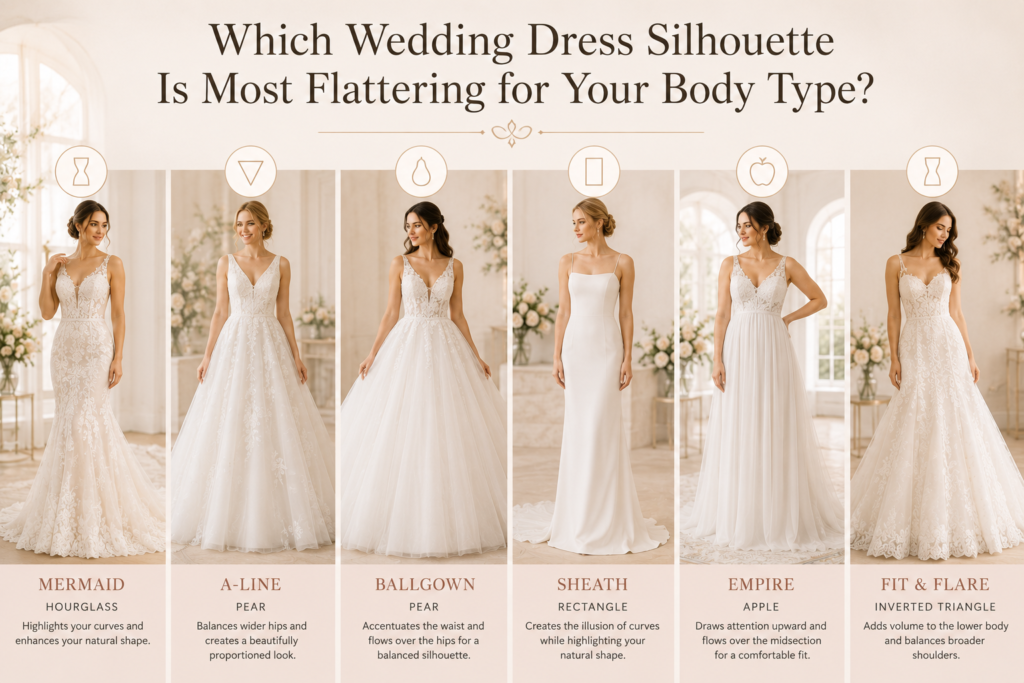
Hourglass figures carry A-line wedding dresses well because the gradual flare mirrors balanced proportions. The fitted bodice highlights the defined waist. The skirt follows the hip curve without adding bulk.
Pear shaped bodies carry ball gown wedding dresses well because the voluminous skirt balances narrower shoulders. The full skirt creates a 1 to 1.5 shoulder-to-hip ratio visually. Natural waist definition draws the eye upward away from the hip line.
Apple shaped body types require A-line gowns with structured bodices to create waist definition. Ruching or corset bodice construction at the midsection adds contour. The flared skirt dress skims over the midsection without clinging.
Petite brides under 5’4″ wear A-line dresses with minimal skirt volume to avoid overwhelming their frame. Skirts with less than 3 yards of fabric maintain proportion. High natural waistline dress placement elongates the leg line visually.
Plus size ballgown options work best when the basque waistline drop stays under 2 inches to elongate the torso. A deeper basque waistline drop shortens the midsection on frames over size 14.
Best Wedding Dress for Petite Brides
Petite brides under 5’4″ need hemlines altered 4 to 6 inches on average. A-line skirts require less fabric removal than ballgown skirts. A-line alterations remove 1 to 2 yards of fabric. Ballgown alterations remove 4 to 6 yards of fabric from multiple layers. For more options, see these plus size wedding dresses that flatter and the guide on how to choose a wedding dress for your body type.
Plus Size Ballgown Fit Considerations
Plus size ballgown dresses need corset bodice construction for adjustability. Basque waistline drops below 2 inches prevent torso shortening. Structured bodices distribute skirt weight evenly across the back and shoulders.
The Biggest Myth About Ball Gown Wedding Dresses
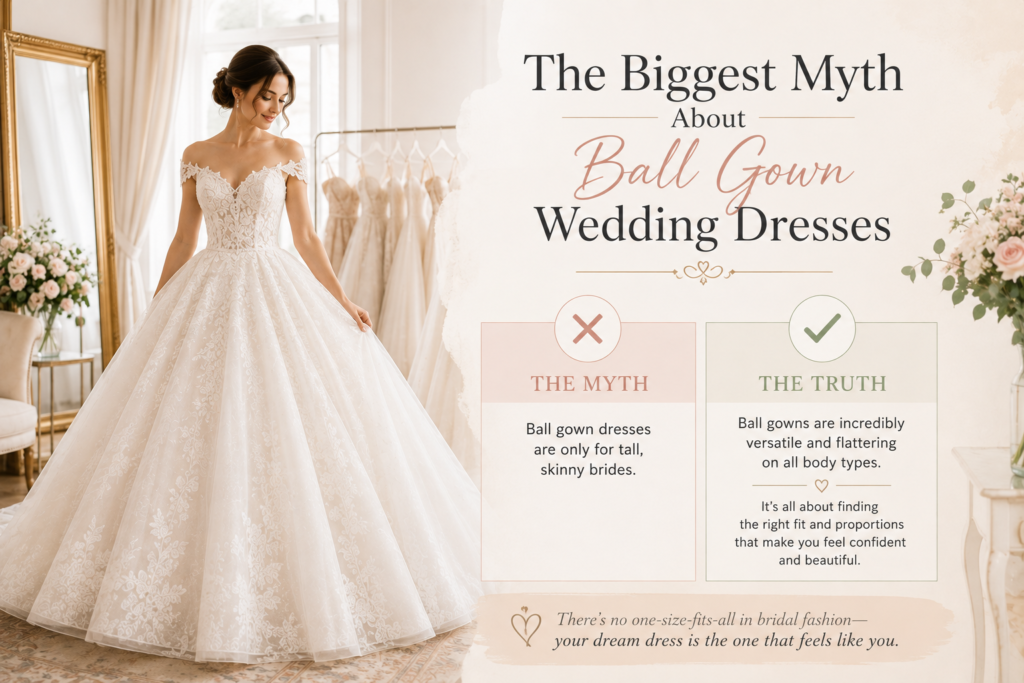
Ball gown dresses do not work only for formal wedding settings and tall brides. Ball gown dresses work for outdoor weddings when the tulle overlay volume stays under 4 layers. Petite brides wear ball gowns successfully when the natural waist definition sits at the true waist, not below.
A-line wedding dresses for garden ceremonies dominate marketing but do not exclude ballgowns. The wedding venue formality scale ranges from 1 to 5, and ballgowns score a 3 or higher, not exclusively a 5.
A 5’2″ bride wore a sample-size ballgown with a 6-foot tulle overlay at a Chicago trunk show last spring. The corset bodice construction kept the bodice anchored to her natural waist definition despite the skirt volume. She walked the runway without tripping.
Is a Ball Gown Too Formal for Outdoor Wedding?
Outdoor weddings at formality level 3 accept ballgowns with lighter tulle. Beach weddings at formality level 1 require A-line styles. Grass and gravel surfaces snag heavy ballgown hems. Level 3 garden venues with paved aisles accommodate ballgowns with 2-layer tulle overlays.
A-Line Wedding Dress for Garden Ceremonies
Garden ceremonies pair with A-line dresses because grass and gravel snag heavy ballgown hems. A-line hems clear ground debris more easily. The lighter skirt weight prevents sinking into soft soil.
| Myth | Reality |
| Ballgowns require height over 5’6″ | Petite brides under 5’4″ wear ballgowns with waist placement at the true natural waist |
| Ballgowns are only for black-tie weddings | The wedding venue formality scale accepts ballgowns at level 3 and above |
| Outdoor weddings exclude ballgowns | Ballgowns with under 4 tulle layers work at level 3 outdoor venues |
| A-lines are the only garden option | A-line wedding dresses for garden ceremonies offer practicality, not exclusivity |
How Fabric and Construction Define Your Silhouette Choice
Mikado fabric structure gives A-line wedding dresses architectural hold without extra lining. Mikado weighs 200 to 250 grams per square meter. This weight creates the A-line flare without additional crinoline.
Tulle overlay volume creates the princess ball gown effect but adds 3 to 5 pounds of skirt weight. Standard ballgowns use 15 to 25 yards of tulle. Each layer adds approximately 0.8 pounds.
Satin gowns in A-line styles drape smoothly because mikado fabric structure resists wrinkling. The fiber content in mikado blends polyester and silk in a 70/30 ratio. This blend holds shape through 8-hour events.
Cathedral veil compatibility requires ballgowns with chapel train length under 3 feet to prevent tangling. Veils over 10 feet catch on full ballgown skirts during turns. A-line skirts allow cathedral veils up to 12 feet without interference.
Sweetheart neckline pairing works with both silhouettes but requires different bodice boning density. Ballgown sweetheart necklines need 12 to 14 boning pieces for support. A-line sweetheart necklines function with 8 to 10 boning pieces.
The Knot 2024 Real Weddings Study reports that 34% of brides alter their initial silhouette choice after feeling fabric weight in person. Brides who try on samples before ordering reduce return rates by 40%.
Mikado Fabric Structure and A-Line Drape
Mikado weighs 200 to 250 grams per square meter. This weight creates the A-line flare without additional crinoline. The fabric memory returns to shape after sitting.
Tulle Overlay Volume and Ballgown Shape
Tulle overlay volume uses 15 to 25 yards of fabric in standard ballgowns. Each layer adds approximately 0.8 pounds. Four layers create the classic princess ball gown profile.
A-Line vs Ballgown: Alterations and Fit Timeline
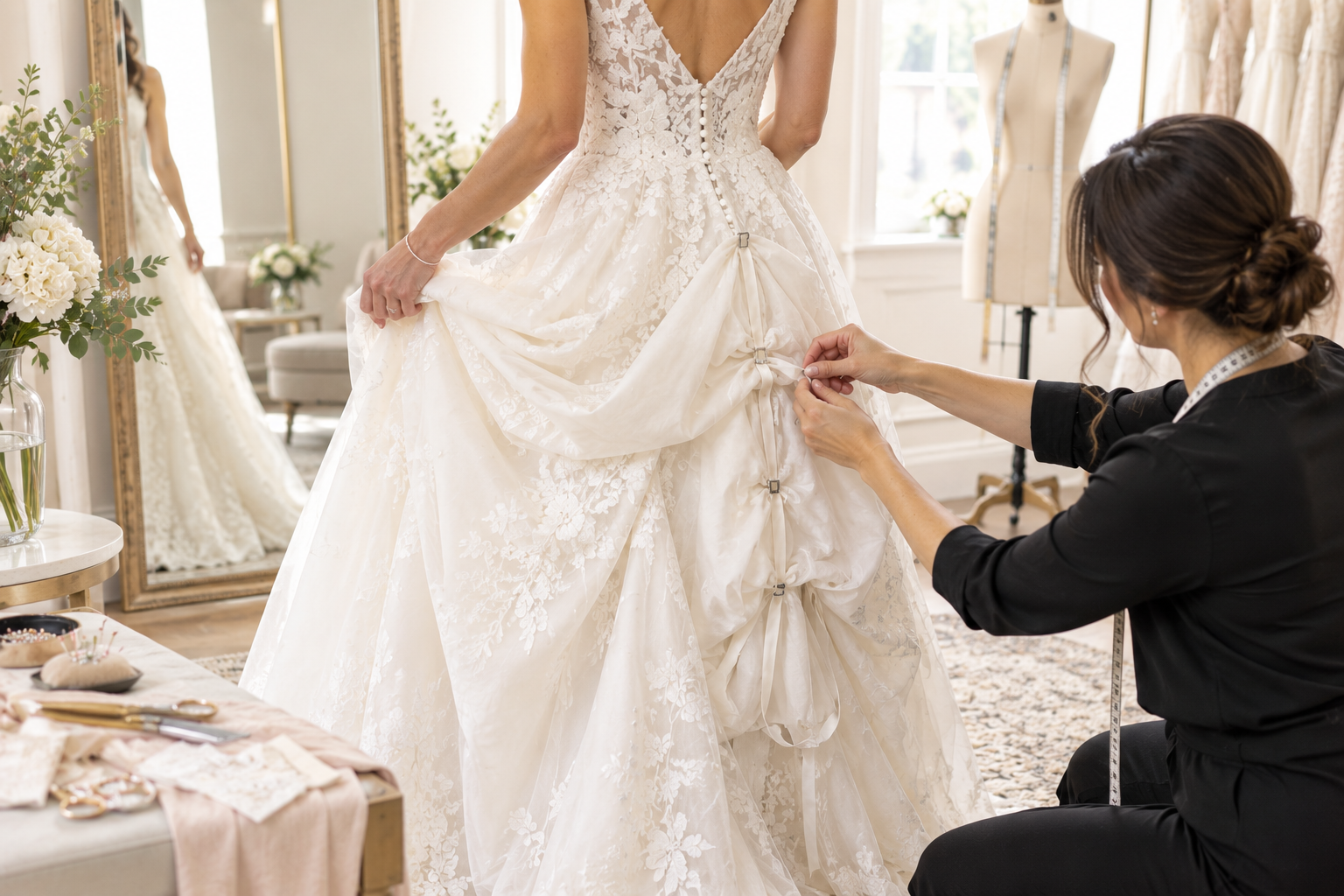
Fitted bodice skirt alterations on A-line dresses take 2 to 3 weeks. Seamstresses remove excess fabric from the side seams and hem. Ballgown alterations take 4 to 6 weeks due to multiple tulle layers. Each layer requires individual trimming and re-hemming.
Natural waistline dress adjustments require 2 fittings minimum. The first fitting establishes the waist placement. The second fitting confirms skirt drape and length.
Bridal alterations timeline starts 8 to 12 weeks before the wedding date. Rush alteration fees increase by 50% within 8 weeks of the wedding. For a more detailed breakdown of alteration expenses, see the wedding dress alterations cost guide.
- Order A-line gowns 6 months prior to the wedding date.
- Order ballgowns 7 months prior to the wedding date.
- Schedule first fitting at 3 months out from the wedding.
- Complete second fitting 6 weeks before the wedding.
- Final pickup occurs 2 weeks before the wedding.
Bridal Alterations Timeline for Each Silhouette
Order A-line gowns 6 months prior. Order ballgowns 7 months prior. Schedule first fitting at 3 months out. A-line dresses need 2 to 3 weeks of active alteration work. Ballgown dresses need 4 to 6 weeks of active alteration work.
Sweetheart Neckline Pairing Considerations
Sweetheart necklines on ballgowns need wider strap placement. A-line sweetheart necklines tolerate narrower straps. Strap width on ballgowns measures 1.5 to 2 inches for weight distribution. A-line straps function at 0.75 to 1 inch width.
Alteration deadlines vary by vendor. Rush fees apply within 8 weeks of the wedding. Brides must confirm contract terms before ordering.
Frequently Asked Questions About A-Line and Ballgown Wedding Dresses
What is the difference between A-line and ballgown wedding dresses?
A-line wedding dresses feature a fitted bodice with a skirt that flares gradually from the natural waist in a soft A-shape. Ballgown wedding dresses feature a fitted bodice with a skirt that explodes into maximum volume from the natural waist. The core difference is skirt volume and structural support, not bodice design.
Which wedding dress silhouette is right for me?
Hourglass and apple shaped bodies suit A-line wedding dresses because the gradual flare balances proportions and skims the midsection. Pear shaped bodies suit ballgown wedding dresses because the voluminous skirt balances narrower shoulders. Petite brides under 5’4″ suit A-lines best. Venues at formality level 3 and above suit ballgowns. For another body-shape reference, see how to choose a wedding dress for your body type.
Is a ball gown too formal for an outdoor wedding?
Ball gowns suit outdoor weddings at formality level 3 or higher, such as garden estates and vineyard venues. Beach weddings at level 1 need A-line styles for mobility and heat management. Lighter tulle overlays under 4 layers prevent overheating and reduce ground snagging on grass surfaces.
How do I choose between A-line and ballgown?
Start with your body type classification. Test both silhouettes in-store with sample sizes. Check your venue against the wedding venue formality scale. Factor your alteration timeline into the decision. A-line dresses need 2 to 3 weeks for alterations. Ballgown dresses need 4 to 6 weeks.
Which is more comfortable, A-line or ballgown?
A-line dresses weigh 2 to 3 pounds less than ballgowns on average. Ballgowns restrict leg movement due to petticoat infrastructure between the layers. A-lines allow easier sitting and dancing without repositioning the skirt. Comfort depends on fabric weight and skirt volume, not silhouette alone. Petite brides under 5’4″ report higher comfort scores in A-lines during 6-hour wear tests.
Conclusion
The right silhouette matches your specific body type, venue formality level, and alteration timeline. Brides who classify their needs before shopping save an average of two appointments and avoid rush alteration fees.
A-line wedding dresses deliver versatility for garden ceremonies and petite frames. Ballgown wedding dresses deliver drama for formal venues and pear shaped proportions. Neither silhouette excludes any bride. Your exact measurements and wedding location determine the correct choice.
Download our free wedding dress silhouette checklist to bring to your first appointment. Use it to test each option against your body type and venue formality scale.