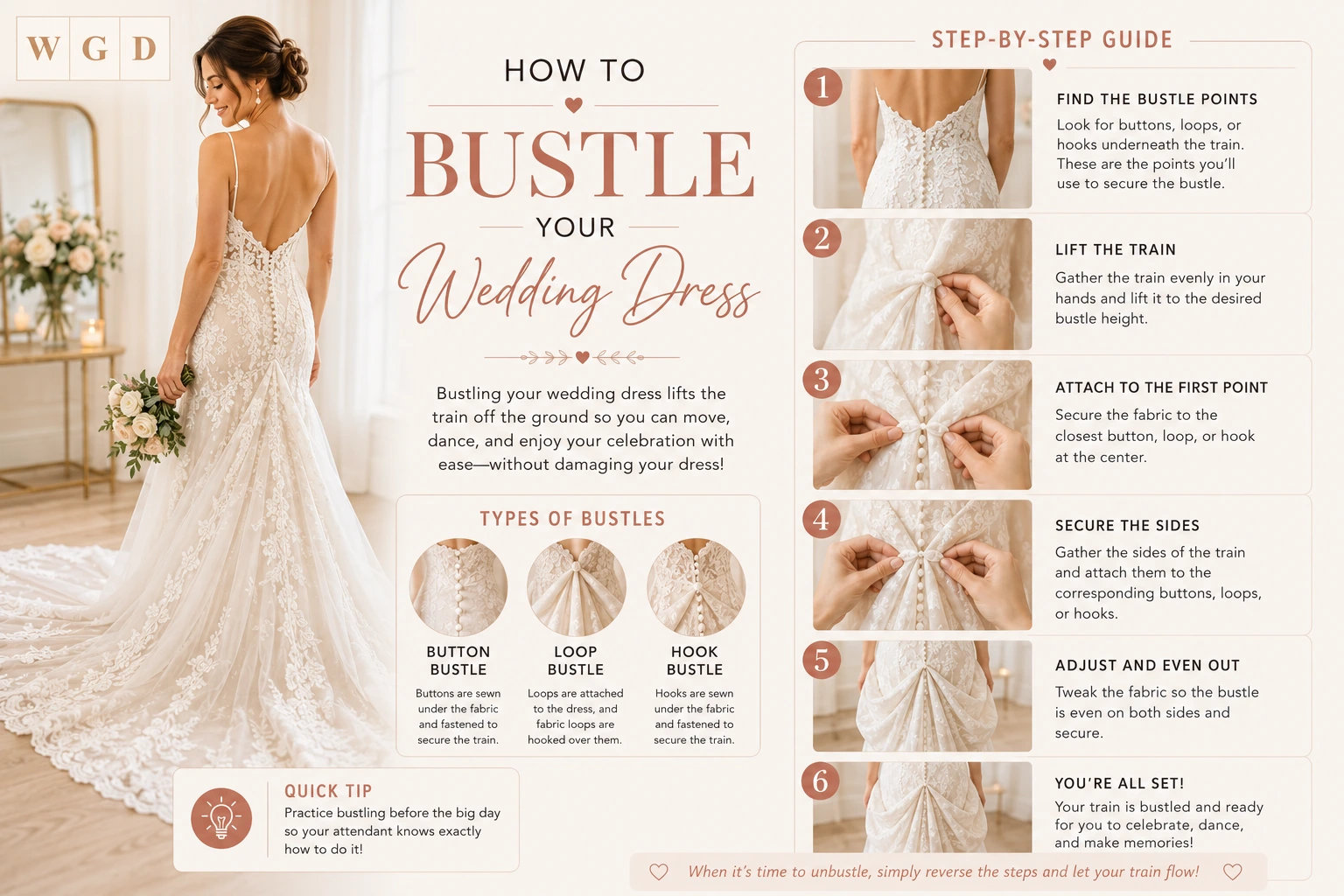
- American bustle: Hooks the train over the skirt back
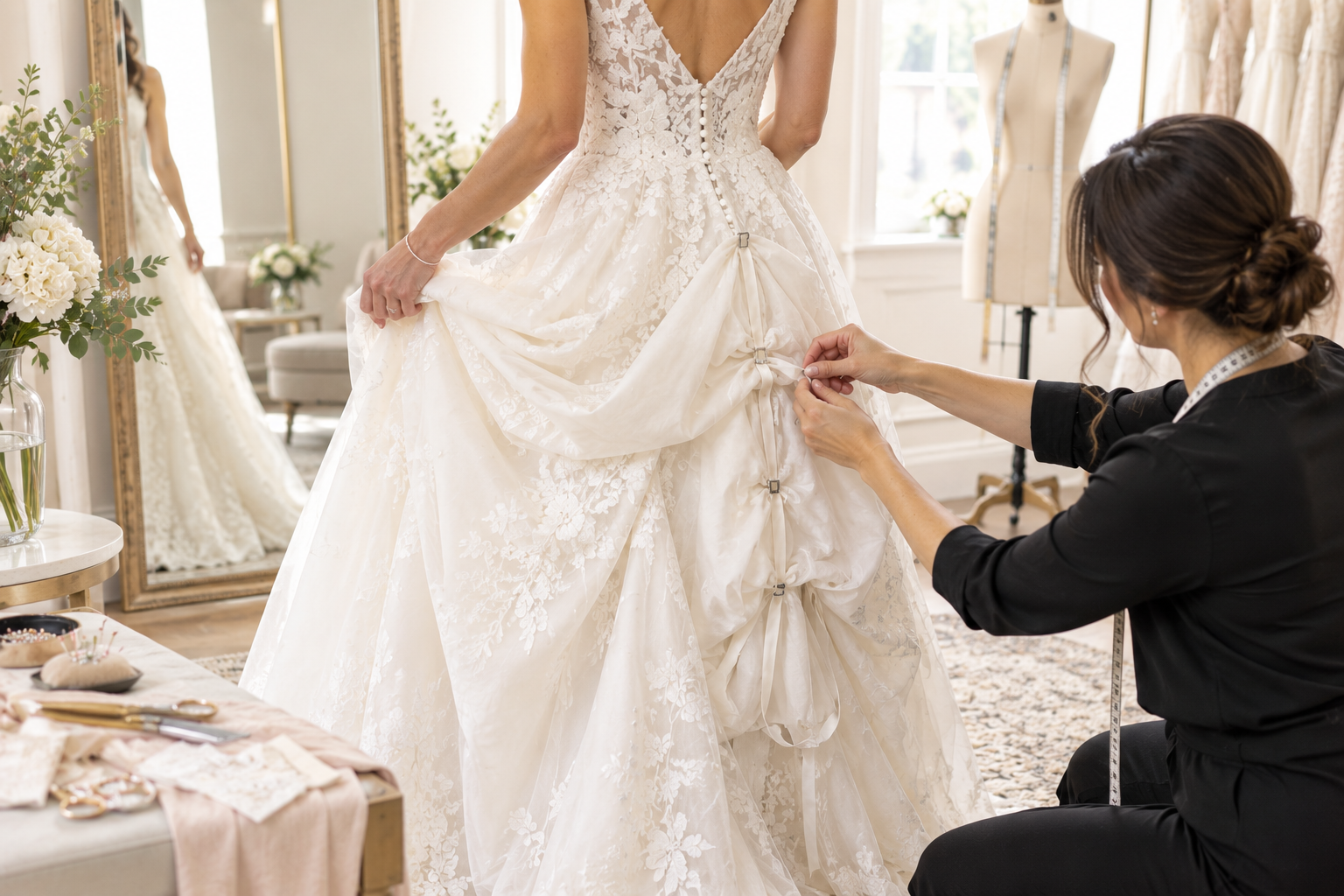
- French bustle: Ties ribbons beneath the skirt
- Ballroom bustle: Distributes fabric across the entire hemline
- Cost: $50 to $200 depending on style
- Timing: Immediately after ceremony photos
Brides learning how to bustle a wedding dress encounter three primary styles. American, French, and ballroom bustles each lift the train off the ground using hidden hooks, ribbons, or buttons sewn into the gown’s lining. Each style creates a distinct reception silhouette through different attachment point configurations.
Brides without a bustle face tripped trains, torn hemlines, and restricted movement during the first dance. Unbustled gowns drag across reception floors and collect dirt within 30 minutes of entering the venue.
This guide provides step-by-step instructions for all three styles, average costs, and a 5-minute practice routine that prevents reception-day panic. You will know exactly which bustle matches your train length and how to instruct your maid of honor before the wedding day arrives.
What Is a Wedding Dress Bustle and Why Do You Need One
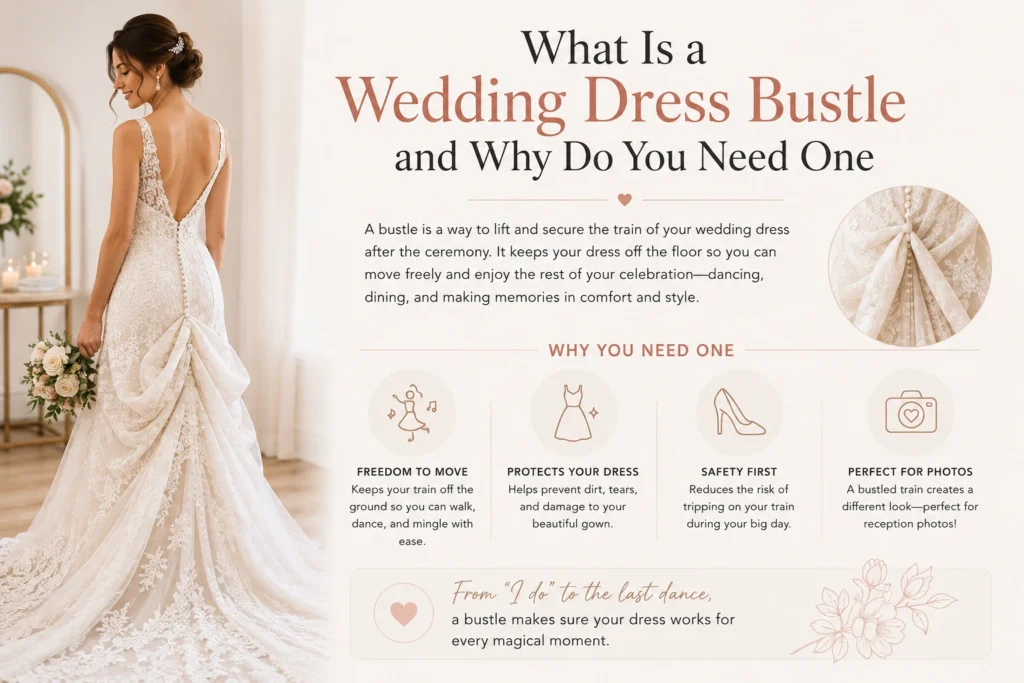
A wedding dress bustle is a system of hooks, ribbons, or buttons sewn into a gown’s interior lining. The mechanism lifts the train off the ground after the ceremony concludes.
Unbustled trains drag across reception floors, collect dirt, and create tripping hazards during the first dance. All three bustle styles achieve the same functional goal with different visual results.
The Association of Bridal Consultants recommends scheduling the final bustle fitting 14 days before the wedding. This timeline allows the seamstress to confirm attachment point placement and gives the bride time to practice the fastening sequence. Bridal gown alterations completed earlier than 14 days risk fit changes from weight fluctuation. Gowns with cathedral trains require this fitting to verify that 2 assistants can secure all attachment points in under 10 minutes.
American Bustle Style
The American bustle style drapes the train over the back of the skirt using exterior hooks and buttons. Attachment points sit at the waist or hip line on the outside of the gown. This configuration creates a single visible fold that showcases the train fabric during the reception.
Brides with short to medium trains choose this method for its 30-second fastening time and minimal hardware. The exposed hook-and-eye closure sits at the center back and remains visible as a decorative element on gowns with covered buttons.
Follow these step by step bustle instructions:
- Locate the hook sewn at the center point of the train’s end.
- Fasten the hook to the button positioned at the center back waist.
- Adjust the fabric drape so the train falls in a single elegant fold that clears the floor by 1 inch.
Gowns with lace overlays require the maid of honor to verify that no delicate threads catch on the hook during fastening. Bustle with hooks delivers a secure hold for dances and lasts the entire reception without adjustment. American bustle wedding dress installations work best on A-line and ballgown silhouettes where the skirt volume hides the folded train bulk.
French Bustle Style
The French bustle style tucks the train beneath the skirt using color-coded ribbons sewn into the interior lining. Two or more ribbon pairs create tiered volume under the gown. This method hides all hardware from view and creates a structured bubble effect at the back hem.
During a final wedding dress fitting, ask your seamstress to demonstrate how the bustle works. Practice fastening and releasing it with someone who will help you on your wedding day.
Follow these instructions for how to tie a French bustle:
- Lift the train and locate the ribbon loop at the hem.
- Tie the loop to the corresponding waist ribbon using a secure double knot.
- Repeat the process for secondary ribbon pairs to achieve even lift.
Brides with medium to long trains prefer this style because the interior volume distributes weight evenly across the hips. Bustle with ribbons requires the maid of honor to memorize the color sequence at the fitting appointment. French bustle wedding dress installations suit mermaid and trumpet gowns where exterior hooks disrupt the fitted silhouette.
Ballroom Bustle Style
The ballroom bustle style creates the illusion of a trainless gown by distributing fabric across the entire skirt. Multiple hemline attachment points hidden throughout the lining secure the train edge to the interior hem. Brides with cathedral trains select this method when they want to hide the train completely for unrestricted dancing.
The finished hemline drape produces a seamless floor-length edge that looks identical to a gown designed without a train. Follow these instructions for how to tie a wedding bustle in ballroom configuration:
- Locate the series of hooks or loops spaced evenly along the train edge.
- Fasten each point to corresponding attachments inside the skirt lining.
- Smooth the fabric to create a seamless floor-length hem that allows unrestricted movement.
Ballroom bustle wedding dress installations require 5 to 15 attachment points for even weight distribution. Gowns with heavy satin or beaded trains need this style to prevent fabric strain at any single point. Brides who want to hide the train for the entire reception choose this option despite its 5-minute fastening time. Two assistants work from opposite sides of the gown to secure all points simultaneously and avoid pulling the skirt off-center.
When to Bustle and Who Helps
The bustle before reception transition happens immediately after the ceremony concludes and post-ceremony photos finish. The maid of honor or a designated bridesmaid performs the bustle in a private room with full lighting. This post-ceremony outfit change requires 10 minutes in a well-lit space to avoid errors because rushing the bustle process causes missed attachment points and fabric tears.
Key timing and helper guidelines include:
- Bustle at fitting: A 5-minute practice session at the final fitting prevents reception-day errors.
- Train length determines helper count: Brides with cathedral-length trains require 2 assistants for ballroom bustles.
- Bridal stylist fitting appointment: Bring the exact undergarments and shoes to the fitting so attachment points align with the final hem position.
- Who helps: The maid of honor learns the bustle type at the fitting and demonstrates the sequence to a backup bridesmaid.
Brides who schedule the practice session reduce their day-of fastening time from 15 minutes to 3 minutes.
Cost to Bustle a Wedding Dress and Common Mistakes
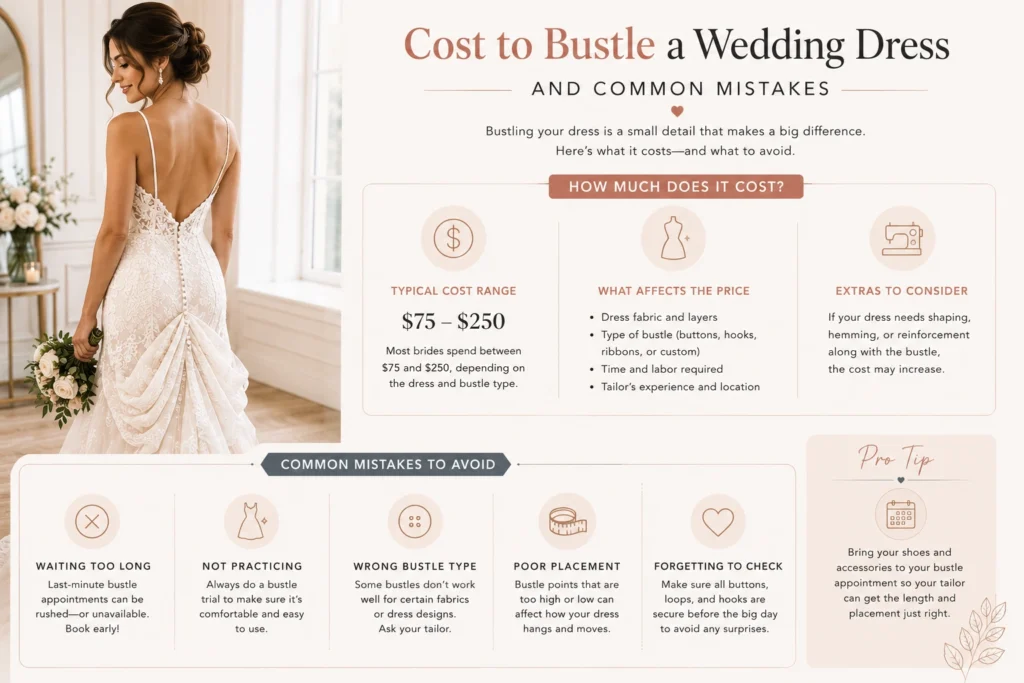
Professional bustle alterations cost $50 to $200 depending on train length and style complexity. The Wedding Report cites a national average of $75 for standard bustle installations. American bustles cost $50 to $75 due to single attachment points. French bustles cost $75 to $150. Ballroom bustles cost $100 to $200 because they require 5 to 15 attachment points for even weight distribution. Safety pins snag delicate fabrics and leave permanent holes in silk and lace. Professional hook-and-eye closures prevent fabric damage.
| Bustle Style | Cost Range | Attachment Points | Best For |
| American | $50 – $75 | 1-3 | Short to medium trains |
| French | $75 – $150 | 2-6 | Medium to long trains |
| Ballroom | $100 – $200 | 5-15 | Cathedral trains, dancing |
Common mistakes brides make include:
- Skipping the final fitting practice, which extends day-of fastening time to 15 minutes.
- Substituting safety pins for professional closures, which destroys silk and tulle.
- Forgetting a bustle repair kit containing spare thread, a needle, and clear fashion tape.
- Choosing a style incompatible with the train weight, which causes attachment points to rip loose during the first dance.
Brides who allocate 10% of their alteration budget to bustle work avoid last-minute seamstress surcharges. A wedding day fashion emergency kit with clear fashion tape repairs minor hook failures in under 2 minutes.
Frequently Asked Questions About How to Bustle a Wedding Dress
What is a bustle on a wedding dress?
A wedding dress bustle is a system of hooks, ribbons, or buttons sewn into a gown’s interior lining. The mechanism lifts the train off the ground after the ceremony concludes. American, French, and ballroom styles create different silhouettes by folding the train over, under, or throughout the skirt.
How do you bustle a wedding dress?
You bustle a gown by fastening the train to the skirt using the attachment points installed during alterations. American style hooks the train to the center back waist. French style ties interior ribbons beneath the skirt. Ballroom style secures multiple points across the hemline to distribute fabric evenly.
How much does it cost to bustle a wedding dress?
Professional bustling costs $50 to $200 depending on style complexity and train length. American bustles cost $50 to $75 with 1 to 3 attachment points. French bustles cost $75 to $150 with 2 to 6 ribbon pairs. Ballroom bustles cost $100 to $200 with 5 to 15 points. The Wedding Report cites a national average of $75 for standard installations.
When should you bustle your dress?
You bustle your dress immediately after the ceremony concludes and post-ceremony photos finish. The maid of honor or a designated bridesmaid performs the task in a private room with full lighting. A 5-minute practice session at the final fitting reduces day-of fastening time to 3 minutes.
Can you bustle any wedding dress?
Most gowns with trains accept a bustle installation. Lightweight chiffon works with American style. Heavy satin cathedral trains need French or ballroom configurations. Sleeveless sheath gowns with no train do not need a bustle because the hemline already clears the floor without assistance.
Conclusion
Your train length, fabric weight, and desired reception silhouette determine the correct bustle style. American bustles suit short to medium trains with exterior hooks. French bustles tuck medium to long trains beneath the skirt with ribbons. Ballroom bustles distribute cathedral train weight across the entire hemline.
A properly fitted bustle transforms your ceremony gown into a reception-ready dress in under 5 minutes. The correct attachment points prevent tripping, protect the hem from floor damage, and allow unrestricted movement during the first dance. Brides who complete the 5-minute practice session at their final fitting enter the reception with confidence.
Your bustle style choice awaits in the comments section. The complete wedding dress alteration timeline linked below shows exact fitting dates.