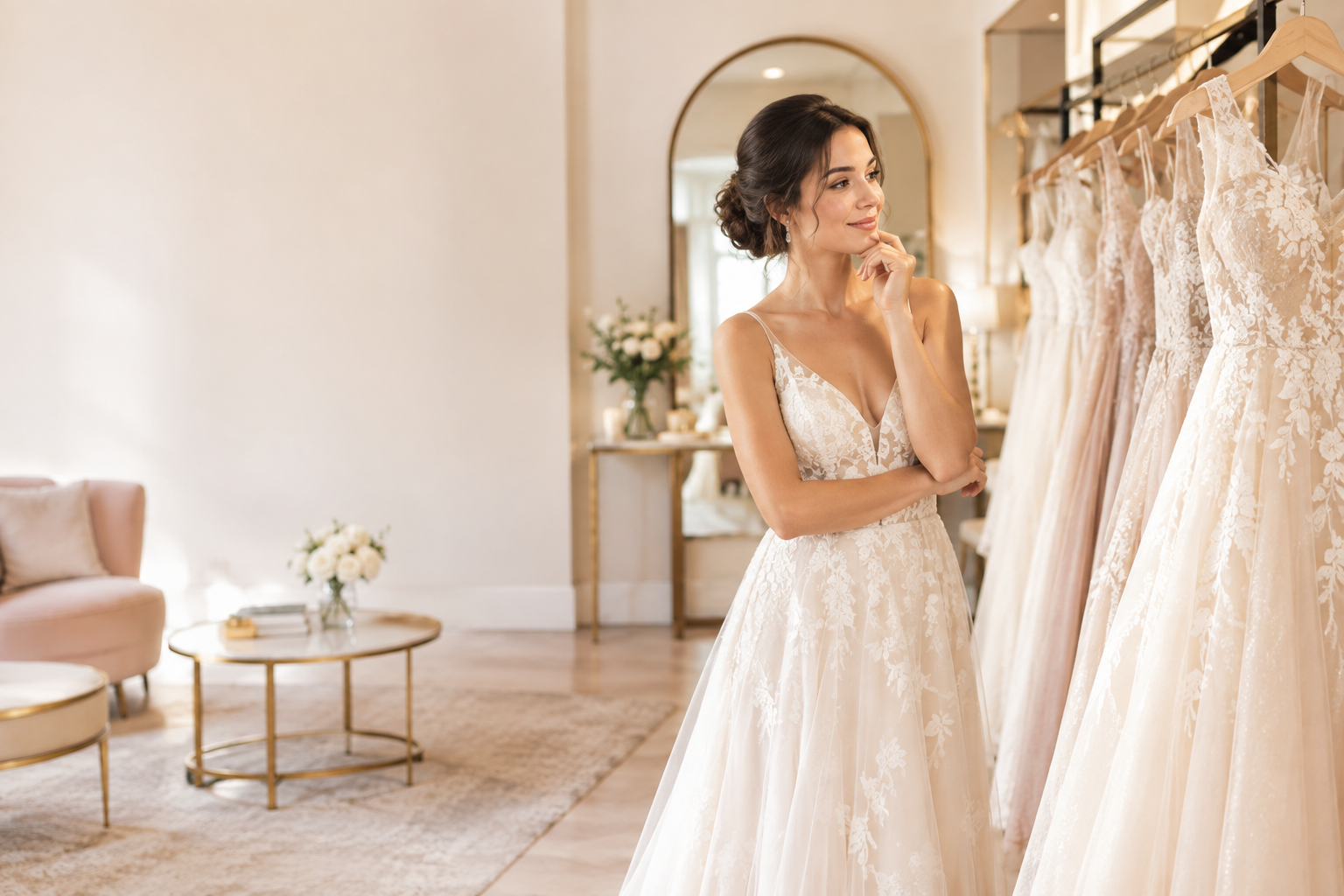
- Limit yourself to 6-12 dresses total across 2-3 appointments to avoid decision fatigue.
- Bring only 1-2 trusted people whose style judgment you know aligns with yours.
- Make your final decision within 48 hours of finding a dress you love.
- Stop browsing online immediately after you find a top contender.
- Focus on how confident you feel, not how perfect the dress looks on a hanger.
Brides learn how to stop overthinking wedding dress shopping by limiting themselves to 6-12 dresses total across 2-3 appointments, bringing only 1-2 trusted people, and making the decision within 48 hours of finding a dress they love. Brides who try more than 15 dresses experience decision fatigue that makes every option feel wrong.
The goal is not to find a perfect dress. The goal is to find a dress that makes you feel confident and beautiful on your wedding day.
You have scrolled through 400 Pinterest pins, saved 27 dresses to your camera roll, and now every gown looks the same. This guide gives you 7 concrete actions to end the spiral, make a clear choice, and stop second-guessing yourself.
Why Brides Overthink Their Dress Choice
Five specific factors trap brides in wedding dress shopping anxiety. Decision fatigue sets in after 7-8 dresses per appointment and causes brides to forget what they tried first. Social media comparison creates an endless loop of “what if there’s something better.”
The “say yes” cultural moment pressures brides to feel a dramatic emotional reaction that most brides do not experience. Family opinions override gut instincts for 1 in 3 brides. The 6-8 month production gap between purchase and delivery gives ample time for wedding dress regret to build.
Nayri, wedding fashion expert at Lovella Bridal and best-selling author of “I’m Getting Married And I Have Nothing To Wear,” identifies six specific reasons brides second-guess: not what they envisioned, not shopping enough, forgetting the feeling, not trusting their gut, outside opinions, and budget-driven choices. Brides overwhelmed by options lose the ability to distinguish between a dress they love and a dress they merely like. Emotional decision-making suffers during decision fatigue wedding shopping. The pressure to say yes to the dress on the spot turns a joyful experience into a high-stakes performance. Read our complete Wedding Dress Shopping Timeline guide.
How to Prepare for Your Appointment
These bridal appointment tips eliminate overthinking before you step into a boutique.
- Create a Pinterest board with 8-12 images max. Delete anything added more than 2 weeks ago.
- Set a firm budget and do not try dresses priced more than 20% above it.
- Research 2-3 boutiques that carry dresses in your price range and body size inclusivity.
- Schedule appointments 2+ hours apart if visiting multiple shops in one day.
- Bring 1-2 people whose style judgment you trust implicitly.
Trying multiple silhouettes early narrows preferences without requiring 20+ total dresses. An A-line gown and a fit-and-flare gown feel completely different on the body, and knowing which silhouette flatters your frame limits your choices immediately. Brides who are unsure where to start can use a wedding dress body type guide to narrow their choices before booking multiple appointments.
An intimate boutique experience reduces overwhelm because smaller shops carry curated collections. Brides with a budget above $3,000 or those requiring plus-size samples above size 24 must call boutiques directly to confirm sample availability, as not all shops carry extended size ranges. The ceremony venue aesthetic shapes appropriateness; beach weddings need lighter fabrics than cathedral ceremonies.
How to Trust Your Gut When Choosing a Dress

Trust your gut by recognizing these 5 internal signals.
- You keep thinking about the dress after you take it off. The gown that lingers in your mind after the appointment is the one worth pursuing.
- You feel confident and beautiful, not merely impressed by hanger appeal. A dress that delivers body confidence on wedding day beats a dress that only photographs well.
- You picture walking aisle in the gown without forcing the image. Brides who can naturally visualize walking down aisle in a dress rarely regret that choice later.
- Your trusted friends react with genuine excitement. Polite nods and hesitant compliments signal doubt; wide eyes and spontaneous smiles signal alignment.
- You stop wanting to look at other dresses. The desire to keep browsing disappears when finding the one that makes you feel like yourself.
The right silhouette from your earlier appointment research plays a major role in this gut feeling. A dress that fits your aesthetic and flatters your frame creates ease that logic cannot override. Read our guide to wedding dress necklines explained if the neckline is one of the details making your decision harder.
The 7 Actions That End Dress Shopping Overthinking
These 7 actions show brides exactly how to decide without spiraling.
1. Set a Hard Cap on Dresses to Try
Limit total dresses to 6-12 across all appointments. Brides who try 15-25+ dresses report higher regret rates. The sweet spot is 5-8 dresses at a first appointment. The production and alteration timeline matters; designers need 4-6 months to complete a gown.
2. Bring Only 1-2 Supportive People
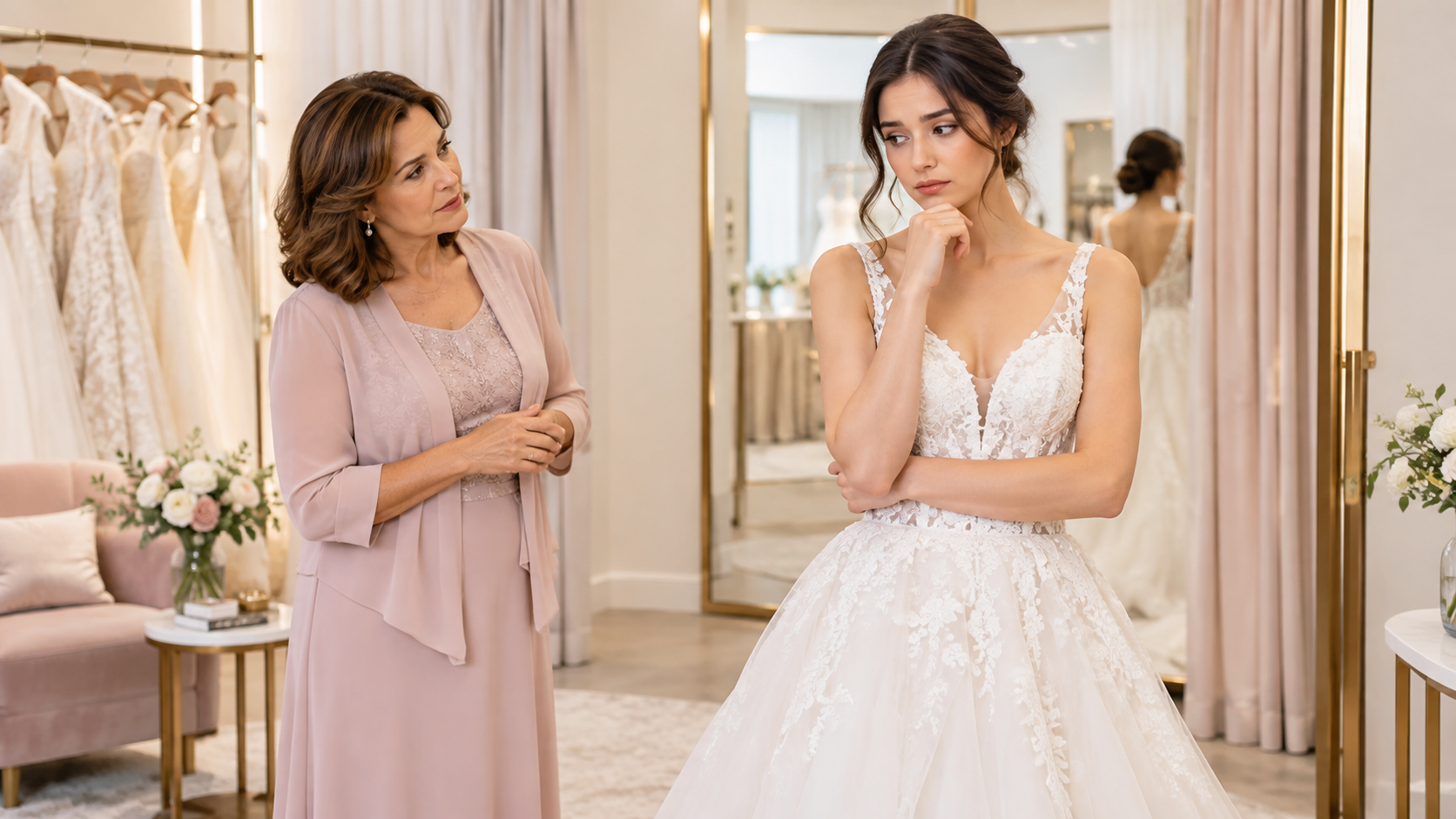
Groups larger than 3 people produce conflicting opinions. Your entourage must know your personal style, not impose their own vision. Bring supportive people who know your everyday style.
3. Stop Looking at Dresses Online After Your First Appointment
Social media fuels the comparison trap. Unfollow wedding dress accounts and delete Pinterest boards after you have narrowed to 2-3 contenders. Brides who stop second guessing their choice report that ending online browsing was the single most effective action they took.
4. Make the Decision Within 48 Hours
Brides who wait more than 1 week to decide experience 3x higher second-guessing rates. Set a calendar deadline before you start shopping. The phrase “just decide already” exists because paralysis costs more than a wrong choice.
5. Focus on Feel, Not Perfection
No dress is 100% perfect. Alterations fix minor fit issues. The dress that makes you feel like yourself beats the dress that looks best on a model.
6. Communicate Honestly with Your Stylist
Tell your consultant your exact budget, timeline, and deal-breakers. A good consultant stops pulling dresses when you are overwhelmed. Honest communication creates an intimate boutique experience where you manage dress expectations together.
7. Take a Break If You Hit Decision Fatigue
Do not book more than 2 appointments in one day. If you feel anxious instead of excited, reschedule remaining appointments for another week. Dress shopping anxiety peaks when brides ignore their own emotional exhaustion.
I watched a bride try on 22 dresses across 4 boutiques in a single Saturday. By the 18th dress, she could not remember what the first one looked like. She left with nothing and called me 3 days later more confused than when she started. The sunk cost fallacy drives brides to keep shopping because they have invested emotional energy, not because the next dress will be better. Emotional decision-making fails when exhaustion replaces excitement. Before you say yes to the dress, review the hidden costs of buying a wedding dress so unexpected expenses do not create additional anxiety.
What to Do If You Already Bought the Dress

Post-purchase wedding dress regret follows a predictable pattern. Peak dress regret occurs 4-6 months before the wedding and usually fades 2-3 months out. Brides who stop second guessing their choice take 3 specific actions to reclaim their confidence.
- Stop looking at other dresses online immediately. The comparison spiral has no endpoint.
- Review photos from your shopping day to remember how you felt in the moment.
- Small modifications (adding a belt, changing neckline, different veil) often resolve regret without buying a new dress.
- If you genuinely never loved the dress, consult your boutique about exchange policies.
Bridal deposits are typically non-refundable. Before purchasing a second dress, calculate the total cost including the lost deposit, rush fees, and new alteration expenses. Most boutiques do not accept returns on ordered gowns. Brides seeking post-purchase peace of mind recognize that the sunk cost fallacy pushes them to chase a new gown rather than fix the one they have. The real path to avoid buyer’s remorse is remembering why you said yes in the first place. If your concern is primarily fit rather than the dress itself, review our wedding dress alterations cost guide before considering a replacement gown.
The Myth of the “Perfect” Wedding Dress
The idea of a single “perfect” dress creates dress shopping anxiety that keeps brides overwhelmed by options. This myth is a marketing construct, not a reality.
| Myth | Reality |
|---|---|
| One perfect dress exists for every bride. | Hundreds of dresses can look beautiful on you; the right one fits your budget, timeline, and venue. |
| You will have a dramatic crying moment when you find it. | Most brides do not cry. Hollywood and social media created that expectation. |
| The dress with the most Instagram likes is the best choice. | The dress that gives you body confidence on wedding day outperforms any viral gown. |
| Guests will study every bead and seam. | Your guests will remember how happy you looked, not the beadwork on your bodice. |
Brides who release the perfection myth free themselves from endless searching. The sunk cost fallacy keeps brides shopping because they have invested emotional energy, not because the next dress will improve on the last.
Frequently Asked Questions About Wedding Dress Shopping
How do I know if my wedding dress is “the one”?
You know a dress is right when you keep thinking about it after taking it off, you feel confident and beautiful in it, and you stop wanting to look at other dresses. Most brides find their dress between the 6th and 12th gown they try.
Why do I keep second-guessing my wedding dress?
Brides second-guess because of social media comparison, outside opinions from family, the 6-8 month wait between purchase and delivery, and decision fatigue from trying too many dresses. The feeling usually peaks 4-6 months before the wedding and fades as the day approaches.
How many wedding dresses should I try on before deciding?
Most brides find their dress after trying 6-12 gowns total. Trying more than 15 dresses increases decision fatigue and regret. Limit yourself to 5-8 dresses at your first appointment.
What if there’s a better dress out there?
Different dresses always exist, but not a better one for you. The dress that fits your budget, timeline, venue, and body is the right dress. Stop looking at other dresses online once you have found one you love.
When should I stop looking at wedding dresses?
Stop looking the moment you find a dress you love that fits your budget and timeline. Set a 48-hour decision window. Continuing to browse after you have a top contender creates unnecessary comparison and regret.
Conclusion
The right wedding dress is not the one that looks perfect on a hanger or wins the most Instagram likes. The right dress is the one that makes you feel like the most confident version of yourself when you picture walking down the aisle.
You will stop overthinking, make a clear decision, and redirect your energy toward the parts of wedding planning that actually matter. Your guests will remember your joy, not your beadwork. Your partner will remember your smile, not your silhouette. The energy you save by ending the dress spiral goes directly into building the memories that last beyond the wedding day.
Subscribe to our weekly wedding planning newsletter for expert dress shopping tips, timeline checklists, and real bride stories delivered straight to your inbox.