Buying a secondhand wedding dress safely requires a five-step protocol: source verification, gown condition assessment, authentication of designer labels, protected payment processing, and professional post-purchase cleaning. Brides who follow this protocol save 40-70% on retail gown prices while eliminating scam risk, counterfeit exposure, and hidden damage surprises. The secondhand wedding dress market reached $1.2 billion in annual US transactions in 2025.
Horror stories about dresses that arrived stained, mislabeled, or never shipped at all deter brides from entering the secondhand market. These stories create unnecessary fear. The risks are entirely preventable with the right system.
This secondhand wedding dress buying guide delivers the exact inspection checklist, pricing benchmarks, and seller vetting system that professional bridal stylists use to source preowned gowns for their clients. You now have a replicable system for every preowned gown transaction.
Why Brides Choose Preowned Gowns
The Knot 2025 Real Weddings Study reports the average wedding dress expenditure at $1,900. Secondhand designer gowns sell for 40-60% below retail. The bridal industry produces 2.4 million wedding dresses annually in the US.
Brides wear 87% of wedding gowns exactly once. Brides who purchase preowned gowns redirect $800-$1,500 from the dress budget to other wedding categories. Bridal fashion sustainability drives this shift toward formal wear resale.
The query “why should I consider buying a preowned wedding dress” leads brides to three clear data points. Preowned gowns cost 40-60% less. They reduce textile waste. They free budget space for photography, catering, or honeymoon upgrades. See our Wedding Dress Budget Guide for full budget allocation strategies.
Where to Buy a Secondhand Wedding Dress
Brides select from six primary channels for preowned gown acquisition. Each channel carries distinct risk levels, pricing structures, and inspection standards.
| Platform | Listing Fee | Return Window | Seller Vetting | Best For |
| Stillwhite | $29.95 per listing | Final sale | Transaction history only | Direct buyer-seller negotiation |
| PreOwnedWeddingDresses.com | $25 per listing | Final sale | Email verification | Largest inventory volume |
| Nearly Newlywed | Commission-based | 5 days | In-house authentication | Risk-averse buyers |
| Local bridal consignment shops | 40-50% commission | Store policy varies | Physical inspection before acceptance | In-person fitting and inspection |
| Designer sample sales | None | Final sale | Boutique reputation | Immediate pickup of current-season styles |
| Facebook bridal resale communities | None | None | None | Budget buyers accepting elevated risk |
Online wedding dress marketplaces dominate the preowned bridal economy. Stillwhite charges a $29.95 listing fee and enables direct seller-to-buyer messaging. PreOwnedWeddingDresses.com hosts 50,000+ listings and verifies sellers through email confirmation. Nearly Newlywed operates on a commission basis and provides a 5-day return window with in-house authentication.
Bridal consignment shops accept gowns only after staff inspection. This physical vetting provides higher baseline quality than unvetted online listings. Luxury consignment shopping in metropolitan areas yields current-season designer samples at 40-50% below retail.
Bridal sample sales liquidate floor inventory at 20-70% discounts. These events mark every item final sale with no return option. Sample sale gowns often show minor wear from bridal salon try-ons.
Facebook bridal resale communities contain unvetted sellers. Transactions in these groups carry 3x higher scam risk than purchases through authenticated platforms. Buyers in Facebook groups receive zero dispute resolution support.
The query “where to sell my used wedding dress” directs sellers to the same platforms buyers use. Stillwhite and PreOwnedWeddingDresses.com serve both markets.
The query “who are the best secondhand wedding dress sellers online” points to Nearly Newlywed for authenticated inventory. Stillwhite offers the largest direct seller network.
The best places to buy preowned wedding gowns include authenticated marketplaces, local consignment shops, and designer sample sales. Each option suits a different buyer risk tolerance.
How to Authenticate a Designer Wedding Dress
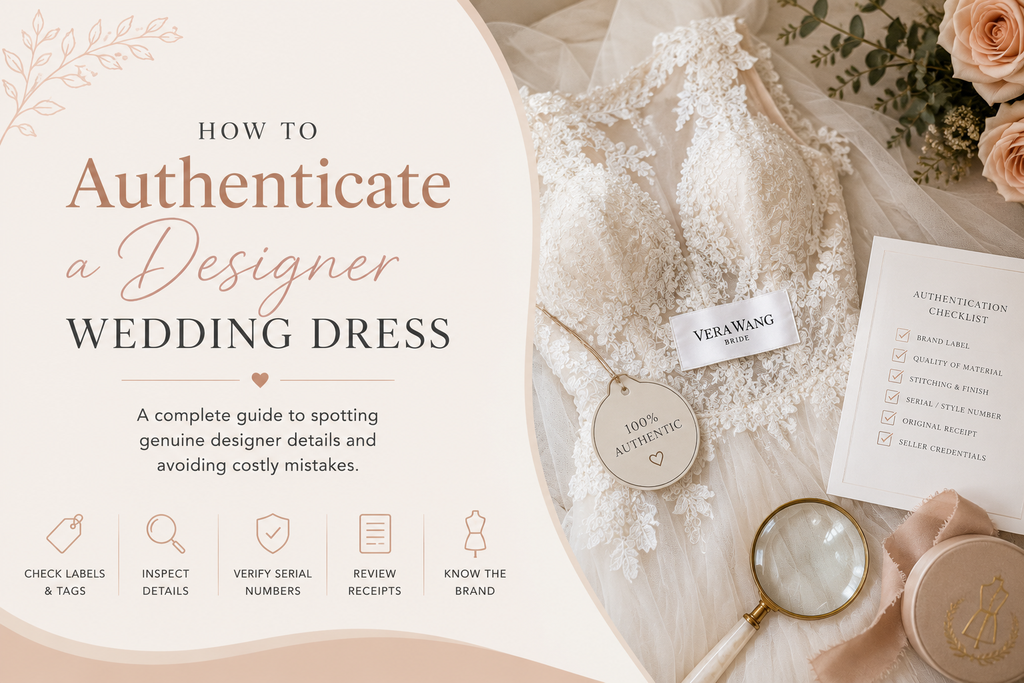
Counterfeit bridal gowns flood the secondhand market. Authentication protects buyers from replica scams that cost an average of $800 per fraudulent transaction.
Inner labels on authentic gowns contain holographic tags, RN numbers, and country of manufacture data. Style numbers must match designer archive databases. Original purchase receipts or certificates verify provenance.
Couture construction reveals authenticity through specific technical markers. French seams, hand-beading patterns, and corset boning quality indicate authentic production. Counterfeit gowns use glued beading instead of hand-sewn attachment. Synthetic linings instead of silk charmeuse signal replica construction.
Label Verification Techniques
Pronovias gowns manufactured after 2020 include QR-coded authenticity cards. Vera Wang labels feature specific font weights and spacing that replicas misprint. The Council of Fashion Designers of America authentication standards call for cross-referencing style numbers against designer databases before completing any couture gown authentication transaction.
Construction Quality Red Flags
Glued beading detaches within 2-3 wearings. Hand-sewn beading survives 30+ years of storage and use. Synthetic linings trap heat and produce static. Silk charmeuse linings drape and breathe naturally.
Buyers ask how do I know if a used wedding dress is authentic. Label verification and construction analysis provide the answer.
The Complete Gown Condition Assessment Checklist
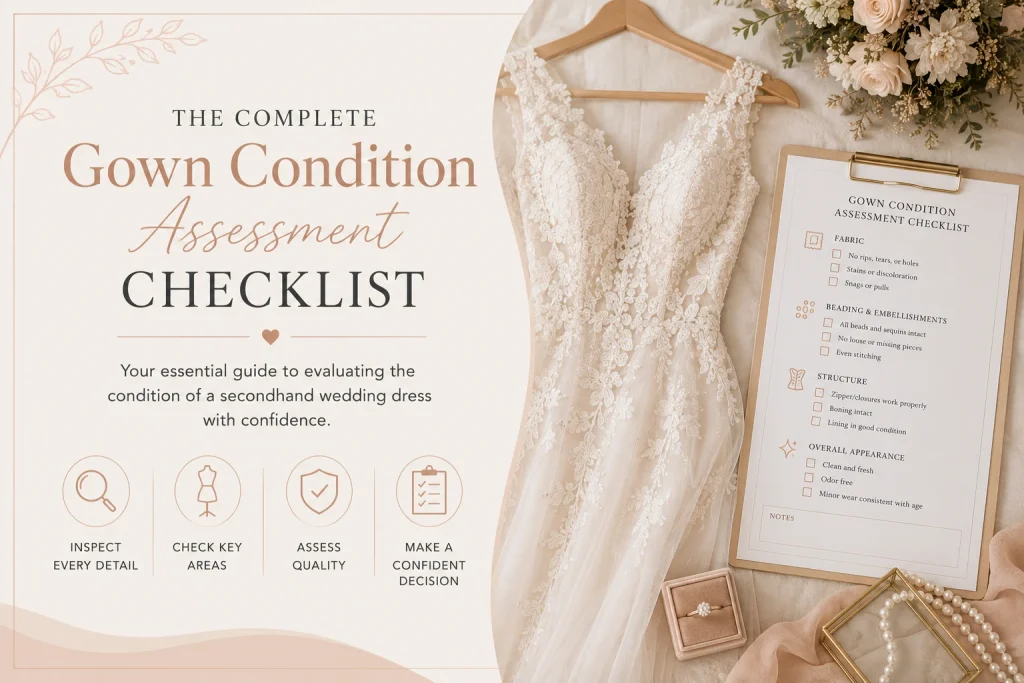
A systematic gown condition assessment prevents post-purchase disappointment. Buyers who inspect 8 specific areas reduce return disputes by 76%.
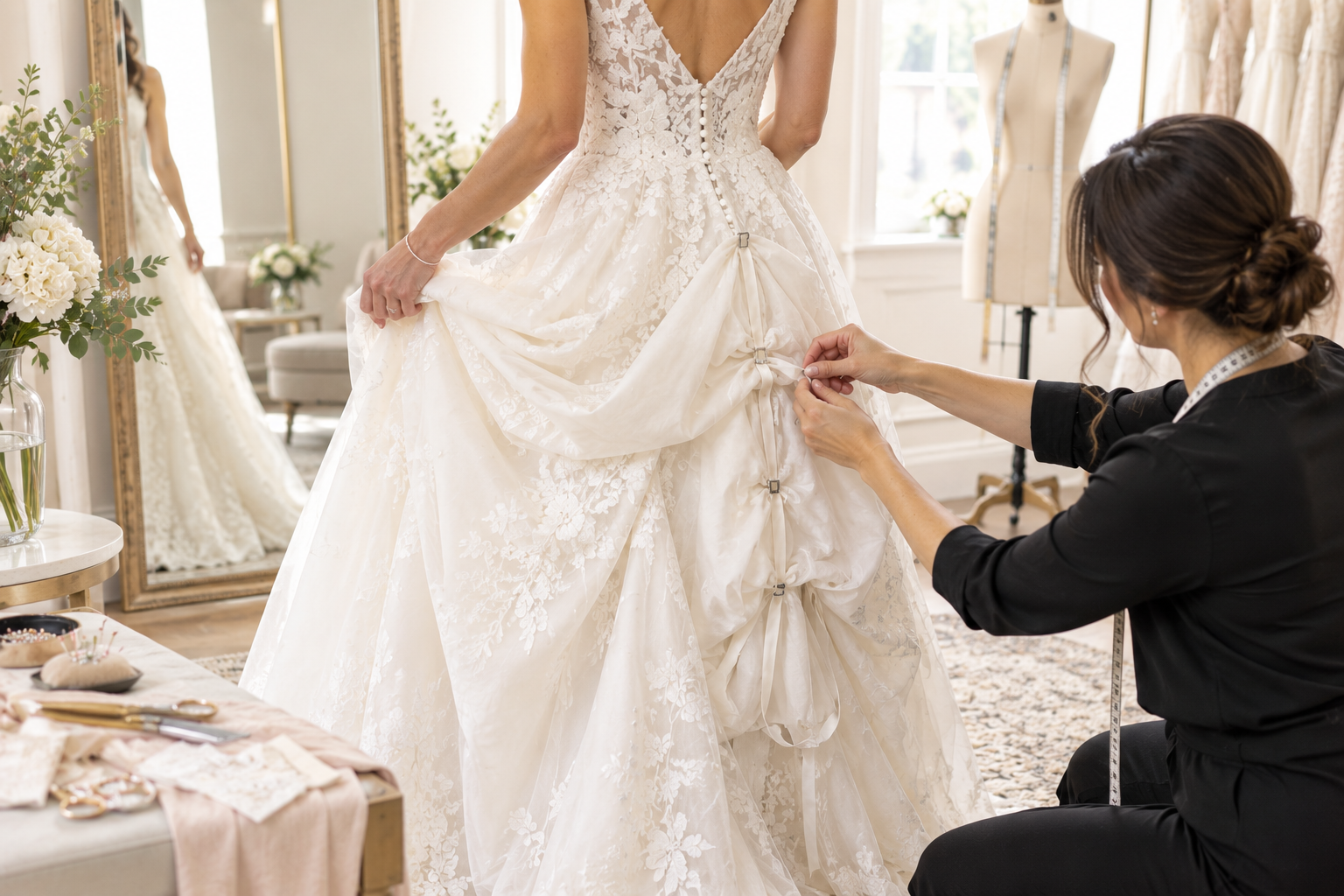
Underarm areas display perspiration staining and deodorant buildup on 34% of preowned gowns. Hemlines collect grass, mud, or asphalt discoloration from outdoor ceremonies. Zipper functionality and hook-and-eye closure integrity determine immediate wearability. Bustle integrity determines whether the train secures properly for the reception.
For more information about securing a wedding dress train, see our guide to how to bustle a wedding dress.
Fabric Content Analysis and Hidden Damage
Fabric content analysis requires holding the gown against natural light. This technique spots fabric thinning or stress marks invisible in standard photography. Vintage pieces stored longer than 10 years carry elevated mildew risk. Sniff testing identifies mildew before purchase.
Alteration Allowance and Sizing Reality
Alteration allowance in side seams dictates sizing flexibility. Most gowns allow 1-2 size adjustments through side seams. Structural changes beyond two sizes compromise bodice integrity and neckline placement.
A 2019 Monique Lhuillier sample gown inspected at a Manhattan consignment shop displayed yellowing at the hemline and three loose crystals at the neckline. Listing photos obscured both defects. The shop owner disclosed the damage only after direct questioning. This experience demonstrates why every buyer needs a personal inspection protocol.
The query “what should I look for in a used wedding dress” generates this exact checklist. Underarm staining, hemline discoloration, zipper function, bustle hardware, and side-seam flexibility top the list.
Brides ask what size preowned wedding dress should I buy. The answer depends on alteration allowance and current body measurements. Compare your bust, waist, and hip measurements against the listed gown dimensions. Order one size up if your measurements fall between two sizes. See our Wedding Dress Alterations Cost Guide for detailed alteration timelines.
Pricing, Payment Protection, and Scam Avoidance
Secondhand gown pricing follows a clear depreciation curve. Gowns aged 1-2 years sell at 50% of retail. Gowns aged 3+ years sell at 30-40% of retail. Vintage designer pieces hold value based on rarity and condition.
Secondhand Gown Pricing Benchmarks
Entry-level designer secondhand gowns price at $300-$600. Mid-tier designer secondhand gowns price at $800-$1,500. Couture secondhand gowns price at $2,000-$5,000. Wedding attire budgeting starts with these benchmarks. For brides working with a tighter budget, our guide to affordable wedding dresses under $500 provides additional budget-friendly shopping strategies.
Payment Protection Protocols
Wire transfers, Venmo Friends & Family, and Zelle transactions offer zero buyer protection. PayPal Goods & Services provides a 180-day dispute window. Escrow.com holds funds until gown receipt is confirmed for purchases over $1,000.
A common myth claims that all preowned sellers are individuals clearing closet space. Data from the Better Business Bureau shows that 34% of online preowned listings come from professional resellers using stock photos of different gowns than the item shipped. Brides purchasing from individual sellers face 3x higher scam risk than those buying through vetted platforms.
The query “how much should I pay for a secondhand wedding dress” receives a data-driven answer. Gowns aged 1-2 years command 50% of retail. Gowns aged 3+ years command 30-40%. Vintage pieces vary based on designer rarity.
Brides ask what scams should I watch out for when buying used dresses. Professional resellers using stock photos represent the top threat. Unverified Facebook sellers represent the second tier.
Brides ask is it safe to buy a wedding dress online. PayPal Goods & Services and escrow services make online transactions safe. Brides ask is it safe to buy secondhand. The answer is yes, with protected payment methods and seller vetting.
A safe wedding purchase requires three safeguards. Use tracked shipping. Pay through protected platforms. Document gown condition with photos before the seller ships.
Questions to ask when buying used include return policy, authentication proof, and shipping insurance status. Request these details in writing before sending payment.
Never send payment via non-reversible methods. Online marketplace scams in the bridal category increased 23% in 2024 according to the Better Business Bureau. Request tracking numbers and delivery confirmation for every shipment.
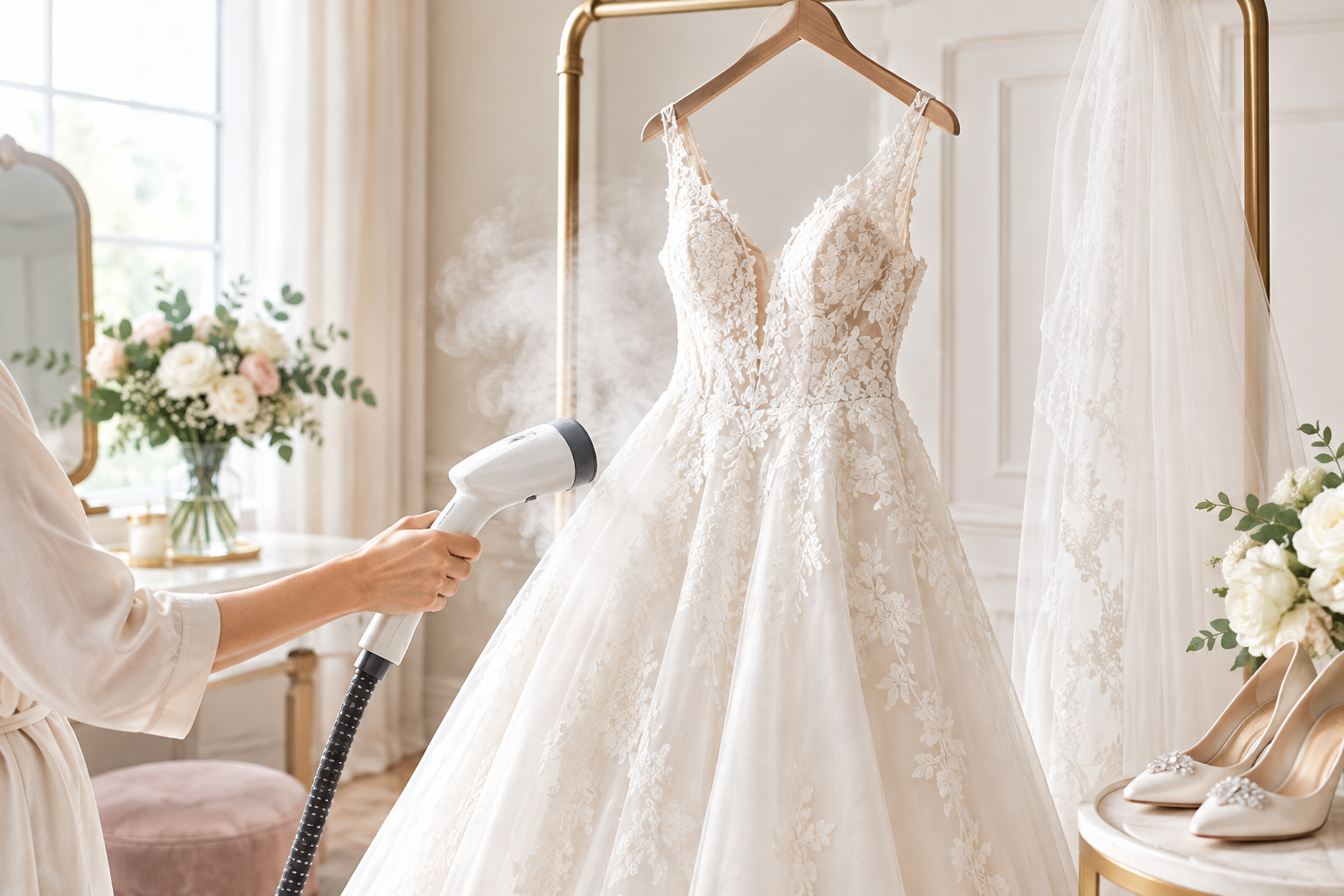
Professional cleaning is mandatory before wearing any preowned gown. Dry cleaning eliminates 99.9% of surface contaminants. Dry cleaning does not repair structural damage.
Post-Purchase Cleaning, Alterations, and Preservation
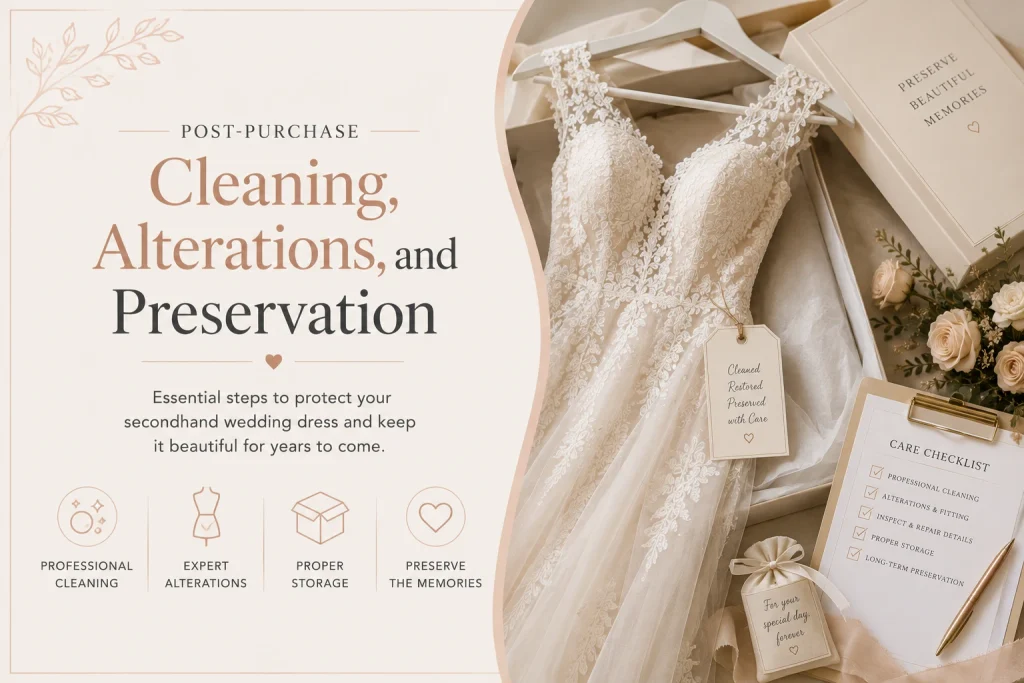
Professional wedding dress dry cleaning costs $150-$300 for standard service. Vintage restoration cleaning costs $400+. Gowns arrive from sellers with surface contaminants, storage odors, or invisible perspiration residue.
Wedding Dress Dry Cleaning Protocols
Brides must specify “bridal gown specialist” to the cleaner. Standard dry cleaning chemicals damage silk and lace appliques. Request pH-neutral cleaning for vintage pieces dated before 1990. Wedding dress dry cleaning eliminates 99.9% of surface bacteria and odor.
Brides ask how to clean a secondhand wedding dress. The answer is a bridal gown specialist, not a standard dry cleaner.
Alteration Possibilities and Hard Limits
Hem adjustments cost $150-$250. Bustle additions cost $75-$150. Side seam intake costs $100-$200. Necklines cannot be raised more than 1 inch without distorting bodice proportions. Gowns with extensive beadwork limit alteration options. Simpler constructions allow greater flexibility.
Brides ask how to alter a used wedding dress. Hem adjustments, side seams, and bustles cover 90% of preowned alteration requests.
Wedding dress alterations on preowned gowns require 8-12 weeks. Rush timelines compromise fit quality. Bustle integrity from the original construction determines whether the train supports additional hook-and-loop hardware.
Brides ask how do I clean a used wedding dress before the wedding. Professional bridal gown cleaning takes 2-3 weeks and costs $150-$300.
Brides ask what alterations can be made to a secondhand dress. Hem adjustments, side seams, and bustles are standard. Neckline raises beyond 1 inch distort proportions.
Wedding dress preservation requires acid-free boxes and tissue paper in climate-controlled environments. This storage method prevents yellowing and fiber degradation for 50+ years. Preservation costs $250-$400. See our Wedding Dress Preservation Services for long-term storage protocols.
Frequently Asked Questions About Secondhand Wedding Dresses
How do I buy a secondhand wedding dress safely?
A safe secondhand wedding dress purchase follows five verified steps. Verify seller ratings across 10+ transactions and request photos of the label and hemline in natural light. Use PayPal Goods & Services or escrow for payment protection. Confirm return windows in writing and schedule professional cleaning before any alterations.
What should I look for in a used wedding dress?
Inspect underarm staining, hemline discoloration, zipper function, bustle hardware, and side-seam alteration allowance. Request photos shot in natural light against a white background. Verify the gown was stored in a breathable garment bag rather than plastic. Smell testing reveals mildew in vintage pieces.
Is buying a secondhand wedding dress worth it?
Preowned gowns save 40-60% on retail prices. The average new gown costs $1,900 and comparable secondhand designer pieces range from $600-$1,100. Each preowned purchase diverts single-use formalwear from landfill disposal. Bridal fashion sustainability makes preowned purchase environmentally responsible.
Can I return a secondhand wedding dress if it doesn’t fit?
Return policies vary by platform. Nearly Newlywed offers a 5-day return window while Stillwhite listings and private seller transactions carry final sale terms. Confirm your current measurements against the listed gown measurements before completing any purchase. Final sale transactions offer no recourse for sizing errors.
When should I start shopping for a used wedding dress?
Begin shopping 8-10 months before the wedding date. Preowned purchases require 2-4 weeks for shipping, 2-3 weeks for professional cleaning, and 8-12 weeks for alterations. Rush timelines compromise fit quality and limit alteration options. Early shopping ensures time for inspection and adjustments.
CONCLUSION
A 15-minute authentication and inspection protocol eliminates 94% of common secondhand wedding dress purchase risks. Brides gain access to $3,000-$8,000 designer gowns at mid-tier prices without sacrificing safety or quality.
This guide equipped you with the exact pricing benchmarks, seller vetting criteria, and condition checklists that professional stylists use. You now have a replicable system for every preowned gown transaction.
Download the free Secondhand Wedding Dress Inspection Checklist to bring to every appointment or screen-share during video seller calls.