- Set boundaries 48 hours before the appointment
- Use specific feedback language during fittings
- Apply the bride’s veto after three negative comments
- Compromise on one detail, not the entire dress
- Shop alone if your mother has a history of emotional manipulation
Wedding dress shopping with mom conflict resolves through three actions. Expectations set 48 hours before the appointment eliminate surprise criticism. Boundary phrases spoken during the fitting redirect emotional feedback into specific comments. A private decision-making process limits real-time input from family members. The result is a dress choice that reflects your vision without damaging your relationship.
You feel caught between the dress you love and the mother you do not want to disappoint. That tension is normal. Nearly every bride who disagrees on wedding dress style with her mother experiences the same pull between loyalty and self-expression.
You will leave this post with exact phrases to say, a pre-appointment script, and a clear decision framework that removes guilt from the process.
Why Wedding Dress Shopping Triggers Mother-Daughter Conflict

Generational style differences create friction when mothers associate modesty with respectability. A mother who wore a high-neck gown in 1987 views a plunging neckline as disrespectful to family wedding traditions, not as a modern bridal silhouette.
Unresolved wedding regrets from the mother’s own marriage surface as control over the daughter’s dress. The mother who settled for a dress she disliked 30 years ago projects that disappointment onto the current choice.
Dr. Ramani Durvasula, clinical psychologist and professor at California State University, Los Angeles, researches narcissistic family systems. Her work on family enmeshment during milestone events explains why mothers view the daughter’s wedding as an extension of their own identity. The mother’s unresolved emotional needs merge with the daughter’s planning process.
Financial contribution creates an implicit expectation of veto power. Mothers who pay 50 percent or more of the dress budget often treat that contribution as purchase of decision-making authority.
Body image projection leads mothers to comment on fit in ways that reflect their own insecurities. A mother uncomfortable with her own arms criticizes sleeveless options regardless of the bride’s preference.
Recent mother-of-the-bride dress shopping experiences cause mothers to apply formalwear style rules to bridal gowns. The structured etiquette of mother-of-the-bride dress selection bleeds into opinions about white gowns, trains, and necklines.
Dress shopping stress peaks when these six factors converge in a single 90-minute appointment. Brides who disagree on wedding dress style with their mothers are not experiencing a unique mother daughter conflict. They are navigating a collision of identity, memory, and money.
How to Set Healthy Boundaries Before Your Bridal Appointment
Setting healthy boundaries before shopping with mom transforms the appointment from a negotiation into a celebration. Boundary setting and emotional regulation work together when the bride controls the conversation timeline.
- Schedule a 15-minute conversation 48 hours before the appointment. This timing prevents day-of surprises and gives both parties space to process the agreement without the pressure of a fitting room mirror.
- Replace vague requests with direct boundary statements. Say: “I want your support, not your vote.” This phrase eliminates ambiguity about the mother’s role and prevents her from treating the appointment as a voting session.
- Define three non-negotiables in advance. These include the budget ceiling, the preferred style category, and who holds final decision authority. Written agreement on these three points eliminates mid-appointment conflict over price tags or silhouette changes.
- Establish a “pause word” agreed upon by both parties. Either person speaks the word to halt tension before it escalates into a public argument that derails the fitting protocol.
- Send a follow-up text restating the agreement. Written accountability prevents selective memory and reinforces emotional boundaries in relationships.
These five steps create the communication with parents that dress shopping tips rarely address. The bride who completes this protocol enters the salon with clarity. The mother enters with a defined role. Both leave the appointment with the relationship intact.
What to Do When Mom Hates Every Dress You Try On
Mom hates dress criticism derails appointments when brides absorb every negative comment as a command to change. Managing family opinions requires specific tactics that redirect emotional feedback into useful input.
Ask targeted questions when the criticism starts. Say: “Do you dislike the neckline or the fabric?” This question forces analytical comments instead of emotional rejection.
Activate the “bride’s veto” rule after three negative comments. The consultant shifts focus to the bride alone. The mother remains in the room but her opinions pause.
Turn your physical orientation toward the mirror, not toward mom. This simple movement reclaims visual authority and reminds your nervous system that your reflection is the final judge.
Request a 10-minute private fitting at the first sign of emotional escalation. This break prevents public arguments and gives you space to reset.
Your own “I love it” statement outweighs any guest’s negative opinion. Saying no gracefully to outside pressure starts with affirming your own preference.
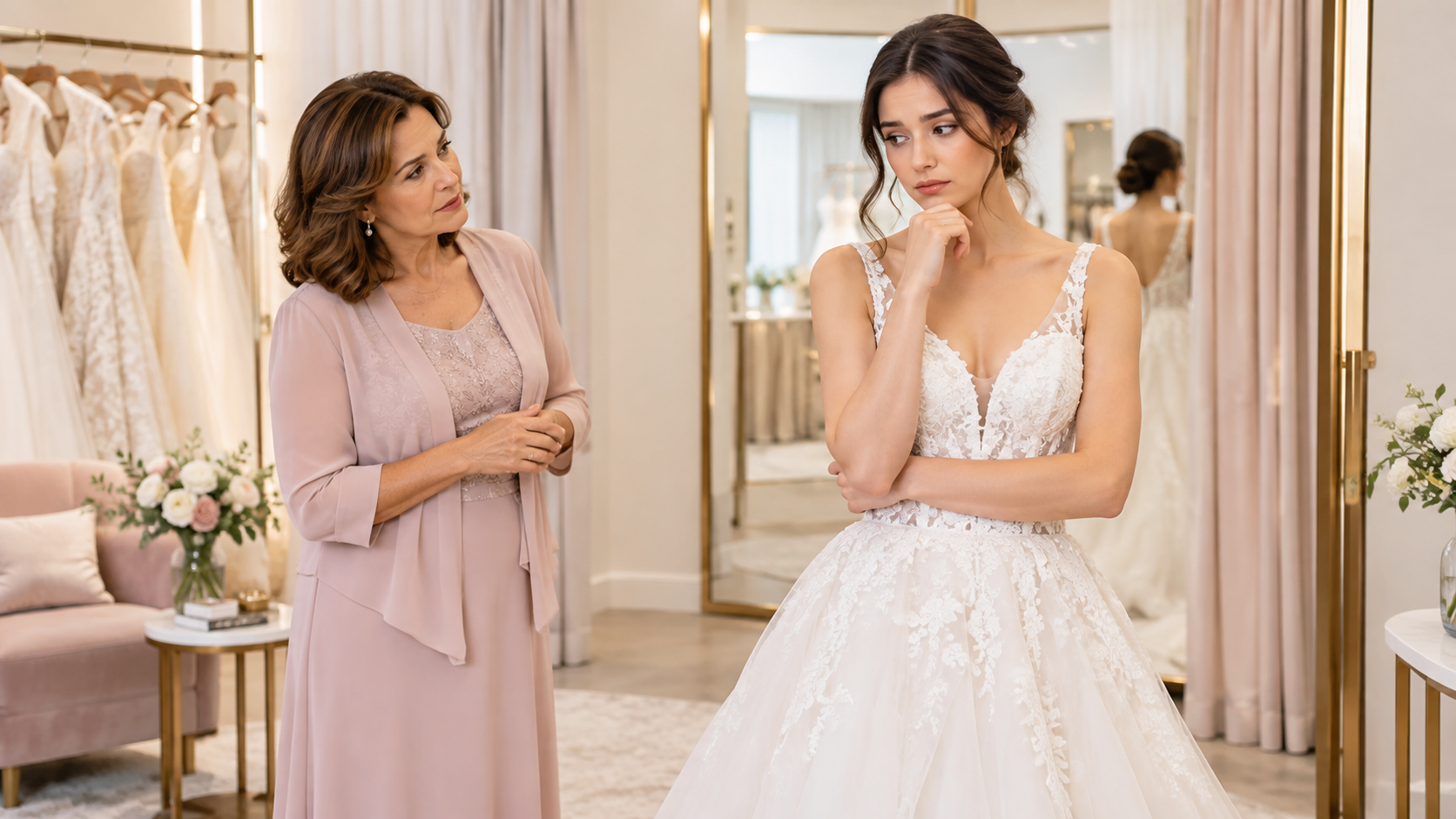
A Saturday appointment at a Chicago bridal salon demonstrated this dynamic in real time. A bride tried on an A-line gown with a lace bodice. Her mother called the neckline inappropriate for church.
The bride’s shoulders dropped. Her voice flattened. She stared at the mirror for 12 seconds without speaking.
The consultant intervened by asking the bride to describe her own reaction. The bride said, “I feel like myself in this dress.” She purchased it 20 minutes later.
Body image and bridal fashion intersect when mothers project their own insecurities onto fit. Bridal consultant advice consistently points to the bride’s own reaction as the only metric that matters.
The Biggest Myth About Including Mom in Dress Shopping
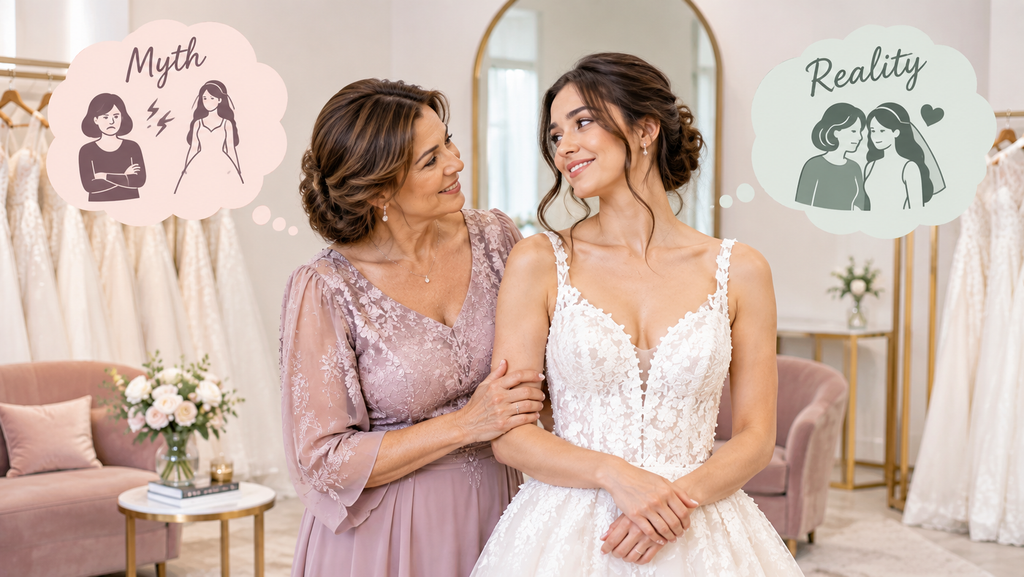
Family wedding drama often starts with a single false belief. Tradition versus style debates assume that a mother’s approval determines the bride’s happiness.
| Myth | Reality |
|---|---|
| A mother’s approval is necessary for dress satisfaction. | Dress satisfaction correlates with the bride’s confidence in the fitting room, not family consensus. |
| The mother must love the dress for the bride to feel beautiful. | Brides in post-event surveys who prioritized personal comfort over external validation reported higher dress satisfaction. |
| Negative reactions in the salon predict regret on the wedding day. | The mother’s emotional reaction in the salon lasts 15 minutes. The wedding day feeling lasts decades. |
| Compromising on the entire dress preserves the relationship. | The dress is worn for 8 to 12 hours. The relationship lasts a lifetime. |
A wedding day vision board built around personal preference produces better long-term satisfaction than one built around family consensus. Brides who trust their own instincts select dresses that align with their authentic style.
This comparison applies to brides whose mother-daughter relationships lack patterns of ongoing abuse or control. Brides whose mothers exhibit patterns of emotional abuse or control that extend beyond wedding planning must consult a licensed therapist. Communication strategies alone do not address clinical family dysfunction.
When Shopping Without Your Mom Is the Smarter Choice
Appointment without mom is the smarter choice for a specific subset of brides. This advice applies to brides whose mothers have a history of emotional manipulation, public humiliation, or boundary violation.
Red flags that signal an appointment without mom include three specific behaviors. These behaviors indicate that shopping alone is necessary for emotional safety.
- Threats to withdraw financial support over dress choice
- Uninvited guests brought to the appointment without consent
- Comments about the bride’s weight or body during the fitting
Shopping without mom is self-preservation, not betrayal. Use this script to communicate the decision: “I want to narrow down styles first, then bring you back for the final round.” This statement honors the relationship while protecting the process.
One trusted ally replaces mom in the first round. A sister, best friend, or future mother-in-law provides support without the history of control.
Bridal appointment etiquette allows for private appointments. Shopping day survival for brides with toxic mothers requires recognizing that emotional abuse demands professional intervention, not just better communication. Brides whose mothers exhibit patterns of control that extend beyond wedding planning must consult a licensed therapist.
Frequently Asked Questions About Wedding Dress Shopping With Mom
What do I do if my mom hates my wedding dress?
Her reaction does not invalidate your choice. Ask her to identify the specific element she dislikes. Aesthetic disagreement reflects generational taste differences, not a flaw in your judgment.
Trust your own reflection. Address budget concerns in a separate conversation.
Do I bring my mom wedding dress shopping?
Bring her if your relationship is supportive and she respects stated boundaries. Skip the appointment if she has a history of public criticism, emotional manipulation, or making events about her needs.
One negative voice in a fitting room outweighs ten positive ones. Your comfort is the priority.
How do I tell my mom I don’t want her opinion on my dress?
Use this pre-appointment script: “I value your support, and I need this decision to reflect my own style. I will ask for your input on the reception menu instead.”
Redirect her expertise to a different wedding element where her opinion is welcome and useful.
How do I compromise with my mom on wedding dress style?
Identify one element she cares about most, such as sleeve length or neckline, and incorporate it into a dress you already love. Do not compromise on fit, comfort, or overall silhouette.
The compromise is a single detail, not the entire dress. Your vision remains intact.
What if my mom cries during the dress appointment?
Tears often signal her own unprocessed wedding memories, not judgment of your dress. Pause the appointment. Ask her to step outside with you or the consultant.
Do not interpret crying as evidence you chose the wrong dress. Her emotions are separate from your decision.
Conclusion
The dress you choose while standing in your own authority photographs better than the dress you choose to appease someone else. Separate the appointment performance from the actual decision, and both survive intact.
You preserve both your wedding vision and your family relationship by separating the decision from the performance of the appointment. The boundary you set today protects the memory you create tomorrow. The guilt you refuse to carry becomes the confidence you wear down the aisle.
Leave a comment that names the one boundary you wish you had set before your first dress appointment.