
The hidden costs of buying a wedding dress can add $800 to $2,500 to the sticker price. Brides purchasing new gowns often encounter these charges during alterations, accessory selection, and post-wedding preservation. Understanding these fees before stepping into a boutique can prevent budget shock at checkout.
Brides shopping for their first gown often budget for the dress alone and discover the total investment only after deposits are nonrefundable. Wedding dress costs no one tells you about can turn a $2,000 dress into a $4,000 surprise.
This guide breaks down the major hidden fees with practical price ranges so you can negotiate from a position of knowledge rather than surprise.
1. The Sticker Price Lies: What Wedding Dresses Actually Cost

The myth that the tag price covers everything can cost brides thousands in unplanned charges. Brides asking how much wedding dresses cost soon discover that the answer extends far beyond the tag.
The average wedding dress cost in the US sits around $1,900 according to The Knot Real Weddings Study. The average cost of a wedding dress purchase can rise to $2,200 or more after taxes and other fees.
The listed price generally reflects the gown itself, while the final cost can include sales tax, boutique fees, alterations, accessories, and preservation.
Common additional charges include:
- Sales tax: 4% to 10% of the gown price, depending on location
- Processing fees: $50 to $150
- Alteration markup: 15% to 20% above the base alteration price
- Nonrefundable deposit: Often 50% to 60% upfront at some high-end salons
Quick Answer: Hidden Costs of Wedding Dresses
| Expense | Typical Cost |
|---|---|
| Sales tax | 4%–10% of gown price |
| Processing fees | $50–$150 |
| Alterations | $150–$1,000+ |
| Accessories | $300–$1,500+ |
| Rush/shipping fees | $100–$650 |
| Preservation | $250–$750 |
| Nonrefundable deposit | 50%–60% upfront |
What does a wedding dress really cost? The true figure includes tax, fees, alterations, accessories, and potentially preservation.
For a deeper breakdown of the base purchase price, see our guide to the average wedding dress cost in the US.
Hidden wedding dress costs brides forget about can also include storage and post-wedding care. The total cost of ownership includes the gown, alterations, accessories, and preservation. These additional expenses can push the wedding attire total investment well beyond the original tag price.
2. Wedding Dress Alteration Costs That Inflate Your Budget
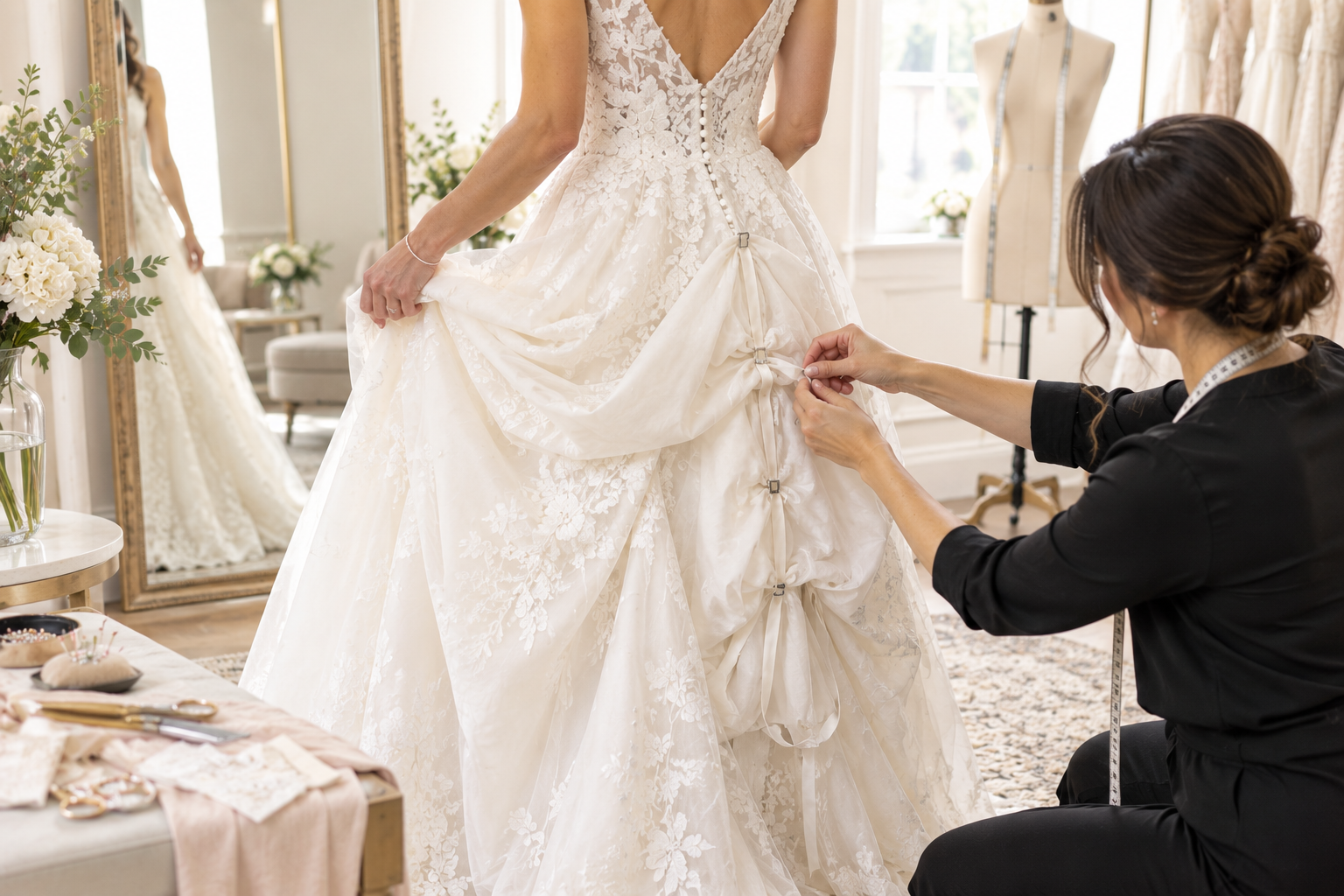
Wedding dress alteration costs range from about $150 for basic hemming to $1,000 or more for extensive reconstruction. Brides purchasing floor-length gowns usually need at least hem and bustle work. Gowns with multiple tulle or lace layers can drive alteration prices considerably higher.
The most common adjustments include:
- Basic hemming: $150–$300
- Bustle construction: $75–$250 depending on style
- Taking in or letting out bodice sides: $50–$200
- Corset boning replacement: $100–$400
- Custom changes such as sleeves or neckline modifications: $300–$800
For a more detailed breakdown of alteration pricing, see our wedding dress alterations cost guide.
Standard Alterations vs. Custom Changes
Standard alterations usually include hemming, bustle construction, and bodice adjustments. Custom changes involve redesigning structural elements such as adding sleeves, changing a neckline, or modifying the silhouette.
The cost of custom wedding dress changes can exceed standard tailoring by 200% to 300% because of the additional labor and construction involved.
A routine fitting can also reveal unexpected complications. A gown that appears simple on the rack may contain multiple layers of tulle, lace, lining, horsehair, boning, or beading that require specialized work.
Brides with lace overlays or heavily beaded bodices often face the steepest labor charges. Schedule your final wedding dress fitting at least two weeks before the wedding to allow time for last-minute adjustments.
Understanding alteration requirements before booking can prevent mid-process budget panic.
3. Bridal Gown Hidden Fees Boutiques Slip Into Your Contract
Bridal gown hidden fees can appear after the initial contract signing. Extra charges may alter the final invoice even when the original gown price looked manageable.
The most important wedding dress hidden fees to check for include:
- Rush order fees: $100–$500
- Designer shipping: $75–$150
- Storage: $20–$50 per month
- Weekend appointment fees: Up to $50 per visit at some high-end boutiques
- Cancellation or restocking fees: Potentially 20%–40% of the deposit
These charges are particularly important when your wedding date is close to the standard designer production timeline.
Rush Fees and Timeline Penalties
Standard designer delivery can take several months. Orders placed inside a designer’s normal production window may trigger rush fees.
The wedding dress rush order premium can reflect expedited production, priority handling, and faster international shipping. Before ordering, ask exactly how much extra you’ll pay if the gown needs to be rushed.
Shipping and Storage Surcharges
Boutiques may pass freight costs directly to the buyer. Gowns arriving early can also generate monthly holding fees if you cannot collect them immediately.
Together, shipping and storage can add another $95 to $200 when there is a significant timeline gap.
Ask the boutique to identify every possible fee in writing before paying your deposit. A verbal assurance that “there shouldn’t be any other charges” is less useful than an itemized contract.
4. Wedding Dress Accessory Prices Complete the Look
Wedding dress accessory prices can transform a seemingly affordable gown into a much larger purchase. The complete wedding ensemble includes items many brides forget to budget for.
Wedding dress shopping costs beyond the gown can include accessories, undergarments, shoes, jewelry, and structural pieces.
| Accessory | Low Price | Mid Price | High Price |
|---|---|---|---|
| Veil | $100 | $300 | $600 |
| Bridal undergarments | $80 | $175 | $300 |
| Shoes | $100 | $175 | $250 |
| Jewelry set | $150 | $300 | $500 |
| Crinoline layer | $50 | $100 | $150 |
Brides purchasing veils and jewelry from the same boutique may encounter substantial markups compared with non-bridal retailers.
Bridal undergarment costs can include shapewear, bustiers, specialty bras, and adhesive solutions for backless or low-cut gowns. If you’re unsure what foundation garments your gown requires, consider your neckline and silhouette before buying accessories. Our guide to what to wear under a wedding dress explains the main options.
A crinoline layer or petticoat can also provide the structural volume shown in designer catalog images. Brides with simple sheath gowns may not need one, while ballgown silhouettes may require a substantial understructure.
Online retailers and department stores often sell comparable accessories for less than bridal salons. Comparing prices before purchasing can significantly reduce the complete ensemble cost.
5. Wedding Dress Preservation Cost and Aftercare
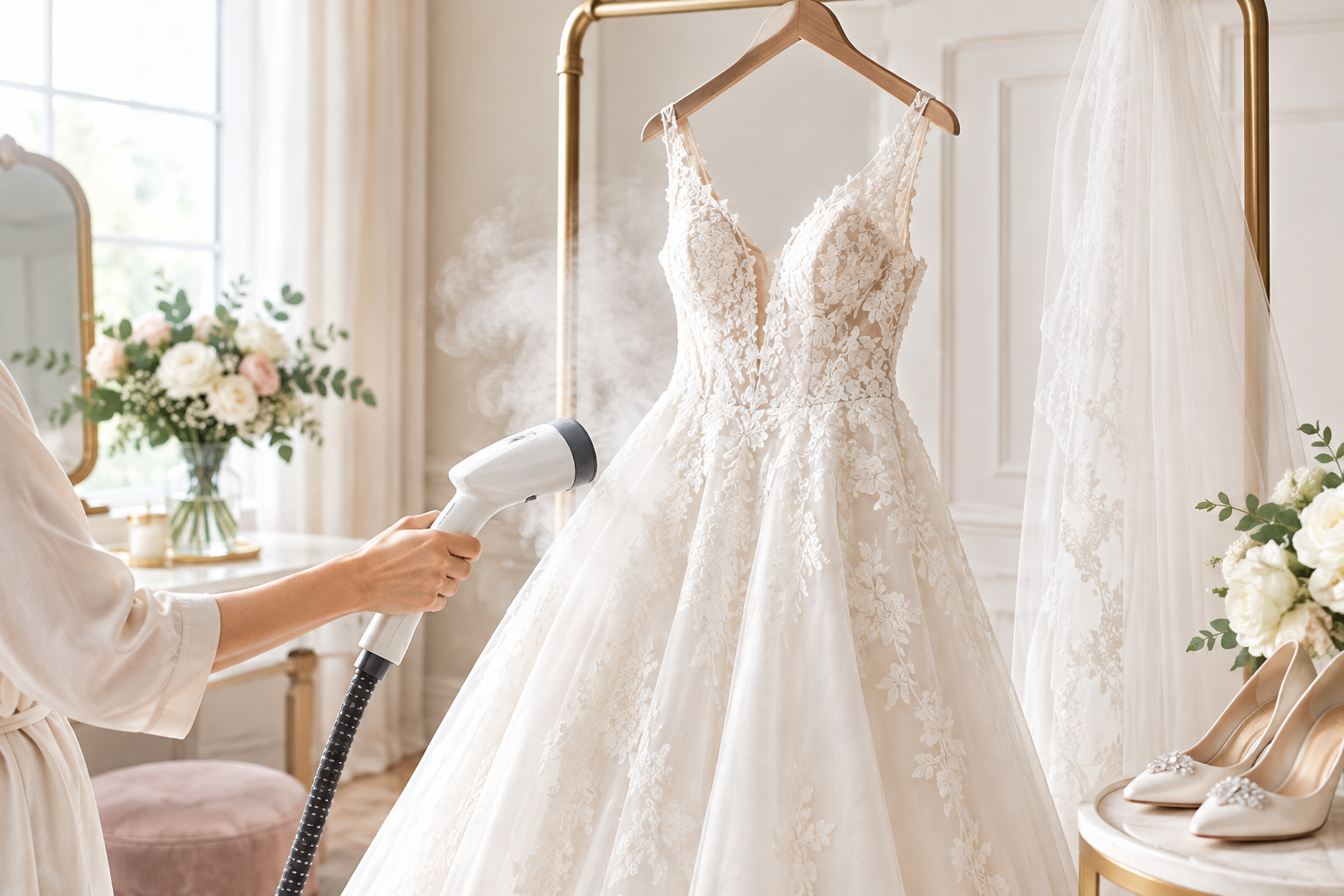
Wedding dress preservation cost typically ranges from $250 to $750 for professional cleaning and preservation. Services may include specialized cleaning, acid-free materials, protective packaging, and appropriate storage.
Standard dry cleaning without preservation can cost around $100 to $200, but it does not provide the same long-term protection.
Potential post-wedding expenses include:
- Professional preservation: $250–$750
- Standard dry cleaning: $100–$200
- Climate-controlled storage: $25–$75 monthly
- Insurance rider: $50–$150 annually
Preservation vs. Standard Cleaning
Brides asking what wedding dress preservation costs should look beyond the cleaning price. Professional preservation can involve specialized treatment and archival packaging designed to reduce long-term deterioration.
Standard cleaning may be sufficient for a bride who does not intend to keep the gown long-term, while preservation is more appropriate for those who want to store the dress as a keepsake.
For a more detailed look at cleaning, preservation, and long-term storage, see our wedding dress preservation and after-wedding care guide.
Financial Note: Individual preservation and storage costs vary by region, gown material, construction, and service provider. Request an itemized quote before committing to any post-wedding service.
Silk gowns and heavily embellished dresses can require more specialized cleaning and maintenance. Climate can also influence storage decisions, particularly in humid environments where moisture can contribute to mildew and fabric deterioration.
6. How to Avoid Wedding Dress Hidden Fees
Brides who understand hidden fees before shopping are in a stronger position to control their total budget. The most effective wedding dress budget strategy is to treat the gown as only one part of the purchase.
Use these strategies:
- Request an itemized quote before placing a deposit.
- Ask whether shipping and storage are included.
- Confirm the alteration policy and estimated alteration range.
- Shop sample sales for potential discounts.
- Compare accessory prices outside the bridal salon.
- Ask about payment plans and interest rates.
- Read cancellation and restocking terms carefully.
Negotiation Tactics That Work at Bridal Boutiques
Ask whether the boutique can waive shipping or storage fees. You can also ask whether purchasing accessories as a bundle qualifies for a discount.
If the boutique cannot reduce the gown price, negotiating smaller add-on costs may still reduce your final invoice.
Wedding dress shopping on a budget becomes much easier when you negotiate each line item before signing the contract rather than trying to negotiate after the deposit has been paid.
When Payment Plans Help and When They Hurt
A genuine 0% interest payment plan can help spread out a large purchase without increasing the final price. However, third-party financing with high interest rates can make an already expensive gown considerably more costly.
Read the annual percentage rate, promotional period, late-payment terms, and total repayment amount before accepting financing.
Sample sales can also reduce the initial gown cost substantially, although discounted inventory may have different return, alteration, or condition policies.
Brides considering lower-cost options can also compare affordable wedding dresses under $500 before committing to a higher-priced boutique gown.
Sample wedding dress sales in major cities can offer significant discounts, but availability varies by designer, size, season, and boutique inventory.
The important point is to compare the final cost, not simply the percentage discount advertised on the gown.
7. The Costs That Come After You Buy
One of the biggest budgeting mistakes is treating the wedding dress purchase as finished once the deposit is paid.
The financial commitment can continue through fittings, accessories, cleaning, preservation, and storage.
Before purchasing, create a simple wedding dress budget that includes:
- Gown price
- Sales tax
- Deposit
- Alterations
- Rush fees
- Shipping
- Veil
- Shoes
- Undergarments
- Jewelry
- Petticoat or crinoline
- Cleaning
- Preservation
- Storage
This approach gives you a realistic picture of the total wedding dress investment before you commit to a particular gown.
It is also worth considering whether buying is actually the best option for your circumstances. Brides who expect to wear the gown only once can compare the real cost of renting versus buying a wedding dress before making a final decision.
Frequently Asked Questions About Wedding Dress Hidden Costs
How much does a wedding dress cost?
The average wedding dress cost in the US is around $1,900. Off-the-rack options can start around $500, while designer gowns can reach $5,000 or more. Alterations, accessories, taxes, shipping, and preservation can add hundreds or even thousands of dollars to the final investment.
What are the hidden costs of wedding dresses?
Common hidden costs include alterations, accessories, rush fees, shipping, storage, preservation, taxes, and boutique surcharges. Depending on the gown and services selected, these expenses can add $800 to $2,500 or more to the base price.
Why are wedding dresses so expensive?
Designer markup, imported fabrics, labor-intensive construction, hand-sewn details, intricate embellishment, and boutique overhead all contribute to gown prices. The listed price also does not necessarily include alterations, accessories, taxes, or preservation.
How much do wedding dress alterations cost?
Wedding dress alterations can range from approximately $150 for basic hemming to $1,000 or more for extensive custom work. Bustle construction can add $75 to $250, while bodice adjustments commonly cost $50 to $200.
What does wedding dress preservation cost?
Professional wedding dress preservation generally costs about $250 to $750. The service may include specialized cleaning, protective treatment, archival packaging, and storage recommendations. Standard dry cleaning typically costs less but does not provide the same long-term preservation process.
Conclusion
Understanding the full wedding dress cost structure before entering a boutique can help brides avoid unpleasant financial surprises. The gown price is only one component of the total investment.
Taxes, alterations, accessories, rush charges, shipping, storage, and preservation can quickly increase the final bill. By requesting itemized quotes, comparing service providers, negotiating fees, and shopping strategically for accessories, you can keep those additional expenses under control.
Knowledge of hidden costs transforms wedding dress shopping from a financial surprise into a controlled purchase. Before signing a contract, make sure the final estimate reflects the gown, required alterations, accessories, taxes, and every other fee you expect to pay.
The best wedding dress budget is not based on the price you see on the rack. It is based on the complete amount you will spend from the first deposit through the final fitting and, if desired, preservation after the wedding.
Download our free Wedding Dress Budget Calculator to itemize every expected expense before your first boutique appointment.