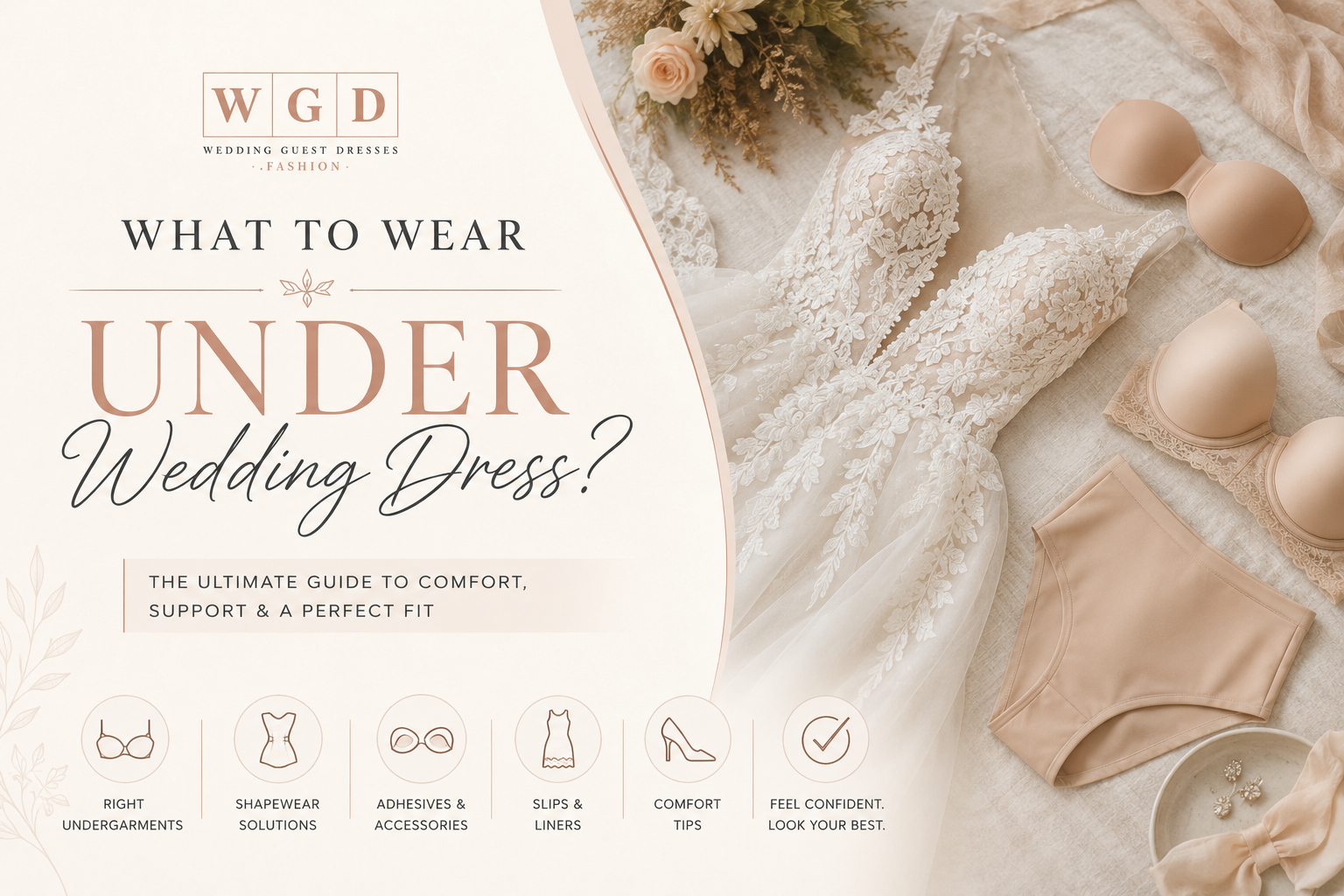
- Strapless gowns need longline bras or adhesive cups.
- Backless styles need low-back converters or stick on bra solutions.
- Fitted sheaths and mermaids need seamless nude shapewear.
- Ballgowns allow standard bras and briefs.
- Purchase undergarments 2 weeks before the first fitting.
What to Wear Under a Wedding Dress: A Guide by Dress Style
What to wear under a wedding dress depends on three factors: the dress silhouette, the fabric weight, and the bride’s support needs. Strapless gowns require longline bras or adhesive cups. Backless styles need low-back converters or stick on bra solutions.
Fitted sheaths and mermaids demand seamless shapewear. Ballgowns allow the most flexibility with standard bras and briefs.
Brides who shop for wedding dress undergarments before selecting a dress style or attending a fitting purchase pieces that do not match the gown’s structure and require replacement. Wedding dress undergarments must align with the specific construction of the gown, not the bride’s preferences alone.
How to choose bridal undergarments starts with identifying the dress silhouette, then matching the support needs to the fabric weight. This guide matches exact undergarment types to 6 specific dress silhouettes and includes fitting timeline advice from professional seamstresses.
If you’re still deciding which silhouette suits you, start with this guide on how to choose a wedding dress for your body type before buying your foundation garments.
Undergarments for Strapless and Sweetheart Necklines
Strapless wedding dresses require bras that distribute weight across the torso instead of relying on a single tight band. Longline strapless bras extend to the waist or hip and provide this distribution through built-in boning.
Adhesive silicone cups stick directly to the skin and work for cup sizes A through C on dresses with minimal structure. Sewn-in bra cups eliminate the need for a separate bra and stay fixed to the dress bodice through 12 hours of wear. Fashion tape and pasties both secure fabric to skin, though pasties cover only the nipple area without lift. Fashion tape secures neckline gaps on sweetheart styles that gape when the bride raises her arms. A strapless bra with grip lining along the inner band prevents slippage on bust sizes D and above.
A strapless longline bra tested through 8 hours of continuous wear during an 85-degree summer wedding revealed zero slippage below the bust line. The boning maintained posture support through the ceremony and reception without digging into the ribcage.
For more guidance on choosing a neckline that works with your undergarments, see our guide to wedding dress necklines explained.
Longline Strapless Bra vs. Standard Strapless Bra
Longline bras add boning through the torso for posture support. Standard strapless bras rely on a tight band and grip strips alone.
Brides with bust sizes D and above experience more stable support from the longline structure because the extended band anchors the weight across 4 to 6 inches of additional torso coverage.
Undergarments for Backless and Low-Back Gowns
Backless wedding dresses with open backs below the bra line need invisible lingerie solutions that avoid visible bands. Low-back bra converters attach to a standard bra and pull the band down to the natural waistline.
Adhesive silicone cups provide lift for cup sizes A through D on gowns with open backs that drop below the bra line. U-plunge bras feature a deep front neckline and a band that sits at the lower back for dresses with moderate back exposure. Nude-toned bodysuits with open-back panels smooth the torso while remaining invisible under sheer or lightweight backless fabrics. Built-in corsetry in the dress itself replaces the need for a separate bra on structured backless gowns.
Adhesive silicone cups contain medical-grade adhesive that causes redness and itching on sensitive skin types. A 24-hour patch test on the inner arm reveals irritation before the wedding day.
Adhesive Cups vs. Low-Back Converters
The table below compares these two bra for backless options.
| Feature | Adhesive Cups | Low-Back Converters |
|---|---|---|
| Support Level | Light to moderate | Moderate to firm |
| Best Bust Size | A through C | B through DD |
| Dress Back Depth | Any depth | Dips to waist, not lower |
| Skin Sensitivity | Requires patch test | No adhesive contact |
| Reusability | Single-use to 3 uses | Reusable indefinitely |
Adhesive cups suit brides with smaller busts and dresses with no structure. A low back converter suits brides who need underwire support and wear dresses with backs that dip to the waist but not lower.
Undergarments for Sheath and Fitted Dresses
Seamless bridal underwear eliminates visible lines under thin, fitted wedding dress fabrics. The myth that white underwear disappears under white wedding dresses leads first-time brides to purchase ivory or white undergarments that show through thin dress fabric.
Nude undergarments that match the bride’s exact skin tone disappear under white fabric. White or ivory underwear creates a visible shadow under flash photography and natural light.
Shapermint confirms that nude shapewear matching the wearer’s skin tone disappears under white fabric more effectively than white undergarments. Brides wearing sheath dresses with thin fabrics need undergarments that match their skin tone exactly, not white or ivory, because light colors show through white fabric.
The following smoothing underlayers work best for sheath silhouettes:
- A nude seamless thong in the bride’s exact skin tone eliminates panty lines under crepe, silk, and charmeuse sheaths.
- Mid-thigh shapewear shorts smooth the hip and thigh area on brides wearing fitted sheath dresses that cling below the waist.
- A bodysuit with a cotton gusset provides full-torso smoothing without the waistband indentation that separate tops and bottoms create.
- Sheath dresses with built-in lining require only a nude slip or minimal underwear because the dress fabric itself provides opacity.
Undergarments for Mermaid and Trumpet Silhouettes
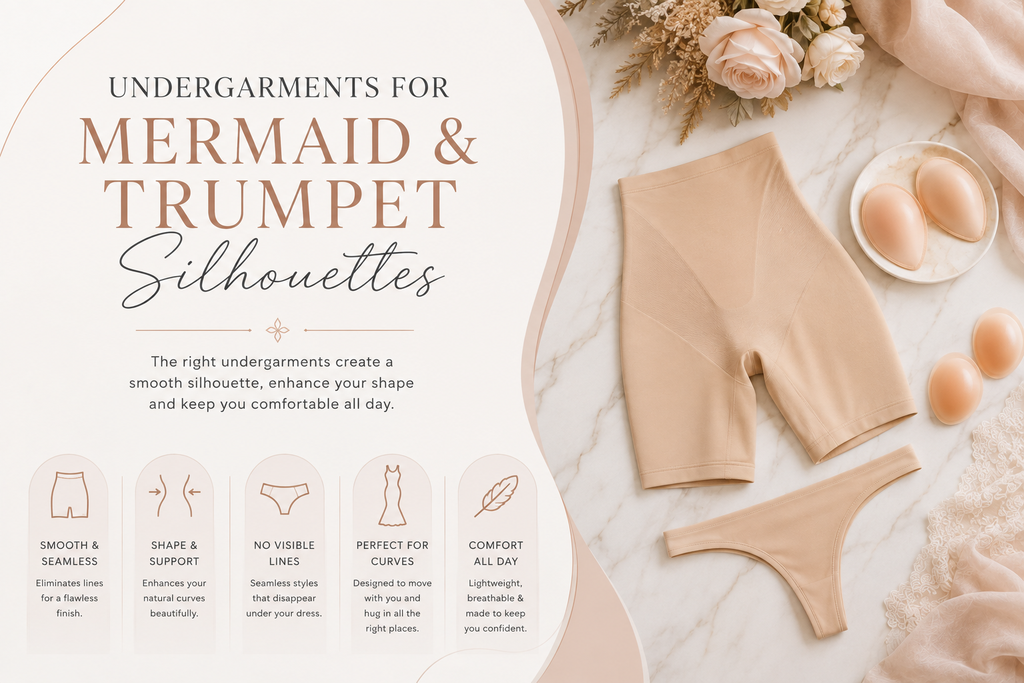
Shapewear under wedding dresses with mermaid and trumpet silhouettes creates a smooth transition from waist to knee. Mid-thigh bodysuit shapewear contours the waist, hip, and thigh in one continuous piece for mermaid gowns that flare at or below the knee.
High-waisted shaping briefs work for trumpet dresses that flare higher on the thigh and require less leg compression. A convertible bra with a low-back strap option supports the bust while the shapewear handles lower-body smoothing on mermaid styles. Brides wearing mermaid dresses with thin satin or crepe need shapewear with a seamless leg opening to prevent a visible line where the shapewear ends.
Best Shapewear for Mermaid Gowns
Bridal bodysuit shapewear prevents the double waistband effect that separate bra and underwear combinations create under thin mermaid fabric. Separate bra and shapewear pieces allow more flexibility for bathroom breaks during a 10-hour wedding day.
Full bodysuits with a cotton gusset and breathable bridal fabrics in the lining layer provide all-day wedding comfort without overheating. Comfortable lingerie for all day wedding wear includes breathable fabrics and cotton gussets that prevent overheating during 10-hour events.
When comparing mermaid and trumpet styles, overall body proportions matter as much as the shapewear underneath. Brides unsure which silhouette works best can review how to choose a wedding dress for your body type before making a final choice.
Undergarments for Ballgown and A-Line Dresses
What brides wear under gown styles with full skirts matters less than what they wear under fitted styles. Ballgown skirts with full crinolines or petticoats hide standard underwear and bras completely because the voluminous fabric creates distance from the body.
A structured bustier or corset with light boning improves posture and defines the waist on ballgown bodices that lack built-in structure. A-line dresses with fitted bodices and flowing skirts require the same support as ballgowns through the bust and waist but allow simpler underwear below the waist.
Brides wearing ballgowns with heavy satin or tulle skirts and built-in bodice structure skip shapewear entirely. Brides wearing A-line dresses with thin bodice fabric and no internal support still need a longline bra or bustier. Nude-toned briefs or boyshorts provide adequate coverage and comfort under ballgown and A-line skirts without the need for thongs or seamless cuts.
If you’re comparing these silhouettes before your purchase, see the A-line vs. ballgown wedding dress difference to understand how each shape changes the overall fit and structure.
The Fitting Timeline: When to Buy and What to Bring
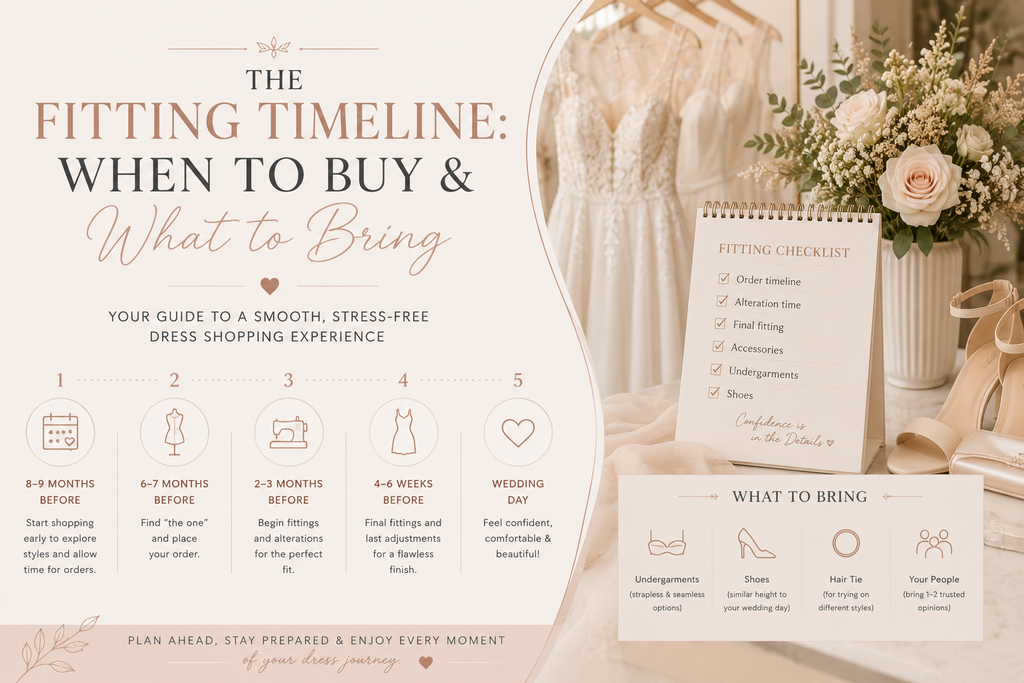
Wedding dress fittings require exact foundation garments to produce accurate alterations. Undergarment purchases happen at least 2 weeks before the first fitting appointment to allow time for exchanges or returns. The exact undergarments, shoes, and jewelry accompany the bride to every fitting because even a 1-inch difference in heel height or bra thickness alters the dress fit.
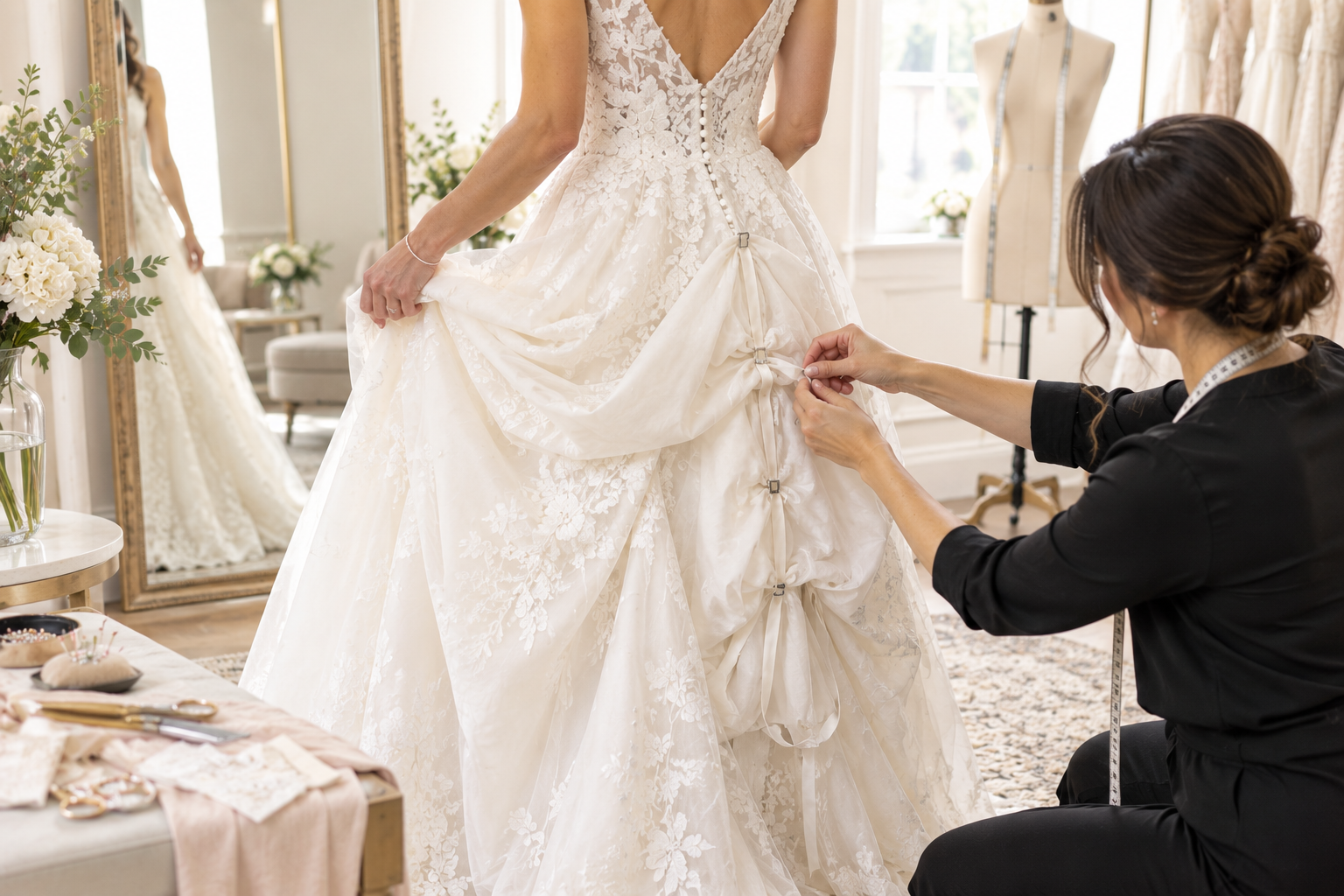
Courtney Poole and Niamh Ginn of Alts – Alteration Specialists recommend three fittings for every bride: the first for pinning and quoting, the second for bustle review, and the third for final confirmation. Seamstresses pin and baste alterations during the first fitting without cutting fabric, so brides see a preview of the final fit while wearing their actual undergarments. Brides who change their undergarments after the final fitting risk visible gaps, tightness, or sagging because the dress was tailored to the specific foundation garments.
For a broader schedule covering ordering, delivery, fittings, and alterations, use this wedding dress shopping timeline checklist.
The following alterations and fit checks require the bride’s exact wedding day undergarments:
- The bra or adhesive cups planned for the wedding day must accompany the bride to fitting 1.
- The shapewear or underwear planned for the wedding day must accompany the bride to fitting 2.
- The exact shoes with the exact heel height must accompany the bride to all 3 fittings.
- The bustle requires testing with the undergarments in place during fitting 2.
- The final hem length requires confirmation with the exact bra and shoes during fitting 3.
Because foundation garments can affect how much tailoring is required, it’s also worth reviewing a wedding dress alterations cost guide before your first appointment.
Frequently Asked Questions About Wedding Dress Undergarments
What should I wear under my wedding dress?
What to wear under wedding dress styles depends on the dress silhouette, the fabric weight, and the bride’s support needs. Strapless gowns require longline bras or adhesive cups. Backless styles need low-back converters or stick-on bras. Fitted sheaths and mermaids demand seamless shapewear. Ballgowns allow standard bras and briefs.
Do I need to wear a bra with my wedding dress?
Wedding dresses with built-in bra cups or corsetry do not require a separate bra. Strapless bodices without internal support need a longline strapless bra. Backless gowns with open backs below the bra line need adhesive cups or a low-back converter. The dress construction determines whether a separate bra is necessary.
What is the best shapewear for a wedding dress?
Mid-thigh bodysuit shapewear creates the smoothest silhouette under mermaid and trumpet gowns. High-waisted shaping shorts work for fitted sheath dresses. Ballgowns with heavy skirts and built-in bodice structure do not require shapewear. The dress silhouette determines whether compression undergarments add value or create unnecessary bulk.
What bra works best under a strapless wedding dress?
Longline strapless bras provide the most reliable support for strapless wedding dresses by distributing weight across the torso. Adhesive silicone cups suit cup sizes A through C on gowns with minimal structure. Sewn-in bra cups eliminate the need for a separate bra and remain fixed through 12 hours of wear.
How do I hide a bra under a backless wedding dress?
Low-back bra converters attach to a standard bra and pull the band down to the waistline on dresses with moderate back exposure. Adhesive silicone cups provide lift for cup sizes A through D on gowns with fully open backs. Built-in corsetry in structured backless gowns replaces external bras entirely.
Conclusion
The wedding dress silhouette determines every undergarment choice. Brides who purchase undergarments before their first fitting waste money on pieces that do not match the dress structure.
The right foundation garments create a smooth silhouette, provide all-day support, and ensure the dress photographs exactly as the designer intended. Nude undergarments matched to your exact skin tone, not white or ivory, disappear under white fabric. A 30-minute test of every piece while sitting, walking, and dancing before the wedding day reveals fit issues. The exact undergarments brought to all three fitting appointments allow seamstresses to tailor the dress to the specific foundation layer.
Brides shopping for extended sizes can also explore plus-size wedding dresses that flatter to compare gown construction and fit considerations before selecting the right undergarments.
Our bridal planning newsletter delivers weekly dress-fitting tips and undergarment recommendations tailored to your wedding timeline.