- Azazie wins on base price and color selection.
- David’s Bridal wins on in-store try-ons and alterations.
- Azazie requires 8 to 10 weeks of production time.
- David’s Bridal alterations cost $300 to $800.
- The best choice depends on your wedding timeline and alteration budget.
Choosing between David’s Bridal and Azazie can be difficult when you are working with a limited wedding dress budget. Both retailers offer affordable options, but they operate very differently.
Azazie wins for bridesmaids and online shoppers who prioritize price and color selection. David’s Bridal wins for brides who need in-store try-ons, immediate inventory, or plus-size gowns up to 30W with on-site alterations.
The retailer you choose depends on which constraint matters most to your wedding timeline. This David’s Bridal vs Azazie comparison addresses the full picture because most brides discover too late that the dress budget does not end at the sticker price. Alterations, shipping, and return restrictions can add $200 to $600 in unplanned costs at any budget wedding dress store.
Before making a final decision, it is also helpful to understand the typical cost of adjustments. Our guide to wedding dress alterations costs explains which changes can have the biggest effect on your overall budget.
This guide breaks down pricing, sizing, alterations, return policies, and timelines so you can decide which retailer better fits your wedding plans.
How David’s Bridal and Azazie Differ in Business Model
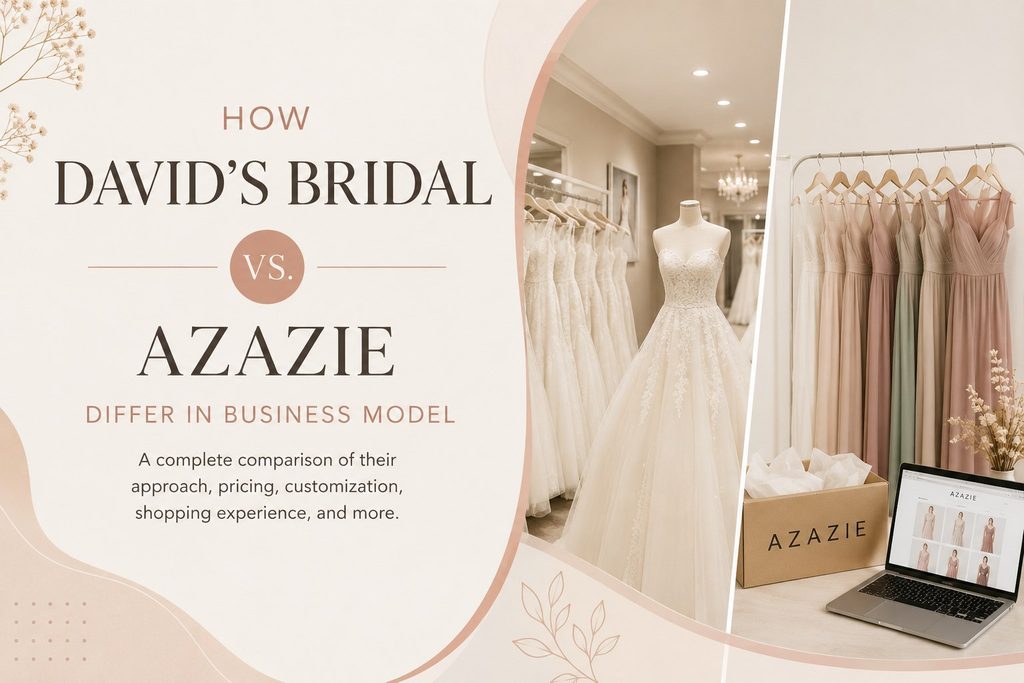
The biggest difference between David’s Bridal and Azazie is how each retailer sells wedding dresses.
| Feature | David’s Bridal | Azazie |
|---|---|---|
| Store Model | 195 US physical stores | Exclusively online |
| Inventory | Off-the-rack wedding dresses, sizes 0–30W | Made-to-order gowns, standard or custom measurements |
| Shipping Speed | 2 to 7 business days for in-stock items | 8 to 10 weeks production + 5 to 10 days delivery |
| Alterations | On-site at every store | None; local seamstress required |
This operational split defines every other difference between the two retailers. Brides who need a dress within 2 weeks can rely on David’s Bridal for immediate inventory from its physical stores.
Brides with 3 months or more gain access to Azazie’s lower base prices through online wedding dress shopping. The budget bridal shop online model eliminates retail overhead but removes the safety net of in-person fittings.
David’s Bridal stocks off-the-rack wedding dresses for same-day walkouts. Azazie produces made-to-order gowns that do not exist until the customer places an order. This distinction matters for brides with firm wedding dates.
If you are buying a gown that needs professional adjustments, planning your appointments in advance is important. A wedding dress fitting timeline can help you understand when fittings should take place before the wedding.
Price Comparison for Wedding Dresses Under $500
For brides trying to stay below $500, both retailers offer options, but the pricing structure is different.
| Cost Category | David’s Bridal | Azazie |
|---|---|---|
| Bridal Gown Range | $149 to $1,900+ | $200 to $500+ |
| Bridesmaid Dress Range | $99 to $250 | $79 to $300 |
| Try-On Cost | $0 (in-store appointment) | $10 per bridesmaid sample; $15 per bridal sample |
| Alterations Estimate | $300 to $800 | $150 to $400 (local seamstress) |
| Rush Fees | $65 for bridal gowns; $35 for other items | Not applicable |
A wedding dress under $500 is available at both retailers. Azazie wedding gowns range from $200 to $500+, while David’s Bridal gowns start at $149 and climb to $1,900+ for designer collections.
This bridesmaid dress comparison shows Azazie’s $79 entry point undercuts David’s Bridal by $20. According to Zola’s 2025 data, standard wedding dress alterations run $300 to $800 nationally.
David’s Bridal charges exactly within that wedding gown alteration range, while Azazie customers add local seamstress rates to the base price.
This means the lowest sticker price is not always the lowest final cost. Brides should calculate the dress price, alterations, shipping, potential rush fees, and any non-refundable try-on or return-related expenses before deciding.
Sizing, Fit, and the Azazie Home Try-On Program
Sizing is another major difference between the two retailers. Online shoppers have to be especially careful because the dress that looks affordable on the product page may require additional alterations if the measurements are not accurate.
How the Azazie Home Try-On Program Works
The Azazie home try-on program lets brides try before they buy and assess pattern grading before committing to a full order. The sample box arrives with the prepaid return label tucked inside the garment bag.
The chiffon overlay on the sample gown felt lighter than expected. Azazie custom sizing adjusts the existing pattern to submitted measurements.
Azazie sizing runs 1 to 2 sizes smaller than standard US street clothing, which can cause frequent returns from first-time buyers who skip the measurement guide.
Choosing the right size is only part of getting a flattering fit. Brides can also compare silhouettes and proportions with this guide on how to choose a wedding dress for your body type before ordering online.
David’s Bridal Sizing and In-Store Fittings
David’s Bridal carries up to 30W in-store, which remains one of the broadest plus-size bridal inventories available at a national chain.
In-store consultants measure brides during appointments and pull dresses from the floor immediately. Dresses ordered from the catalog still require 8 to 12 weeks for delivery if not in stock.
The David’s Bridal sizing chart aligns more closely with standard US sizing than Azazie’s imported pattern grading.
For brides who are uncertain about their measurements or want to see how different silhouettes look in person, the physical-store model can be a significant advantage.
Return Policies and Alterations Cost Reality
The listed price of a wedding dress does not tell the whole story. Alterations can significantly change the amount you ultimately spend, especially when a gown needs multiple adjustments.
David’s Bridal Alterations Cost Breakdown
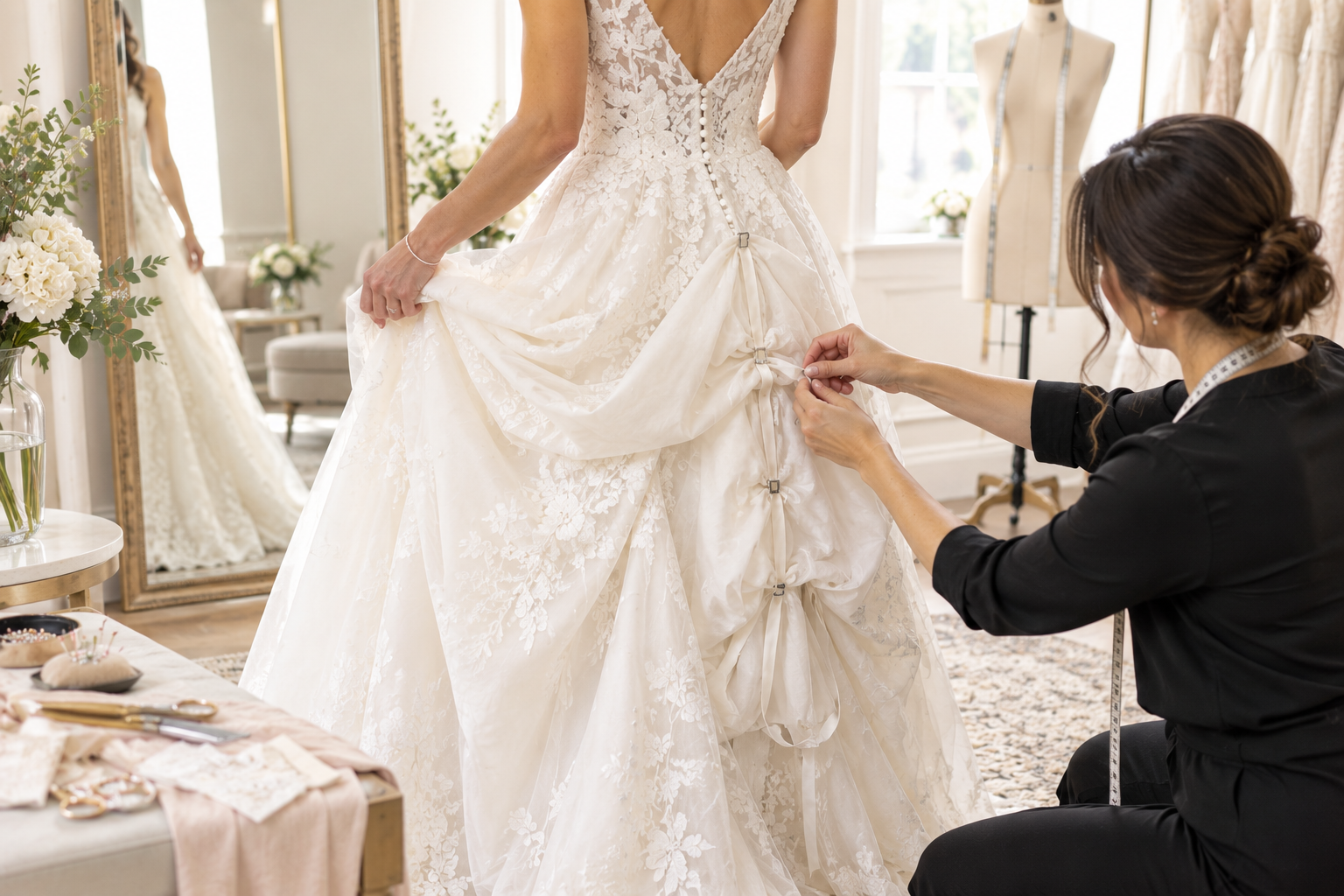
David’s Bridal alterations cost $300 to $800 for standard adjustments like hemming, bodice take-in, and bustle installation.
According to Zola’s 2025 data, standard wedding dress alterations run $300 to $800 nationally, with complex structural changes reaching $1,200 or more.
Rush fees add $65 for bridal gown alterations and $35 for other items when the wedding is fewer than 8 weeks away.
Brides shopping on a strict budget should therefore leave room for alterations instead of spending their entire dress budget on the initial purchase.
Azazie Return Restrictions on Custom Orders
Azazie accepts returns on standard-sized dresses within 30 days of delivery. Custom-sized dresses are non-returnable.
The David’s Bridal return policy offers a narrower 7-day window for wedding dresses and 14 days for bridesmaid dresses, with tags attached and no signs of wear required.
Azazie has no in-house alterations department. Brides who order from Azazie must budget $150 to $400 for local seamstress services.
Wedding dress preservation requires that alterations maintain original seam allowances for future resizing.
Once alterations are complete, proper care becomes important if you plan to keep the gown after the wedding. This wedding dress preservation guide covers the key considerations for protecting the dress long term.
The Bankruptcy Myth: Is David’s Bridal Still Safe to Order From?
Myth: David’s Bridal is closing and will not fulfill orders.
David’s Bridal filed for Chapter 11 bankruptcy in 2023. CION Investment acquired the assets and kept approximately 195 stores open under new ownership.
Most orders shipped, though some brides reported delays of 1 to 2 weeks during the transition.
The double bankruptcy reduced store count and staff levels, which altered the in-store experience but did not terminate operations.
Brides who ask whether David’s Bridal is worth it after the bankruptcy will find the answer is yes for those who need physical locations for fittings and alterations.
Reduced staff means booking bridal salon appointments further in advance than in previous years.
Azazie has never filed for bankruptcy and operates as a privately held e-commerce company.
Which Budget Retailer Is Better for Your Specific Situation?
The best choice depends on your wedding date, budget, sizing needs, and willingness to shop online.
- Brides with weddings fewer than 12 weeks out must choose David’s Bridal for off-the-rack inventory or risk missing Azazie’s 8 to 10 week production window.
- Bridesmaids who wear sizes 18 to 30 and need in-store try-ons receive better service at David’s Bridal, making it a strong budget bridal retailer for plus-size in-person shopping.
- Brides coordinating 5 or more bridesmaids across multiple states get better dye lot consistency and color selection from Azazie’s centralized online ordering.
- Brides with alteration budgets under $200 must avoid David’s Bridal and use Azazie plus a local seamstress.
Azazie’s made-to-order gowns require 8 to 10 weeks of production time before shipping. Brides with weddings fewer than 12 weeks out risk missing their window or paying rush fees.
David’s Bridal carries off-the-rack wedding dresses that ship faster, but inventory varies by location.
Verify current production times on Azazie’s website before ordering if your wedding is fewer than 12 weeks away.
If you are still at the beginning of the shopping process, creating a realistic purchasing schedule can prevent last-minute rush fees and limited-size problems. Use this wedding dress shopping timeline and checklist to plan each stage.
For brides looking beyond the specific sizing offered by individual retailers, exploring different silhouettes can make online shopping easier. These plus-size wedding dresses that flatter offer additional ideas for comparing fit and style.
Frequently Asked Questions About David’s Bridal vs Azazie Comparison
How much do David’s Bridal dresses cost compared to Azazie?
David’s Bridal wedding gowns start at $149 and reach $1,900+. Azazie wedding gowns range from $200 to $500+.
David’s Bridal bridesmaid dresses cost $99 to $250. Azazie bridesmaid dresses cost $79 to $300.
Alterations at David’s Bridal add $300 to $800.
Can you try on Azazie dresses at home before buying?
Azazie’s home try-on program ships up to 6 sample dresses. Bridesmaid samples cost $10 each. Bridal gown samples cost $15 each.
Samples arrive in 1 to 3 days plus shipping. Customers keep them for 7 days and return with a prepaid label.
Is David’s Bridal or Azazie better for plus-size brides?
David’s Bridal carries up to 30W in-store with on-site try-ons and alterations.
Azazie carries up to size 30 online with custom sizing available.
Brides who need in-person fittings prefer David’s Bridal. Brides who know their measurements prefer Azazie.
How long does Azazie shipping take?
Azazie made-to-order gowns require 8 to 10 weeks of production before shipping. Delivery adds 5 to 10 business days.
Sample dresses ship in 1 to 3 days plus 5 to 10 days of transit.
Brides must order at least 12 weeks before the wedding.
Why is David’s Bridal so expensive compared to Azazie?
David’s Bridal prices include the cost of physical stores, on-site consultants, and in-house alterations.
Azazie eliminates retail overhead by shipping directly from production facilities.
The price gap narrows when you add alteration costs to Azazie orders.
Conclusion
Azazie delivers lower base prices and superior color selection for bridesmaids, but David’s Bridal remains the safer choice for brides who need in-store fittings, plus-size inventory up to 30W, and on-site alterations within a predictable timeline.
The right choice depends on your exact wedding date, your alteration budget, and whether your bridal party can coordinate online orders without in-person appointments.
Brides who prioritize speed pay more at David’s Bridal. Brides who prioritize savings accept longer timelines at Azazie.
Before ordering, compare the complete cost rather than focusing only on the listed dress price. Factor in alterations, shipping, fitting requirements, return restrictions, and the time available before your wedding.
Share your experience in the comments, and tell us which factor mattered most to your final decision.