- Most brides need 2 to 3 fittings.
- The first fitting occurs 8 to 10 weeks before the wedding.
- The final fitting happens 2 weeks before the wedding day.
- Bring wedding shoes and undergarments to every appointment.
- Complex alterations require 4 or more fittings.
How Many Wedding Dress Fittings Do You Actually Need?
Most brides need 2 to 3 wedding dress fittings spaced across 8 weeks. Brides ordering off-the-rack gowns or requesting complex customizations need 4 or more appointments. The exact number depends on your bridal gown silhouette, the complexity of alterations, and whether your gown arrived from a made-to-order designer or an off-the-rack purchase.
The Association of Bridal Consultants recommends scheduling the first fitting 8 to 10 weeks before the wedding to allow adequate time for standard alterations. This timeline applies to brides with A-line or sheath silhouettes who need minimal bodice work. Brides with mermaid or ball gown silhouettes require more extensive sculpting.
- 2 fittings: Simple hems and bustle on A-line or sheath gowns.
- 3 fittings: Standard bodice adjustments on most made-to-order gowns.
- 4+ fittings: Corset back adjustments, lace appliqué repositioning, or train length customization on heavily beaded gowns.
If you’re still planning when to purchase your gown, coordinate your fitting dates with a wedding dress shopping timeline checklist so you have enough time for delivery, alterations, and final pickup.
When 2 Fittings Are Enough
A-line and sheath bridal gown silhouettes with minimal bodice work need 2 fittings. Brides who maintain stable weight and order standard sizes fit this subset. Three fittings are enough for most standard alterations, but 2 appointments complete the work when only a hem and bustle are required.
When You Need 4 or More Fittings
Mermaid and ball gown silhouettes with heavy beadwork require extensive bodice sculpting. Lace appliqué repositioning and train length customization add 1 to 2 extra appointments. Brides who order off-the-rack gowns 2 sizes too large often need 4 fittings to reconstruct the bodice without distorting the original design. Rush alterations compress the standard dress alterations timeline into 2 to 3 weeks with a 50% to 100% surcharge.
Wedding Dress Fitting Timeline: From First to Final
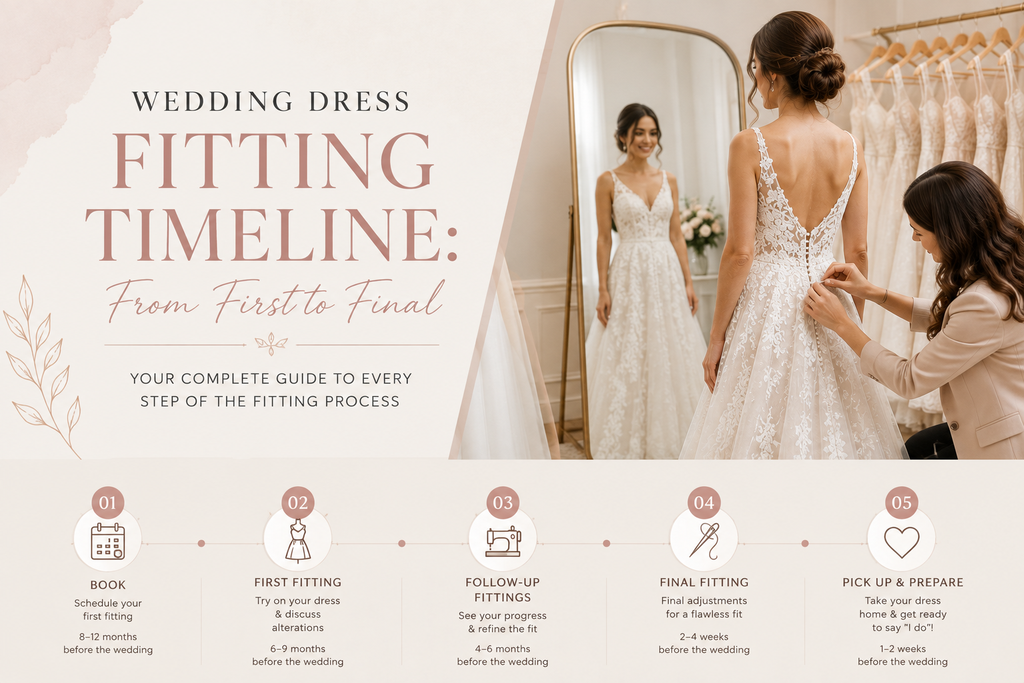
The wedding dress fitting timeline from first to final follows a strict schedule. The first fitting appointment occurs 8 to 10 weeks before the wedding. The second fitting check happens 4 to 6 weeks before the wedding. The final fitting before the wedding day occurs 2 weeks before the date. Dress pickup happens 1 week before the wedding or includes wedding day dress steaming.
First Fitting: 8 to 10 Weeks Before the Wedding
The seamstress pins the bodice, marks the hemline, and determines bustle placement during the first fitting appointment. Bring wedding shoes and bridal undergarments and shapewear to this appointment. The seamstress bases every measurement on the exact undergarments and heel height you wear that day. Schedule your first fitting eight weeks before the wedding at minimum. Brides ordering off-the-rack gowns benefit from booking 12 weeks out to account for potential size discrepancies.
Second Fitting: 4 to 6 Weeks Before the Wedding
The second fitting check verifies bodice fit after initial alterations. The seamstress confirms hemline length and bustle ribbon placement. Train length customization plans finalized at the first fitting are tested with actual fabric movement. Adjustments made here are smaller than those at the first appointment.
Final Fitting: 2 Weeks Before the Wedding
The final fitting before the wedding day verifies every seam, strap, and closure. You practice bustling the gown until the motion takes under 15 seconds. Use the final fitting to practice bustling the dress. The person responsible for securing the train should learn how each attachment works and repeat the process until they feel comfortable doing it without guidance. The seamstress adjusted the loop height by one quarter inch. The fourth attempt took 12 seconds. This small adjustment prevented a reception malfunction.
Schedule the final fitting no later than 2 weeks before the wedding. Alterations completed within 1 week of the wedding date carry a 50% rush surcharge and leave zero margin for error. Last-minute bodice or hemline changes require a minimum of 72 hours.
What Happens at a Wedding Dress Fitting?
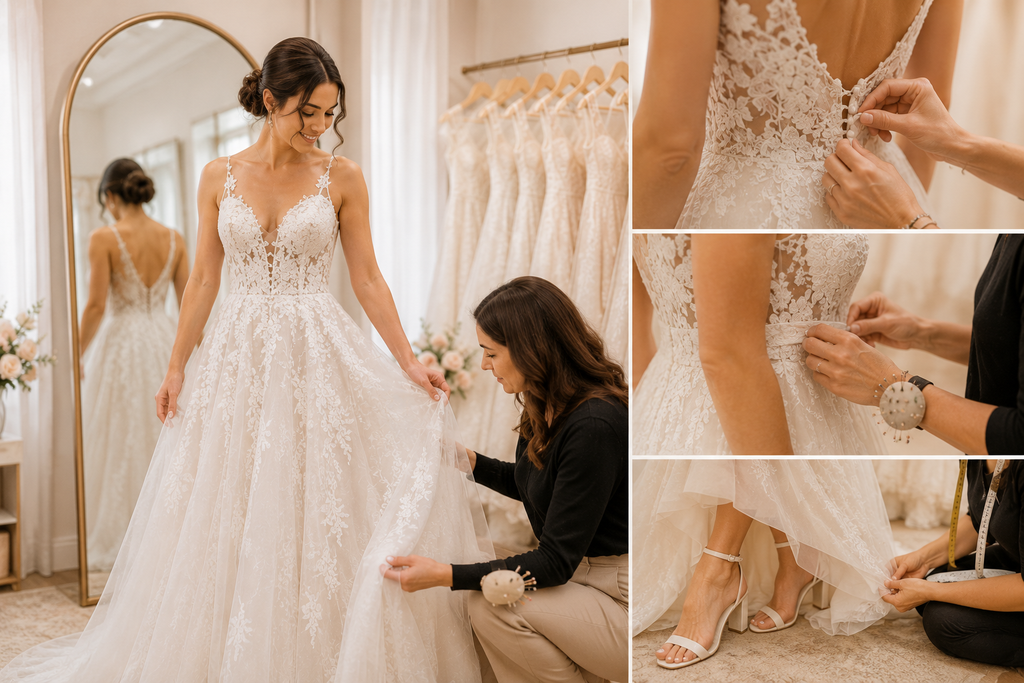
The bodice receives pinning and adjustment during the first fitting. The hemline marking and cutting occur based on exact shoe height. Bustle placement and ribbon or loop installation happen at the first or second fitting. Strap and sleeve adjustments require separate pinning. Corset back adjustments need 2 separate fittings to verify lace spacing and tension.
Before your first appointment, it can also help to understand how different gown structures affect fit. For example, brides comparing fitted and fuller silhouettes can review the A-line vs. ballgown wedding dress difference before discussing alterations with a seamstress.
Bodice and Corset Back Adjustments
Taking in or letting out the bodice requires internal seam restructuring. Corset back adjustment modifies lace spacing and eyelet placement. Brides who add a corset to a zippered gown need 2 additional appointments to test tension across the back panels.
Hemline and Train Modifications
The seamstress marks the hemline while you wear your exact wedding shoes. Train length customization determines how the bustle supports the fabric weight. Ball gowns with multiple layers cost more to hem than sheath gowns with single layers.
Bustle Installation for the Reception
The seamstress installs ribbons, hooks, or loops based on gown weight. You practice bustling the dress until the action takes under 15 seconds. French bustles on heavy satin ball gowns require more support points than American bustles on light chiffon sheaths. Brides who skip this practice risk fumbling with the bustle at the reception.
For a more detailed walkthrough, see our guide on how to bustle a wedding dress. If you want to understand the different bustle mechanisms and the correct way to secure them.
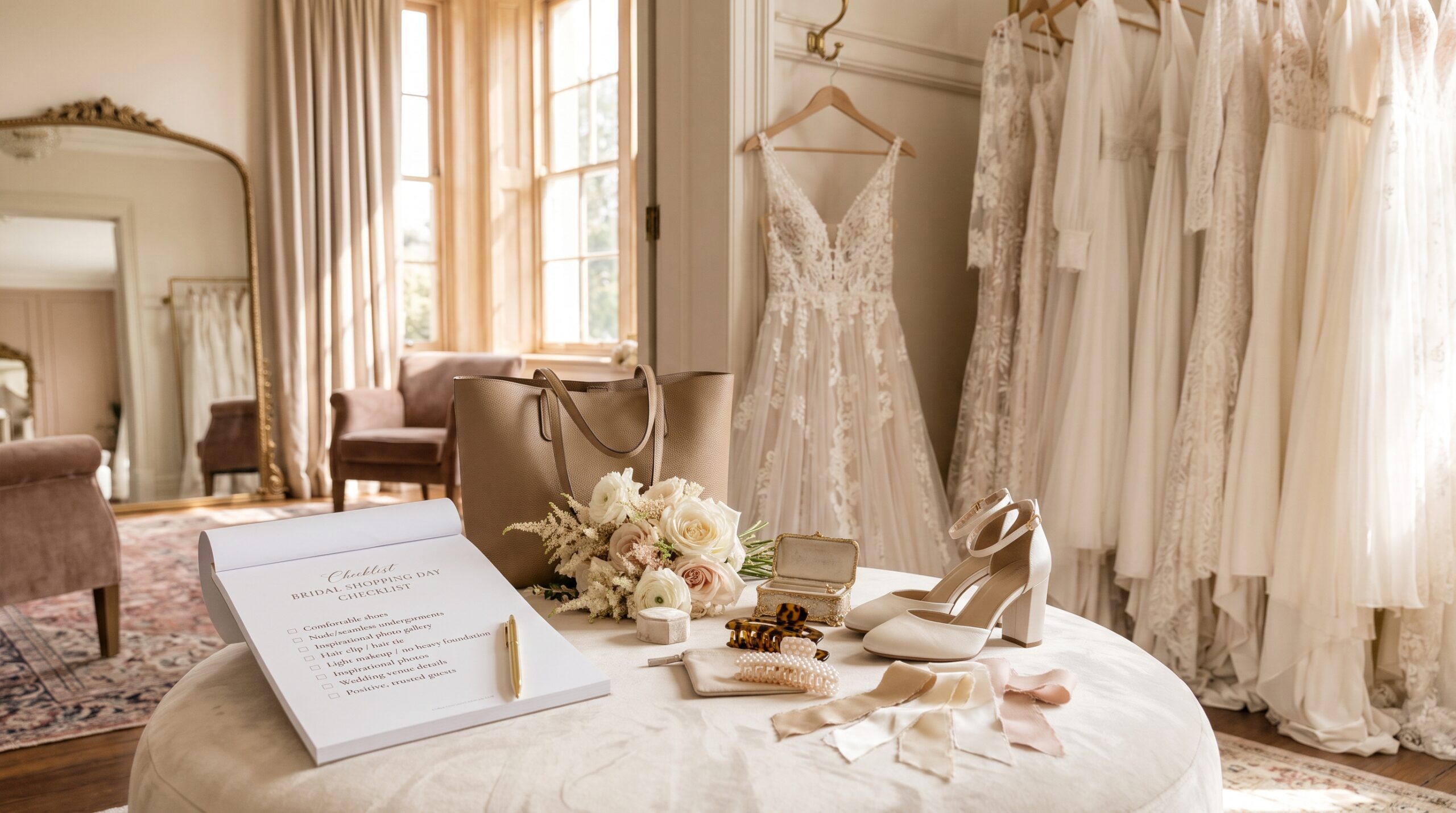
What to Bring to Every Wedding Dress Fitting
- Wedding shoes with the exact heel height you will wear on the wedding day.
- Bridal undergarments and shapewear.
- Jewelry or accessories that affect neckline drape.
- A photo of your planned hairstyle for neckline reference.
- One trusted person, not a crowd.
Bring your shoes to every fitting. The wrong shoe height ruins the hemline. Bring the exact shoes. Do not substitute similar heights. A half-inch difference drops the hemline into a tripping hazard. Bring your wedding shoes to every fitting even if you think the hemline is already correct. The seamstress verifies length against shoe height at every stage.
Your neckline and accessories can also affect how the bodice needs to be adjusted. If you’re still deciding between neckline styles, review this guide to wedding dress necklines explained before your fitting appointments.
How Much Do Wedding Dress Alterations Cost?
| Alteration Type | Cost Range | Notes |
|---|---|---|
| Hem | $150 – $300 | Ball gowns with multiple layers cost more than sheath gowns. |
| Bodice | $100 – $250 | Complex internal restructuring reaches the high end. |
| Bustle | $75 – $200 | French bustles cost more than American bustles. |
| Straps / Sleeves | $50 – $150 | Adding sleeves costs more than shortening straps. |
A bridal boutique in-house seamstress charges 20% to 30% less than an independent tailor. Wedding season alterations rush periods (April through June, September through October) trigger 50% to 100% surcharges.
For a more detailed breakdown of labor, common alteration types, and expected price ranges, see our wedding dress alterations cost guide.
Standard Alterations Price List
Hem alterations cost $150 to $300 depending on layers. Bodice alterations cost $100 to $250. Bustle installation costs $75 to $200 based on ribbon complexity. Sleeve or strap adjustments cost $50 to $150.
Rush Alterations and Wedding Season Surcharges
Rush fees apply to bookings within 4 weeks of the wedding. Peak season demand extends turnaround time by 1 to 2 weeks. The Knot Real Weddings Study reports national average alterations pricing ranges that align with these figures. Brides who book during wedding season alterations rush periods pay premium rates and face longer wait times.
Common Wedding Dress Fitting Mistakes Brides Make
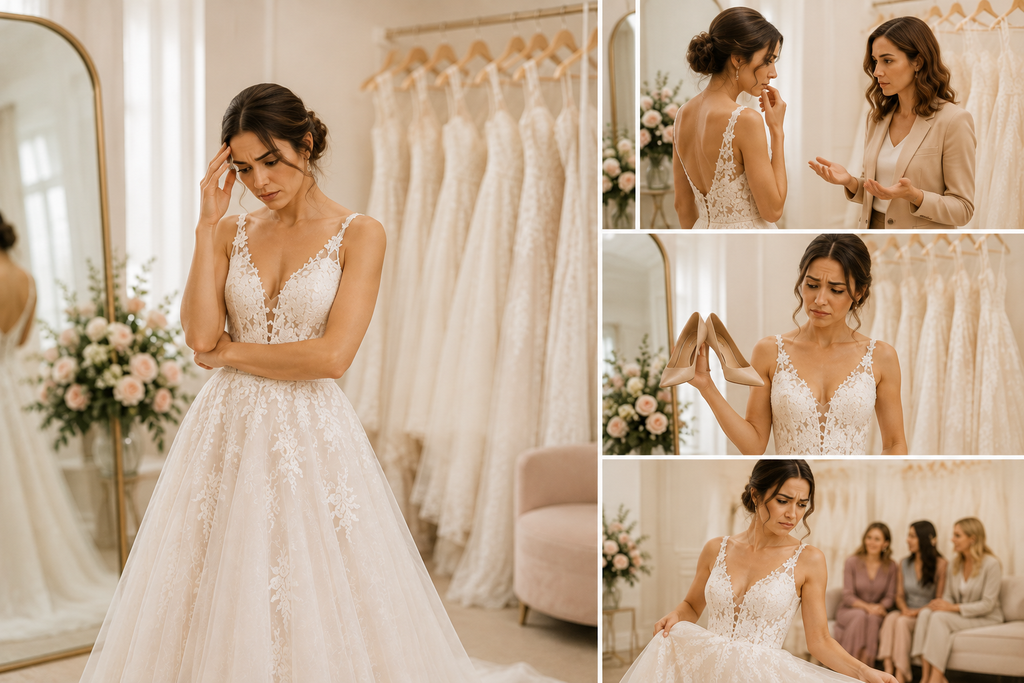
Brides make 6 predictable errors that cost time and money.
- Myth: 1 fitting is enough. Even simple gowns need 2 appointments.
- Mistake: Scheduling the first fitting less than 4 weeks before the wedding. Brides who schedule less than 4 weeks out pay rush fees or miss corrections entirely.
- Mistake: Bringing 5 or more people to appointments. Crowds create conflicting opinions and distract the seamstress.
- Mistake: Buying a gown 2 sizes too large intending to alter it down. Excess fabric distorts the original bridal gown silhouette.
- Mistake: Not accounting for weight loss between fittings. Significant weight loss fitting changes require bodice reconstruction, not simple takedowns.
- Mistake: Skipping the final fitting. A bride who skipped her final fitting experienced a bustle malfunction at the reception because the loop height had shifted during transit.
Myth: You Can Skip the Final Fitting
The final fitting before the wedding catches errors invisible at the second fitting. Post-alteration dress preservation begins after this appointment. Skipping this step leaves loose threads, shifted beads, or bustle malfunctions undiscovered.
Mistake: Scheduling Your First Fitting Too Late
Independent seamstresses book 2 to 3 weeks out during peak season. Brides who wait until 4 weeks before the wedding often cannot secure an appointment with their preferred wedding dress seamstress. Schedule your fitting before wedding day stress compounds by booking early.
Frequently Asked Questions About Wedding Dress Fittings
How many wedding dress fittings do you need?
Most brides need 2 to 3 fittings. Simple hems and bustles complete in 2 appointments. Bodice reconstruction, corset back adjustments, or lace appliqué repositioning require 4 or more fittings.
What happens at a wedding dress fitting?
The seamstress pins the bodice, marks the hemline, and determines bustle placement at the first appointment. The second fitting confirms fit after initial alterations. The final fitting verifies every detail 2 weeks before the wedding.
How long does wedding dress alterations take?
Standard alterations require 6 to 8 weeks from first fitting to final pickup. Rush alterations compress this to 2 to 3 weeks but cost 50% to 100% more. Complex redesigns extend the timeline to 10 or more weeks.
When should you schedule your first wedding fitting?
Schedule the first fitting 8 to 10 weeks before the wedding. Brides ordering off-the-rack gowns should book 12 weeks out. Brides with custom gowns or complex alterations should schedule 14 to 16 weeks before the wedding date.
Do I need to bring my wedding shoes to every fitting?
Bring exact wedding shoes to the first and second fittings. Shoe height determines hemline length. Bring them to the final fitting only if you purchased new shoes or changed heel heights since the previous appointment.
Final Notes on Your Wedding Dress Fitting Timeline
Two to three fittings spaced across 8 weeks prevent last-minute bridal stress. A mapped fitting timeline eliminates uncertainty and ensures your gown fits perfectly on the wedding day. Brides who follow this schedule avoid rush fees, catch errors early, and walk into the reception with a bustle that holds.
If you’re still choosing your gown, remember that fit considerations should start before you order. Brides can compare how to choose a wedding dress for their body type to identify silhouettes that may require more or fewer alterations. Brides shopping in extended sizes can also review these plus-size wedding dresses that flatter before scheduling fittings.
If budget is a concern, planning alterations before purchasing is especially important. A lower-priced gown can become significantly more expensive after extensive tailoring, so compare the total cost with options such as affordable wedding dresses under $500 and cheap wedding dresses that don’t look cheap.
Download our free Wedding Dress Fitting Checklist to track every appointment, item to bring, and alteration detail from now until your wedding day.