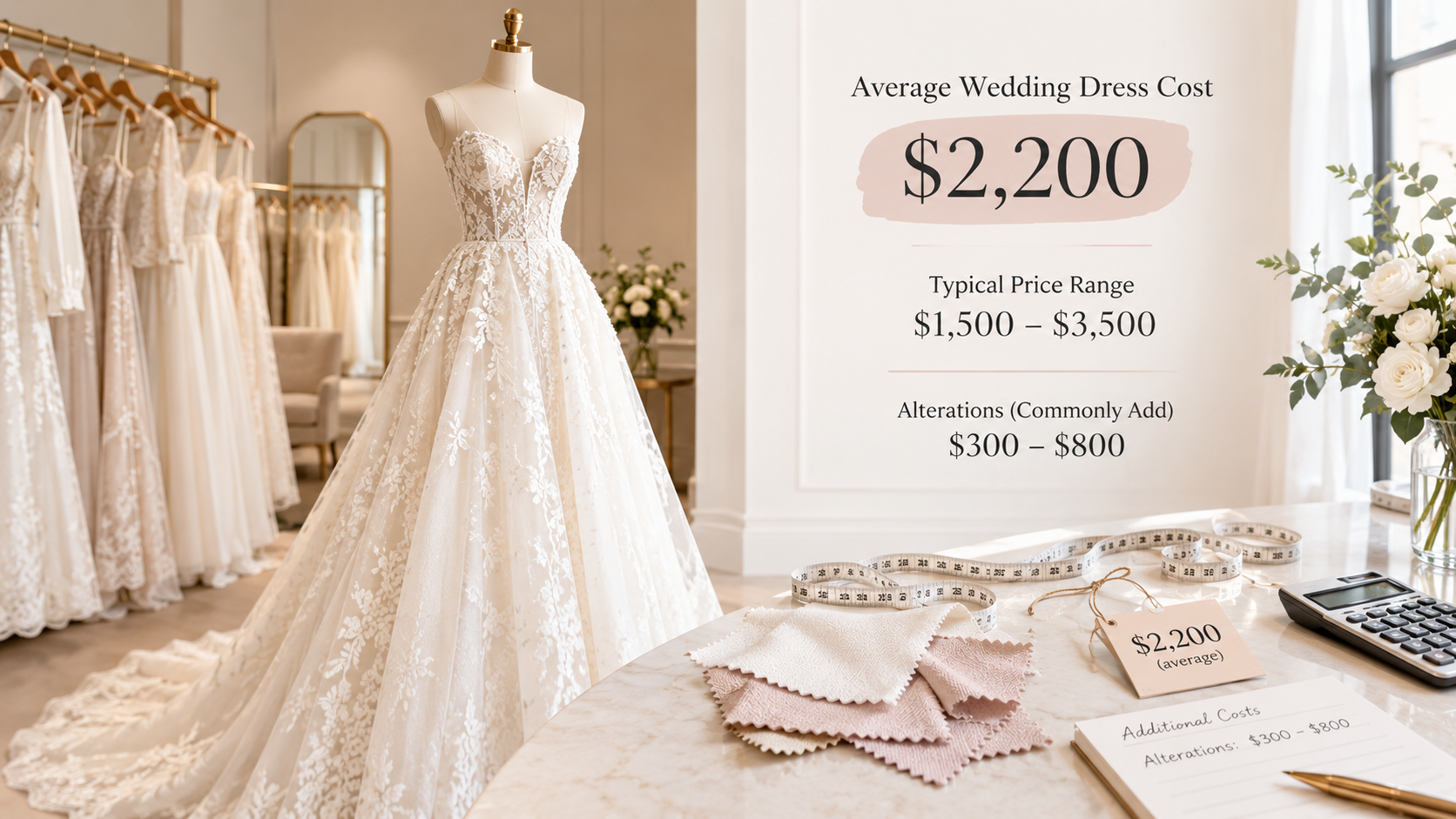
- Average wedding dress cost in 2026: $2,200
- Typical price range: $1,500 to $3,500
- Alterations add: $300 to $800
- Budget rule: 8-10% of total wedding budget
- Hidden costs include: veil, undergarments, shoes, rush fees
How much does a wedding dress cost on average? The 2026 answer is $2,200, based on The Knot 2025 Real Weddings Study tracking more than 12,000 couples. Most brides in the United States spend between $1,500 and $3,500 for the gown alone.
Alterations add another $300 to $800 to the final bill, depending on the gown’s construction, fabric, train length, and amount of tailoring required.
Real wedding dress prices also vary considerably by region. Brides shopping in major metropolitan areas may encounter higher prices because of boutique overhead, local demand, and cost-of-living differences.
Brides often walk into salons without knowing whether the dresses on display match their budget. This can lead to impulse spending or disappointment when a favorite gown turns out to be outside their price range.
Understanding your budget before making appointments makes the shopping process much easier. It also helps you compare different designers, silhouettes, fabrics, and retailers without losing sight of your overall wedding expenses.
What Is the Average Wedding Dress Cost in 2026?

The Knot 2025 Real Weddings Study reports $2,100 as the 2025 national average. Wedding dress cost in 2026 reflects a modest increase as bridal retailers respond to higher material, manufacturing, and operating expenses.
Regional variation is significant. Northeast brides average around $2,800, Midwest brides around $1,700, and West Coast brides around $2,400. Dress costs often follow local cost-of-living patterns and boutique overhead.
The median purchase price is approximately $1,900. Luxury gowns priced above $8,000 can push the national average upward even though relatively few brides purchase dresses at that level.
Wedding Dress Price Range by Tier
Bridal gown price tiers reflect construction quality, fabric origin, designer recognition, and the amount of handwork involved. The overall wedding dress price range can span from around $500 to more than $10,000.
| Tier | Price Range | Materials | What You Get |
|---|---|---|---|
| Budget | $500–$1,500 | Polyester blends, minimal handwork | Off-the-rack styles, limited size ranges |
| Mid-Range | $1,500–$3,500 | Satin, chiffon, some lace appliqué | Structured boning, standard delivery |
| Designer | $3,500–$6,500 | Silk organza, custom measurements | Named labels, made-to-order construction |
| Luxury | $6,500+ | Hand-beaded details, exclusive fabrics | Multiple fittings, 6–12 month lead times |
Made-to-order versus off-the-rack construction helps explain why similar-looking gowns can have dramatically different prices. Labor, fabric usage, customization, and production time all affect the final retail price.
Wedding Dresses Under $1,000
Wedding dress under $1,000 options include sample sales, online retailers, trunk shows, and seasonal promotions. Polyester satin and unlined bodices are common in this bracket, although affordable gowns can still look polished when the construction and fit are good.
When shopping at this price point, inspect seams, zippers, hems, lining, and embellishments before purchasing. Sample gowns should also be checked for makeup marks, loose stitching, and signs of previous wear.
For additional budget-friendly ideas, compare different affordable wedding dress options under $500 before setting your maximum spending limit.
Designer Wedding Dress Cost
Designer wedding dress prices can start around $3,800 for entry-level luxury styles and rise substantially for couture or highly customized gowns.
Pronovias core collections can range from approximately $2,200 to $4,500, while Maggie Sottero gowns commonly fall around $1,800 to $2,800.
Affordable wedding dress options can sometimes be found even within recognizable designer labels. Trunk shows, sample sales, discontinued collections, and seasonal promotions may reduce retail prices.
Wedding Dress Alterations Cost and Hidden Fees

Custom fitting and tailoring can significantly change the final cost of a wedding gown. The real cost of wedding gown ownership includes hemming, bustling, taking in or letting out seams, pressing, steaming, and accessory purchases.
Typical alteration expenses include:
- Hemming: $150–$400 depending on gown layers and fabric.
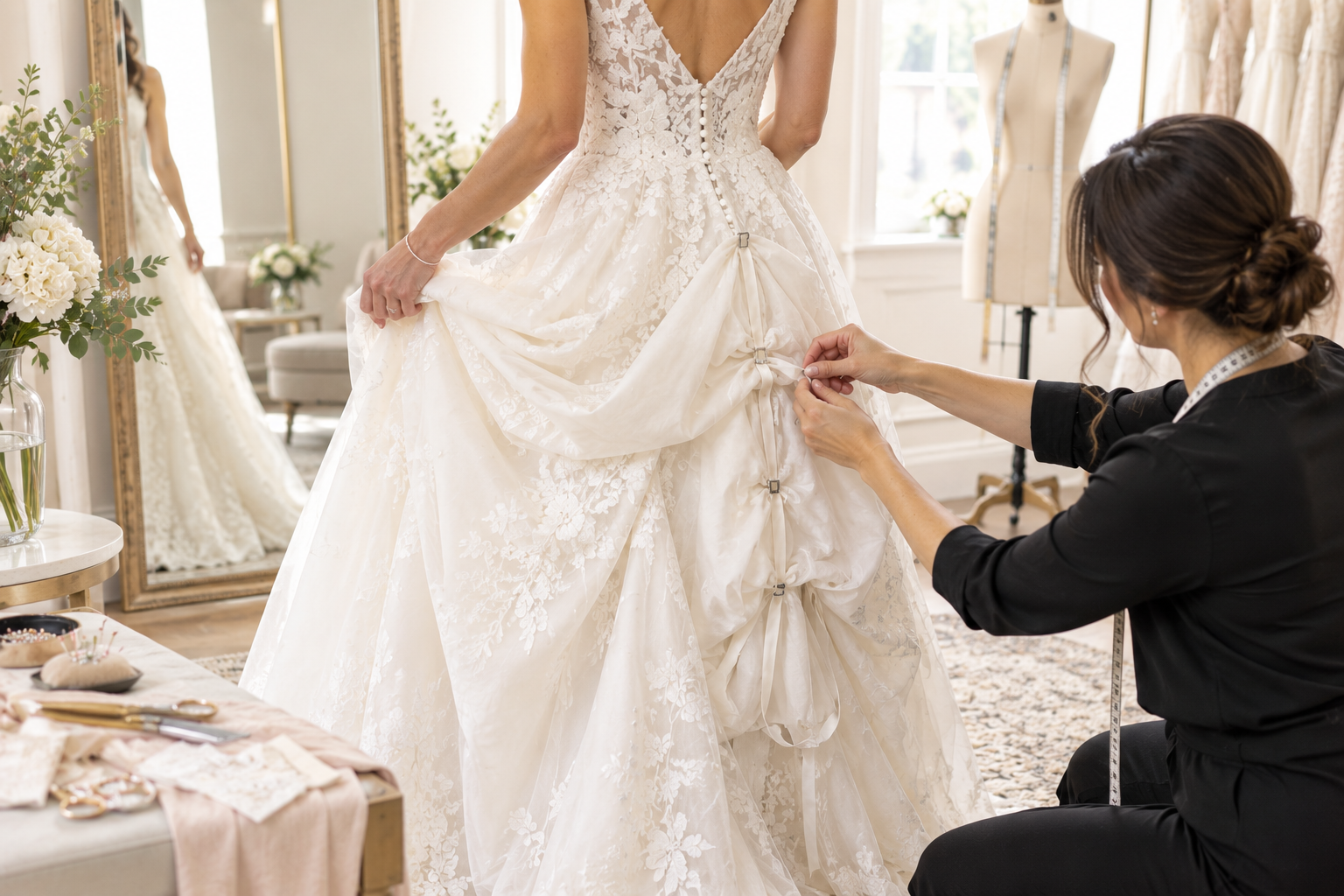
- Bustle installation: $75–$250 depending on the number of attachment points.
- Taking in or letting out seams: $50–$150 per area.
- Rush fees: Weddings scheduled within eight weeks may incur an additional 20–30%.
- Bridal accessories: Approximately $200–$600 depending on what you purchase.
For a more detailed breakdown of tailoring expenses, see this wedding dress alterations cost guide before accepting an alteration quote.
Complex gowns can require substantially more labor than brides initially expect. A heavily layered ball gown, for example, may require several hours of work simply to create a secure and functional bustle.
Always request a written alteration estimate before work begins. Ask whether the quote includes pressing, steaming, bustle installation, and any adjustments that may be needed after the first fitting.
What Drives Wedding Dress Prices?
Wedding dress cost factors extend beyond fabric and thread. Construction methods, imported materials, labor, customization, and retail overhead all contribute to the final price.
1. Fabric
Fabric type can have a major effect on the base cost. Silk charmeuse, for example, is significantly more expensive than polyester satin.
The amount of fabric required also matters. A dramatic ball gown with multiple layers and a long train will generally require more material than a simple sheath dress.
2. Construction Complexity
Hand-sewn boning, corsetry, lace placement, embroidery, beading, and other detailed techniques require additional labor.
A gown that looks simple from a distance may still require extensive internal construction to create the desired shape and support.
3. Imported Materials
European lace, specialty silks, imported embellishments, and other premium materials can increase wholesale production costs.
4. Boutique Overhead
Bridal boutiques have expenses that online retailers may not have to the same extent, including showroom rent, sample inventory, consultants, fitting rooms, and staff commissions.
5. Made-to-Order Production
Made-to-order gowns generally cost more than mass-produced or off-the-rack styles because they involve individual production, specialized measurements, fabric allocation, and additional labor.
This is one reason two gowns with similar silhouettes can have very different price tags.
How to Budget for Your Wedding Dress
A useful starting point is to allocate 8–10% of your total wedding budget to the gown, then reserve additional money for alterations and accessories.
Use these strategies when setting your dress budget:
- Allocate 8–10% of your total wedding budget to the gown.
- Set your dress budget about 15% below your absolute maximum to leave room for alterations.
- Consider sample sales that may offer 20–50% discounts.
- Ask boutiques whether payment plans are available.
- Consider pre-owned gowns if wearing a previously owned dress fits your priorities.
Your shopping timeline also matters. Starting early gives you more time to compare prices, order a gown, schedule fittings, and handle unexpected alterations. Use this wedding dress shopping timeline and checklist to organize the process from initial research through the final fitting.
Wedding Dress Sample Sale Strategy
Sample sales can be one of the easiest ways to purchase a designer-style gown at a lower price.
Arrive early, know your measurements, and remember that bridal sizing often differs from everyday clothing sizes.
Before purchasing a sample gown, carefully inspect:
- Zippers
- Seams
- Hems
- Beading
- Lace
- Underarms
- Bust area
- Train
- Makeup or deodorant marks
Ask whether the sample has been professionally cleaned and whether additional alterations will be necessary.
Wedding Dress Payment Plans
Some boutiques offer in-house financing, while others use third-party payment providers. Payment terms vary, so read the agreement carefully before committing.
Pay attention to interest rates, late fees, promotional periods, and the total amount you will eventually pay.
Your total bridal attire budget should include the gown, veil, shoes, undergarments, jewelry, and alterations rather than focusing solely on the dress’s sticker price.
Other Ways to Reduce Wedding Dress Costs
You don’t necessarily need to sacrifice style to stay within budget.
Shopping during sample sales, looking at discontinued collections, considering off-the-rack gowns, and comparing online retailers can all reduce the initial purchase price.
Another option is buying pre-owned. Where to buy a secondhand wedding dress can be particularly useful if you’re comfortable purchasing a gown that has already been worn and want to access designer styles at substantially lower prices.
However, always account for cleaning, shipping, alterations, and possible repairs when comparing a secondhand gown with a new one.
Mistakes Brides Make When Shopping for Wedding Dresses

One of the biggest mistakes is trying on dresses that are significantly above your budget. Falling in love with a gown you cannot comfortably afford can make the rest of the shopping process frustrating.
Other common mistakes include:
- Forgetting to budget for the veil and accessories.
- Ignoring alteration costs.
- Waiting too long to order the gown.
- Buying a dress based on its current fit rather than planned alterations.
- Failing to inspect sample gowns carefully.
- Forgetting about the bustle and train.
- Ordering a size based on hoped-for future weight loss.
Your gown should be ordered according to your current measurements. Alterations can be made closer to the wedding, but relying on a major future size change can create unnecessary stress.
If you’re unsure how many appointments you’ll need, understanding the wedding dress fitting timeline can help you plan both your time and your alteration budget.
Wedding dress preservation and cleaning can also cost several hundred dollars, so decide whether preservation is important to you before finalizing your overall attire budget.
Frequently Asked Questions About Wedding Dress Cost
How much does a wedding dress cost on average?
The average wedding dress cost in 2026 is approximately $2,200. Most brides spend between $1,500 and $3,500 before alterations, while the median purchase price is around $1,900.
What is the average wedding dress cost including alterations?
Including alterations, the average wedding dress can reach approximately $2,500 to $3,000. Alterations commonly add $300 to $800 depending on hem length, bustle points, seam work, and gown construction.
Why are wedding dresses so expensive?
Silk fabrics, detailed construction, imported lace, hand-sewn embellishments, specialized labor, and boutique overhead all contribute to wedding dress prices.
How much do wedding dress alterations cost?
Wedding dress alterations typically cost $300 to $800. Hemming may cost $150–$400, while bustle installation commonly costs $75–$250. Rush orders can increase the alteration bill further.
How much should I budget for my wedding dress?
A reasonable starting point is 8–10% of your total wedding budget for the gown itself. Keep additional money available for alterations, accessories, shoes, undergarments, steaming, and other finishing costs.
Conclusion
The average wedding dress cost in 2026 is $2,200, but your final price depends on fabric, construction, designer, location, and alteration requirements.
A $1,000 gown can work beautifully for a bride who prioritizes affordability, while a $5,000 designer gown may make sense for someone who values premium materials and customized construction.
The most important step is to calculate the total cost, not just the price on the dress tag. By accounting for alterations, accessories, fittings, and potential hidden fees before shopping, you can avoid sticker shock and choose a gown that fits comfortably within your wedding budget.
Use your overall wedding spending plan as the starting point, establish a realistic dress cap, and compare options across different price tiers before making your final decision.