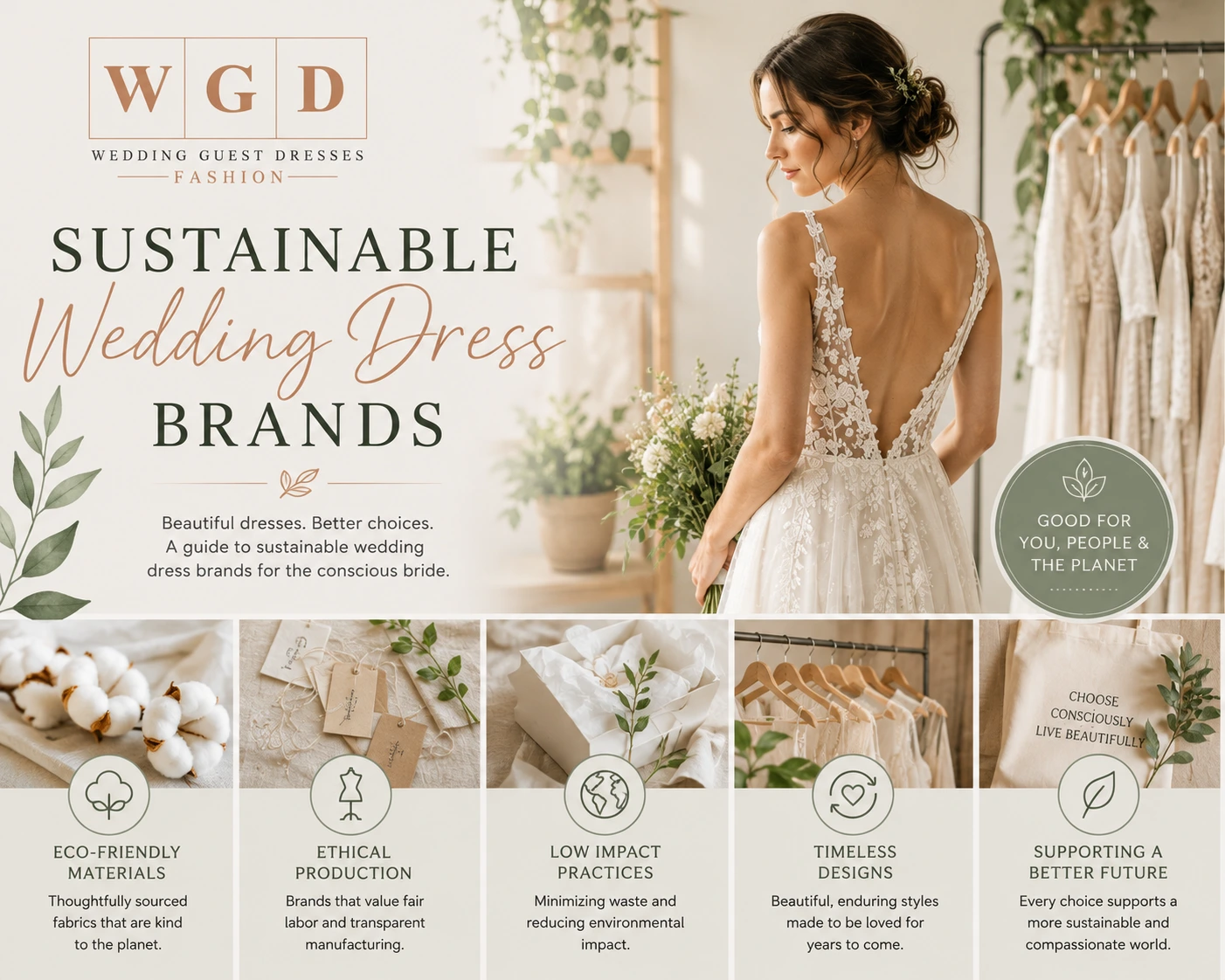
Sustainable wedding dress brands produce gowns using organic, recycled, or deadstock fabrics with transparent supply chains. The 12 brands below range from $300 vintage finds to $5,500 custom designs, covering every budget and aesthetic from minimalist to romantic. Each label meets at least one third-party certification standard such as GOTS or Fair Trade USA. Most brides abandon the search for ethical gowns after encountering greenwashing or limited size ranges. This guide delivers verified brand recommendations, exact price ranges, and a clear framework for spotting genuine sustainability. The best sustainable wedding dresses combine certified materials with ethical production without sacrificing modern style or fit. Every recommendation includes headquarters location, exact pricing, and the specific certification that qualifies the brand.
What Makes a Wedding Dress Truly Sustainable?
Third-party certifications separate genuine sustainability from greenwashing. Material categories include organic fibers, recycled synthetics, and rescued deadstock fabric. Production ethics cover local manufacturing, living wages, and made-to-order models. Transparent supply chain standards require public disclosure of factory locations and exact material percentages.
Certifications That Matter
Brides ask what certifications to look for in sustainable bridal wear before trusting any label. GOTS certification requires 70% or more organic fibers in the finished textile. Fair Trade USA audits labor conditions and wage compliance. B Corp certification measures holistic environmental and social impact. OEKO-TEX Standard 100 screens for harmful chemical residues.
Materials That Minimize Impact
Brides ask what is the most sustainable wedding dress material when comparing environmental impact. Organic cotton uses 91% less water than conventional cotton during cultivation. Peace silk allows moth emergence before harvesting, which eliminates cruelty concerns. Tencel lyocell relies on closed-loop solvent recovery that recycles 99% of processing chemicals. Recycled polyester diverts ocean plastic into textile fiber but lacks biodegradable properties. Deadstock fabric utilization rescues existing textiles from landfills without new production and creates zero waste wedding dress options.
12 Best Sustainable Wedding Dress Brands for Eco Brides
Best sustainable wedding dress brands for eco brides operate within a circular fashion economy that prioritizes reuse, recycling, and responsible end-of-life disposal. Ethical wedding dress designers across three price tiers prove that sustainability spans every budget. The 12 labels below include exact price ranges, headquarters locations, and signature practices.
Under $1,000: Indie and Pre-Owned
1. Reformation Pre-Owned offers eco-friendly wedding dresses under 1000 through its peer-to-peer resale platform. Prices range from $298 to $698 for previously worn gowns in sizes 0 to 22. Each listing includes professional cleaning verification and a 14-day return window.
2. ASOS Edition Responsible produces new gowns from recycled polyester and organic cotton blends. Prices range from $200 to $500 for minimalist silhouettes. The line carries OEKO-TEX certification and offers inclusive sizing up to US 24.
3. Stillwhite operates a global peer-to-peer marketplace for secondhand designer wedding dresses. Prices range from $150 to $900 depending on designer and condition. Sellers list exact measurements and condition ratings for each gown. If you’re considering a pre-owned gown, our secondhand wedding dress buying guide explains what to check before purchasing.
4. Nearly Newlywed authenticates every pre-owned gown through an in-house inspection process. Prices range from $300 to $800 for labels like Vera Wang and Oscar de la Renta. Buyers receive 5-day return windows and professional steaming credits. For brides specifically looking for an inexpensive gown, our guide to affordable wedding dresses under $500 offers additional ways to keep the dress budget low without automatically sacrificing style.
$1,000 to $3,000: Mid-Range Ethical Designers
5. Christy Dawn builds each bridal gown from deadstock fabric rescued from fashion houses. Prices range from $1,200 to $2,400 for floral prints and vintage-inspired cuts. The Los Angeles studio publishes exact fabric sourcing percentages for every collection.
6. Leanne Marshall designs affordable ethical wedding dresses for brides using GOTS-certified organic silk and peace silk blends. Prices range from $1,800 to $2,800. Each small-batch collection eliminates overproduction waste through limited-quantity releases.
7. Wear Your Love specializes in hemp wedding dresses and organic cotton bridal separates. Prices range from $1,000 to $2,200. The Oregon-based studio ships in plastic-free packaging and includes complimentary custom length adjustments.
8. Reformation New Bridal uses recycled fabrics and viscose from sustainably managed forests. Prices range from $1,200 to $2,600. The brand publishes a detailed sustainability report naming tier-1 factories and verifying worker wages above local minimums.
During a trunk show in Brooklyn, the weight of a GOTS-certified organic cotton sample from Christy Dawn felt substantially heavier than standard polyester lace. The natural fiber drape moved naturally without synthetic stiffness. That weight difference revealed the structural density of biodegradable textiles compared to petroleum-based lace.
$3,000+: Luxury Sustainable Ateliers
9. Celia Dawn operates a GOTS-certified atelier in New York City with artisan craftsmanship at its core. Prices range from $3,000 to $5,500 for fully bespoke gowns. Each made-to-order design requires 16 to 20 weeks of production.
10. Pure Magnolia creates custom sustainable wedding dress designs from hemp and peace silk in Vancouver. Prices range from $3,500 to $6,000. The studio offers virtual fittings for US clients and ships with carbon-neutral options.
11. Sanyukta Shrestha handcrafts peace silk couture gowns in Nepal using cruelty-free silk alternatives. Prices start at $4,000. The brand trains local women in traditional embroidery and publishes annual impact reports with worker wage data.
12. Rita Colson produces bespoke organic lace gowns in London using deadstock French lace and GOTS-certified linings. Prices range from $3,200 to $5,800. Each design requires 12 to 16 weeks and includes three virtual or in-person fitting sessions.
Where to Buy Sustainable Wedding Dresses Online and In-Person
Where to buy sustainable wedding dresses depends on your timeline, budget, and need for in-person fitting access. Direct brand websites offer virtual consultations and made-to-order timelines. Sustainable bridal boutiques operate in New York City, Los Angeles, and Portland. Secondhand platforms provide 40 to 70% savings but carry specific risks. Rental services suit single-day wear with 60 to 75% cost reduction.
Direct-from-Designer Online Shopping
Sustainable wedding dress brands that ship worldwide operate direct-to-consumer websites with virtual consultation calendars. Made-to-order timelines run 12 to 20 weeks from deposit to delivery. International shipping often includes carbon-neutral shipping options at checkout. Because made-to-order gowns can require several months before delivery, brides should build their purchase around a realistic wedding dress shopping timeline, including time for fittings and alterations.
Secondhand and Rental Platforms
The best places to buy secondhand wedding dresses online include authenticated marketplaces and peer-to-peer platforms. Wedding dress rental services like HURR and By Rotation list designer gowns for $200 to $800 with damage coverage included. Authentication processes, return windows, and professional cleaning standards vary by platform. Price savings average 40 to 70% below retail.
Secondhand wedding dress purchases on peer-to-peer platforms often carry no return policy. Brides must verify measurements against their own bodies, not the labeled size, since vintage sizing differs from modern standards by 2 to 4 inches. If you’re deciding between purchasing a pre-owned gown and renting one, compare the long-term costs with our guide to the real cost of renting a wedding dress versus buying.
How Budget-Conscious Brides Find Affordable Eco Wedding Dresses
Affordable sustainable wedding dresses for budget conscious brides require strategic shopping within the slow fashion movement. Rental economics compare $200 to $800 rental fees against $2,000 or higher purchase prices. Fabric choice directly impacts price because hemp costs 30 to 50% less than peace silk. Indie designers price their collections 20 to 40% below established luxury labels.
Rent Instead of Buying
Sustainable wedding dress rental companies like HURR and By Rotation offer designer gowns for 60 to 75% below retail purchase cost. Rental suits one-day wear without demanding long-term storage space or preservation expenses. Most platforms include damage coverage and professional cleaning in the rental fee.
Shop Sample Sales and Off-Season
Brides find an affordable eco wedding dress during the January and July clearance cycles. Sample gowns may show minor wear from showroom use. Alteration allowances of 1 to 2 sizes provide fit flexibility for brides who find their approximate size.
How to Choose an Eco Wedding Dress by Fabric and Values
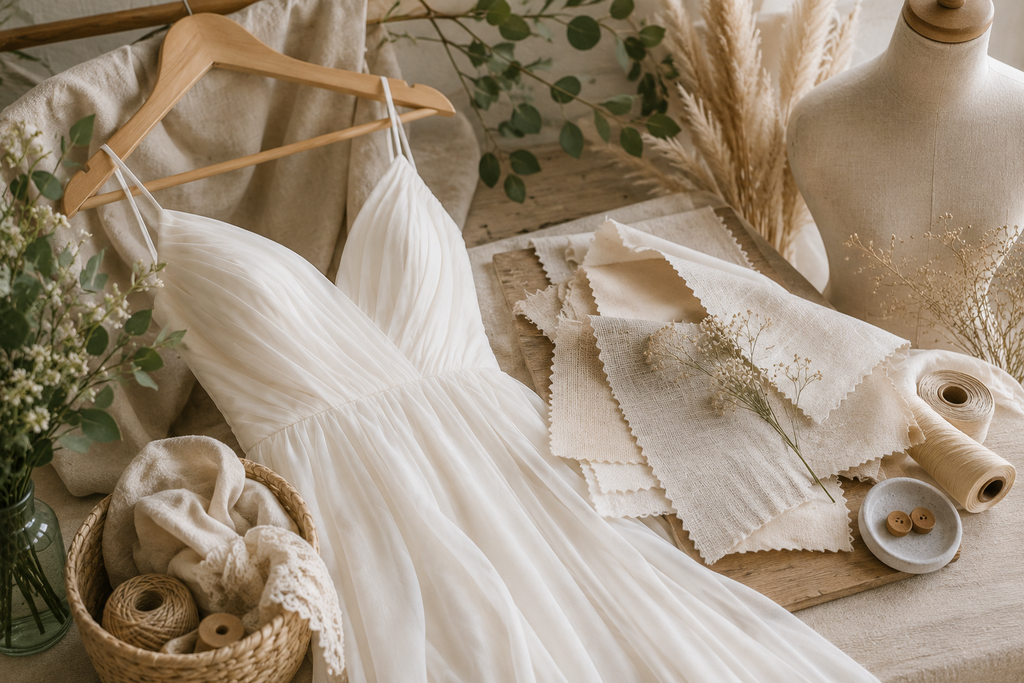
Learning how to choose an eco wedding dress starts with matching fabric weight to climate and venue type. Fiber choice must align with personal values. Vegan brides avoid peace silk while zero-waste advocates prioritize deadstock fabric utilization.
Made-to-order lead times require 16 to 24 weeks plus 4 to 6 weeks for alterations. Verify marketing claims against third-party databases before placing a deposit.
Step 1 — Match Material to Season and Venue
An organic cotton wedding dress suits beach weddings and summer ceremonies because the lightweight weave breathes in heat above 75 degrees. Structured hemp withstands outdoor ceremonies and cooler temperatures without wrinkling. Tencel lyocell drapes formally for indoor settings and photographs with a subtle sheen similar to conventional silk. Once you’ve narrowed down the material, silhouette, and fabric, choosing the right neckline can make a major difference to the final look. Our wedding dress necklines explained guide compares the most common options.
Step 2 — Verify Claims Beyond Marketing
Ethical wedding dress designers USA publish factory locations and exact material percentages on their websites. Cross-reference certification numbers on the GOTS public database before purchasing. Beware of unregulated terms like “natural” or “green” that carry no legal definition. According to Fashion Revolution’s 2023 Transparency Index, only 15% of fashion brands disclose tier-1 manufacturing facilities.
Step 3 — Plan for Made-to-Order Lead Times
Sustainable bridal gowns made to order require standard lead times of 16 to 24 weeks. Rush options rarely exist for ethical brands because small studios lack excess inventory. Alterations add 4 to 6 weeks depending on the complexity of fit changes. Remember to budget separately for alterations when comparing sustainable gowns. Our wedding dress alterations cost guide can help you estimate this additional expense.
Common Myths About Sustainable Bridal Wear
Eco-friendly wedding dresses that don’t look hippie already dominate the ethical bridal market. Why choose a sustainable wedding dress over traditional options becomes clearer once common misconceptions disappear. The comparison below contrasts four frequent myths with verified realities.
| Myth | Reality |
| Eco-friendly gowns look like hemp sacks. | Deadstock lace and organic silk produce minimalist bridal aesthetic designs ranging from sleek column gowns to romantic A-lines. |
| Sustainable always means expensive. | Rental, secondhand, and indie options start at $150. |
| Vintage is automatically sustainable. | Dry cleaning chemicals and alteration waste offset the benefit unless green cleaning and local tailoring are used. |
| Certifications do not matter. | Third-party audits verify claims that marketing language cannot legally guarantee. |
When comparing silhouettes, don’t assume sustainability limits your options. For example, an A-line gown can create a very different effect from a ballgown even when both use the same sustainable fabric. Our A-line vs. ballgown wedding dress comparison can help you choose based on volume, proportions, and overall aesthetic.
Frequently Asked Questions About Sustainable Wedding Dresses
How much does a sustainable wedding dress cost?
Sustainable wedding dresses range from $300 for secondhand or rental gowns to $5,000 or more for custom luxury designs. Most ethical brides spend $1,200 to $2,800 on a new gown. Rental options cost $200 to $800. Secondhand designer dresses sell for 40 to 70% below retail price.
Where can I buy a sustainable wedding dress?
Buy sustainable wedding dresses directly from certified brand websites, sustainable bridal boutiques in NYC, LA, and Portland, or secondhand platforms like Stillwhite and Nearly Newlywed. Rental services including HURR and By Rotation offer designer gowns for single-day wear at 60 to 75% below purchase price.
What is the most sustainable wedding dress material?
Organic hemp and linen require the least water and zero pesticides. GOTS-certified organic cotton offers verified chemical-free production. Peace silk allows moth emergence before harvesting. Tencel lyocell uses closed-loop solvent recovery. Deadstock fabrics rescue existing textiles from landfills.
How do I know if a wedding dress brand is truly ethical?
Verify ethics through third-party certifications, not marketing language. Search the GOTS public database for certification numbers. Check Fashion Revolution’s Transparency Index for supply chain disclosure. True ethical brands publish factory locations, worker wages, and exact material percentages on their websites.
Can I upcycle my mother’s wedding dress sustainably?
Specialist bridal alterationists modernize vintage silhouettes while preserving original fabric. This approach eliminates new material demand entirely. Expect $400 to $1,200 in alteration costs. Source local seamstresses experienced in delicate fabrics. Clean the gown using green dry cleaning before alterations begin.
Conclusion
The best sustainable wedding dress brands combine third-party certifications with transparent supply chains, not just eco-friendly marketing language. GOTS, Fair Trade USA, and B Corp labels provide verifiable proof that a gown meets rigorous ethical and environmental standards.
Choosing an ethical gown reduces your wedding’s environmental footprint without sacrificing the aesthetic you want. Organic fibers, deadstock rescues, and made-to-order production deliver the same visual impact as conventional bridal wear with measurable benefits for water conservation and chemical reduction.
Download our free Sustainable Wedding Planning Checklist to track every ethical vendor decision from dress to decor.