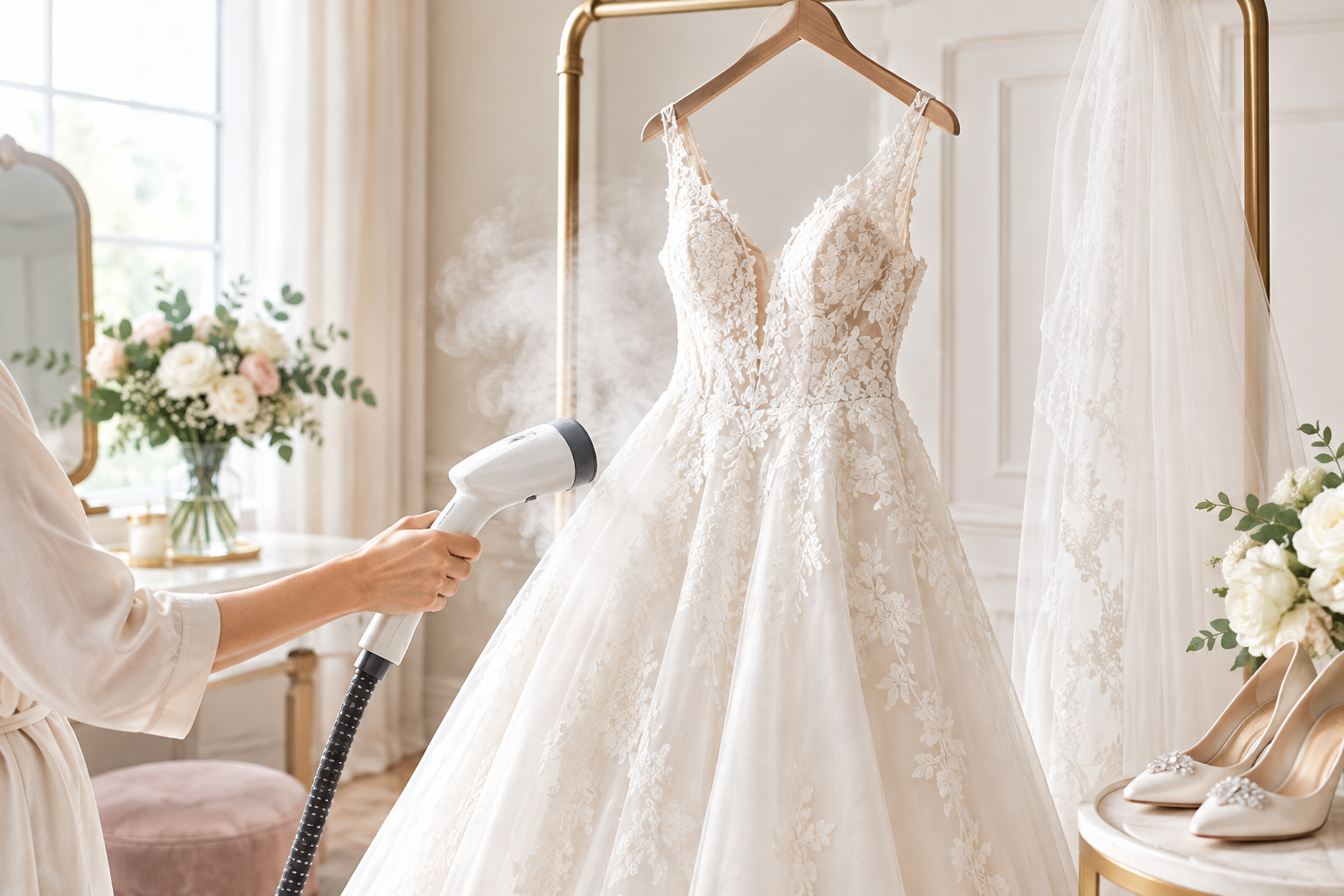
- You can steam your wedding dress at home 1 to 3 days before the big day with a 1,500W handheld steamer.
- Steam polyester gowns 2 to 3 days out; steam silk gowns 24 to 48 hours out.
- Hold the nozzle 6 inches from the fabric and test an inside seam for 60 seconds first.
- A full A-line gown takes 30 to 45 minutes of active steaming plus 2 hours of cooling.
Steam a Wedding Dress: What This Guide Covers
You can steam your wedding dress at home 1 to 3 days before the big day using a handheld garment steamer set to low-medium heat, a padded hanger, and 30 to 45 minutes of uninterrupted time. The method works safely on polyester satin, nylon tulle, and most lace, but silk charmeuse requires extra distance and a test spot on an inside seam.
Wrinkles appear on even a perfectly packed gown after 30 minutes in a garment bag, and the wedding morning leaves zero margin for error. These wedding dress steaming tips before the big day give the exact timing, the complete tool list, and the 7-step method used on real gowns, plus the 3 mistakes that cause permanent water spots and fabric glaze. Before the wedding day arrives, the same 7 steps protect every fabric type.
Can You Steam a Wedding Dress at Home? Materials and Quick Answer

Home steaming works for 90% of modern gowns. Polyester and polyester-blend fabrics dominate the $1,000 to $3,000 US bridal market, and those fibers release wrinkles under steam without damage. Silk gowns respond to steam as well, with tighter distance rules covered in the step-by-step section.
Gather these 5 items before you start:
- Handheld garment steamer, 1,500W or higher: 1 unit, $35 to $60 for a reliable model
- Padded satin hanger, 17-inch shoulder width: 1 hanger, $12
- Lint-free white cotton cloth, 12×12 inches: 1 cloth, $3
- Distilled water, 16 oz: 1 bottle, $2
- Steamer gloves, heat-rated to 250°F: 1 pair, $8
The total first-time setup costs $60 to $85. Professional pressing runs $50 to $150 per gown, so DIY pays for itself after a single use.
Safety note: fill the tank with distilled water only. Tap water mineral deposits spit white dots onto ivory fabric, and those dots survive the wedding day and every photo.
When to Steam Your Dress Before the Big Day: Timing Rules by Fabric
Fabric weight and fiber content set the timing window, so the answer changes by subset. The charmeuse weave in silk gowns relaxes after steaming and settles into new creases if the dress hangs more than 48 hours before the wedding.
| Fabric Subset | Steam This Far Ahead | Why |
|---|---|---|
| Polyester satin and nylon tulle | 2 to 3 days before | Wrinkles do not re-form within 72 hours on a padded hanger |
| Silk charmeuse and silk organza, natural-fiber gowns above $2,500 | 24 to 48 hours before | Silk relaxes and re-creases if steamed more than 2 days out |
| Destination weddings, brides flying with the dress | At the destination, 24 hours before | A garment bag gusset carried as cabin luggage keeps the bodice flat on flights under 5 hours |
Steaming on the wedding morning is the highest-risk option. Allocate 45 minutes minimum and assign the task to one person only; two people steaming the same gown double the condensate risk on the bodice. For a better overall schedule, see the complete wedding dress shopping timeline checklist from ordering through final fittings and wedding-day preparation.
How to Steam a Wedding Dress at Home: The 7-Step Method
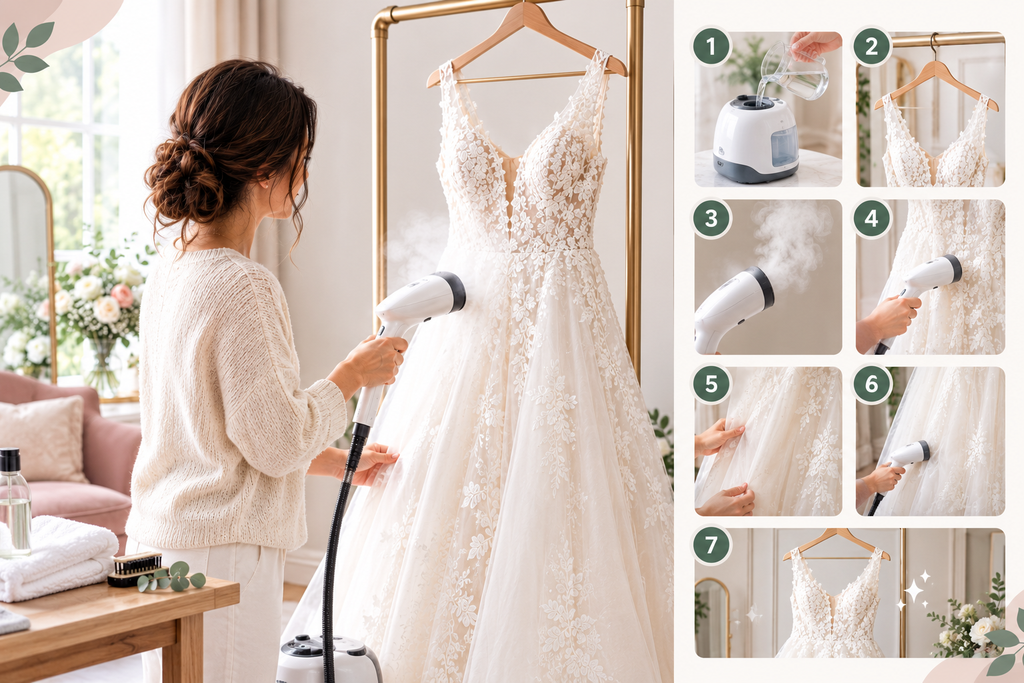
Follow these steps in order. Each step involving the tool carries its own safety note.
- Test the steamer on the inside hem seam for 60 seconds. Check the spot for water spots and shine changes after 5 minutes. The Association of Wedding Gown Specialists recommends this seam test before any visible panel receives steam, and the 60-second test takes less time than fixing one ruined panel.
- Fill the tank with distilled water and set the nozzle to low-medium output. Steam at the nozzle reaches 212°F, which permanently glazes polyester lace held closer than 6 inches. Safety note: unplug the unit before refilling, and never touch fabric with the nozzle. Steam leaves irreversible white rings on silk charmeuse.
- Hang the gown on the 17-inch padded hanger inside a steam-safe doorway or a bathroom with 6 feet of clearance around the skirt.
- Steam the bodice from the inside out, holding the nozzle 6 inches from the charmeuse or satin layer and moving in 4-inch vertical passes.
- Steam the skirt in panels from hem to waist. Tulle releases wrinkles in one pass; satin needs 2 to 3 passes per panel to fully remove wrinkles from the dress. Brides comparing different silhouettes can also review the differences between A-line and ball gown wedding dresses and how their skirt structures affect preparation.
- Steam the train flat on a clean white sheet, using the 12×12 cotton cloth as a buffer between the nozzle and any lace appliqué. If the train will later be lifted for the reception, learn how to bustle a wedding dress correctly after the ceremony.
- Let the gown hang for 2 hours before touching or bagging it. Residual moisture sets new creases if the dress is folded while warm. Make sure final steaming happens after the major adjustments covered in this guide to how many wedding dress fittings you need before your gown is ready for the wedding day.
First-hand result: the tulle A-line gown we steamed for a June wedding released every wrinkle in a single 4-inch pass per panel. Thirty-five minutes of active steaming covered the full skirt, and the inside-hem test took 60 seconds and confirmed the 6-inch distance before a single visible panel received steam. A fabric-safe heat treatment at low-medium output did the entire job.
How to Steam Delicate Fabric: Lace, Silk, and Tulle
Each delicate subset follows a different rule. Silk charmeuse gets 8 to 10 inches of nozzle clearance plus the barrier cloth. Nylon tulle tolerates direct steam at 6 inches. Glued lace appliqué weakens above 200°F of sustained heat, so limit each appliqué area to two passes and let it cool between passes. Understanding the best wedding dress fabrics for different wedding conditions and how fabric choice affects gown care can also help when deciding how carefully to handle lightweight and delicate materials.
Steamer vs Iron for Wedding Dresses: The Comparison
A steamer treats fabric from 6 or more inches away with moist 212°F heat. An iron plate on the “silk” setting reaches roughly 300°F against the fibers, and direct plate contact crushes the tulle weave permanently. Steam lifts wrinkles without compression, which is why the tool wins for every wedding dress fabric except one case: a pressed crease on a polyester lining hem, where a press cloth and the lowest synthetic setting outperform steam.
| Factor | Handheld Steamer | Iron |
|---|---|---|
| Contact distance | 6 inches or more | Direct plate contact |
| Heat at fabric | 212°F moist steam | Roughly 300°F on “silk” setting |
| Tulle safety | Preserves weave | Crushes weave permanently |
| Lace appliqué safety | Safe at 6 inches with press cloth | Glue reactivates above 250°F |
| Time for full A-line gown | 30 to 45 minutes | 20 to 30 minutes with higher damage risk |
Good Housekeeping Institute labs rated garment steamers safer than irons on embellished bridal fabric in every trial category, including scorch, shine, and seam distortion. Safety note: rhinestone glue reactivates above 250°F, so an iron never touches an embellished gown.
3 Mistakes That Permanently Damage Wedding Dress Fabric
Steam wedding dress safely by avoiding these three errors. Each one causes damage that no correction fixes.
- Cranking the output because “higher heat removes wrinkles faster.” High output spits condensate and leaves water spotting, the white rings on silk that no dry cleaner fully removes. Keep the output on low-medium and let time do the work.
- Steaming the dress on the bed or carpet. Floor-level dust and loose fibers transfer to the damp hem fabric and embed in the weave as it dries. Use a cleared doorway or a hanging rod.
- Treating “don’t steam directly” as a suggestion. Touching the nozzle to lace or tulle melts synthetic fibers on contact and creates fabric glaze, a permanent flat shine patch that reads as a stain in photographs. Maintain the 6-inch minimum at every point on the gown.
After Steaming: How to Keep Your Dress Wrinkle-Free
The job ends only when the gown reaches the ceremony wrinkle-free. Hang the dress properly and follow these 4 directives:
- Hang the gown on the padded hanger for a minimum of 2 hours before bagging so the fabric cools and moisture evaporates.
- Use a breathable garment bag with a 4-inch gusset. Plastic bags trap humidity and re-wrinkle satin within 12 hours.
- Transport the bag flat in a vehicle trunk or across a back seat. Never fold the bodice over a hanger bar.
- Steam the veil separately on a towel-covered curtain rod. A tulle veil takes 5 minutes at low output and keeps its shape away from the gown.
After the wedding, proper long-term care matters too, so follow a complete guide to wedding dress preservation after the wedding to protect the fabric from yellowing, stains, and permanent damage.
Frequently Asked Questions About Wedding Dress Steaming
Can you steam a silk wedding dress at home?
Silk gowns respond to home steaming with three restrictions: hold the nozzle 8 to 10 inches from the fabric, place a white cotton barrier cloth between the steam and the silk, and test an inside seam first. Steam only the outer layer. Silk charmeuse shows water spots within seconds of direct condensate contact.
How far in advance should you steam a wedding dress?
Steam polyester gowns 2 to 3 days before the wedding and silk gowns 24 to 48 hours before. Wrinkles do not return to polyester on a padded hanger within 72 hours. Silk relaxes and re-creases if steamed more than 2 days early.
How long does it take to steam a wedding dress?
A full A-line gown takes 30 to 45 minutes of active steaming with a 1,500W handheld unit, plus 2 hours of cooling time before bagging. Ball gowns with layered tulle skirts take 60 to 90 minutes because each layer needs a separate pass.
How do you steam a wedding dress without a steamer?
A hot shower creates enough steam for light wrinkling: run the shower for 15 minutes with the bathroom door closed, hang the gown 4 feet from the water stream, and close the door for 20 minutes. This relaxes light wrinkles on polyester and tulle. Deep creases and silk gowns require a real garment steamer or professional pressing.
Is it safe to steam a wedding dress with lace appliqué?
Appliqué gowns steam safely when the nozzle stays 6 inches away and a cotton press cloth covers the lace. Glue on rhinestone and lace embellishments softens above 200°F of sustained heat. Limit each appliqué area to two 4-inch passes and let the area cool between passes.
Keep Your Gown Flawless With One 60-Second Test
The inside-hem 60-second test is the single step that protects any gown of any fabric, and skipping it is the only unrecoverable decision in the entire process. Steaming your wedding dress at home works because fabric responds to 212°F moisture heat held at the right distance, not to force. The 6-inch nozzle rule, the seam test, and the 2 to 3 day timing window prevent every common failure mode, from water spotting to fabric glaze.
A calm, wrinkle-free gown on the wedding morning is now a procedure, not a hope. Download the printable Wedding Dress Steaming Checklist with the 7 steps, timing table, and materials list sized for your getting-ready room wall.