
What to do with your wedding dress after divorce comes down to four practical paths: sell it through a resale platform or consignment shop, donate it to a verified bridal charity, repurpose the fabric, or keep it as a preserved heirloom. The right choice depends on the dress’s condition, its resale value, and your emotional relationship to the garment. This guide covers all seven options with real timelines, costs, and platform recommendations.
A stored dress carries memory weight heavier than any other decluttering choice. By the end, you will have a step-by-step path matched to your dress’s value and your emotional readiness.
1. Selling Your Wedding Dress: Resale Platforms and Consignment Shops
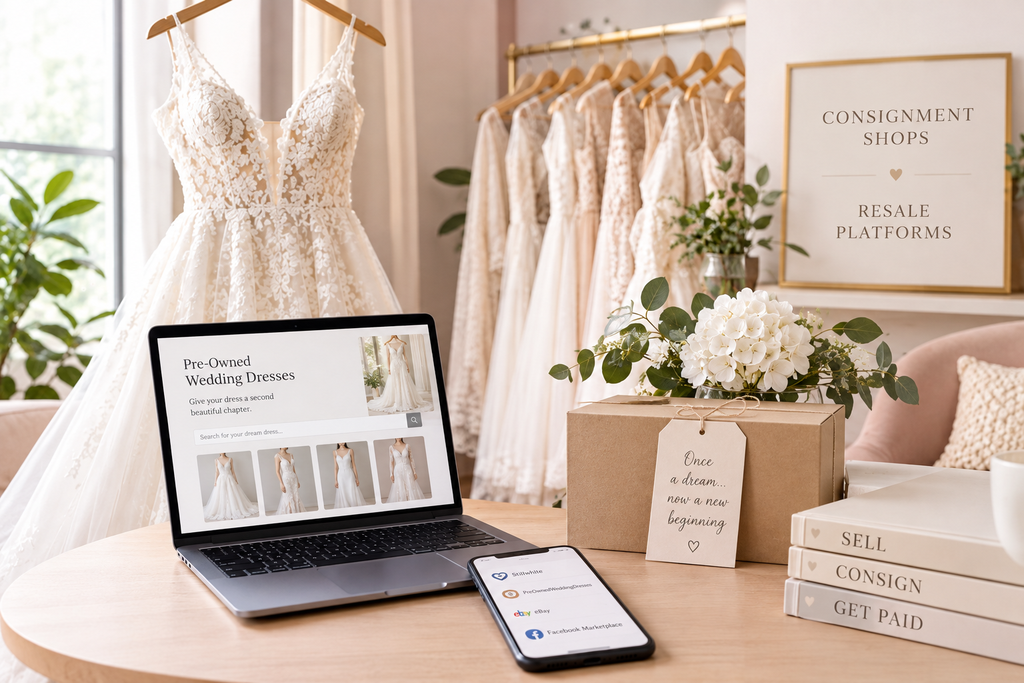
A seller who types “sell my wedding dress” into Google faces four realistic channels. Used wedding dresses in good condition sell for 30 to 50 percent of original retail; designer gowns retain up to 60 percent in sizes 8 through 14, the highest-demand range on any pre-owned wedding gown marketplace. If you’re considering a lower-cost alternative to buying new, understanding the market for secondhand wedding dresses and how to evaluate a pre-owned gown before selling or buying can also help you judge your dress’s condition and resale potential. Follow five steps in order:
- Pay for professional dry-cleaning first ($150 to $300).
- Record bust, waist, hips, and hollow-to-hem measurements to the inch.
- Shoot 10 or more natural-light photos, including the label and hem.
- Choose the channel below that matches the dress’s value.
- List at 50 percent of retail with 10 to 15 percent negotiation room.
| Platform | Fee structure | Best fit |
|---|---|---|
| Stillwhite | $25 flat listing fee | Designer gowns under 5 years old |
| PreOwnedWeddingDresses.com | $25 to $30 flat fee | Mid-range gowns |
| Poshmark | 20 percent commission | Gowns listed under $500 |
| Wedding dress consignment shops | 50/50 to 60/40 consignment split, shop’s favor | Hands-off sellers |
The best place to sell a recent designer gown is a flat-fee marketplace. My own listing confirms it: a size 10, two-year-old Maggie Sottero sold on Stillwhite in 11 weeks at 15 percent below the $900 asking price.
The FTC flags the most common resale fraud: a buyer sends a check above your asking price, asks you to refund the difference, and the check bounces after the refund goes out. Never accept overpayment.
How to Price a Used Wedding Gown (Wedding Dress Resale Value)
Wedding dress resale value tracks age more than any other factor. Price a gown under 3 years old at 50 percent of original retail, then subtract 10 percentage points per additional year of wear. Check sold listings rather than active listings; sold listings show what buyers actually paid.
If you are comparing the resale value with what a new gown might cost, understanding the average wedding dress cost and what brides typically pay for a new gown gives useful context for estimating the original retail price.
How Long Does a Gown Take to Sell
Marketplace listings close in 4 to 12 weeks; consignment quotes 90 to 180 days, with demand peaking January through March. Listing during engagement season speeds up selling a wedding dress after divorce online.
2. Donating Your Wedding Dress to Charity
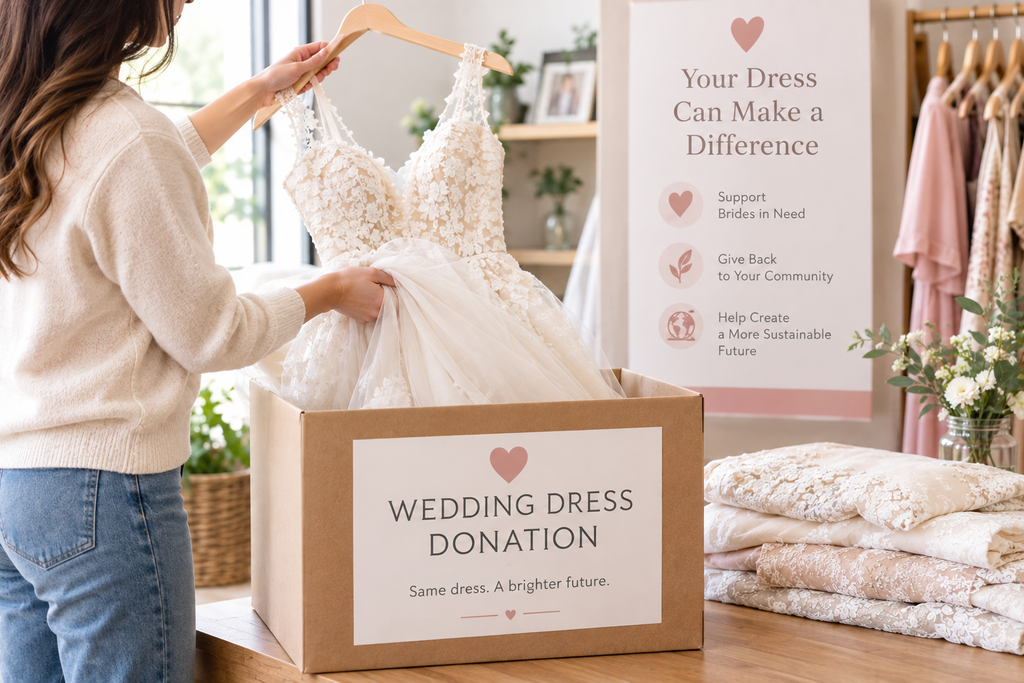
A woman ready to donate a wedding dress after divorce has four verified wedding dress donation options:
- Brides Across America provides gowns at no cost to military and first-responder brides.
- The Angel Gown Program transforms gowns into burial garments for infants in NICU units.
- Domestic violence shelter fundraisers resell gowns to fund services.
- Community theater costume departments accept gowns of any age.
Meet four requirements before shipping: professional cleaning within 12 months, an age check (most charities accept gowns from 2010 or newer), a written acknowledgment letter, and photos for your tax records. Donation extends the garment’s life; the EPA estimates 11.3 million tons of textile waste enter US landfills annually.
3. Repurposing Your Wedding Dress After Divorce
Repurposing a wedding dress after divorce into a new garment turns the dress into something new you will actually use. Five projects deliver the best value:
- Christening gown: $150 to $400; uses roughly one-third of the dress fabric.
- Memory quilt: $200 to $600 from 12 to 20 panels.
- Cocktail or evening dress: $250 to $700 for a full restyle.
- Ring pillow and veil set: $75 to $200 for a family wedding.
- Framed bodice panel: $50 to $150 for wall art.
Silk, satin, and lace repurpose cleanly; beaded bodices add 30 to 40 percent to labor for hand bead removal. Cleaning method matters before cutting: dry-cleaning vs. wet-cleaning is a real decision, and wet-cleaning protects silk chiffon while solvents dull its drape. Hire a bridal-experienced seamstress, and request three photos of prior projects first.
A memory quilt commission I ordered took 6 weeks and cost $380 for a throw-size quilt from a size 12 A-line gown. The lace appliqué survived; the beaded bodice was discarded because hand bead removal priced the quilt out of budget. (More builds: 7 Wedding Dress Repurposing Ideas (With Real Cost Breakdowns).)
4. Keeping the Dress, or Letting Go Through a Symbolic Ritual
A persistent superstition holds that selling a wedding dress after divorce invites bad luck. No cultural or religious tradition in mainstream US practice designates the sale as bad luck; the belief circulates on Reddit and wedding forums with no documented origin.
Myth: Selling the dress erases the marriage or invites misfortune.
Fact: Gowns sell by the thousands monthly on resale platforms; the transaction transfers fabric, not memory.
Photographer John Michael Cooper started the trash the dress trend in 2001. The American Association for Marriage and Family Therapy recognizes symbolic closure rituals as documented divorce recovery practice. Emotional ways to say goodbye to a wedding dress without destruction include a cutting ceremony with a divorce therapist present. Rituals support post-divorce emotional healing (the wellness context) but do not replace professional counseling.
Burn your wedding dress ceremony ideas share three safety requirements: a fire permit where required, a controlled fire pit with water access within reach, and no synthetic satin, which melts and releases irritating fumes.
Trash the Dress Photography After Divorce: What It Costs and How It Works
Trash the dress photoshoot sessions run $300 to $800 and require a photographer experienced in styled destruction shoots. Water-based shoots carry the widest insurance coverage and fewest permits; fire-based shoots require local permits in nearly all US jurisdictions.
5. Wedding Dress After Divorce Etiquette
Wedding dress after divorce etiquette questions resolve with one principle of divorce recovery and moving forward: your future needs the closet space more than your past needs the garment.
| Your situation | Recommended action | Why |
|---|---|---|
| Children from the marriage | Store or repurpose at your discretion; the dress is legally yours | A 3-photo archive preserves the memory in 2 percent of the storage space |
| Shared storage with your ex | Retrieve the dress before the divorce finalizes | Property division after signing becomes a civil matter |
| Heirloom from your former spouse’s family | Return the gown | Keeping another family’s heirloom crosses an etiquette line |
| Faith tradition with ceremonial significance | Consult family elders first | The gown belongs to a tradition larger than the individual marriage |
6. Quick Decision Guide: Which Option Fits Your Dress
Four questions narrow seven options to one path:
- Gown under 3 years old with a current designer label? Sell it through a flat-fee marketplace (Section 1).
- Gown over 10 years old or damaged? Donate it or repurpose the fabric (Sections 2 and 3).
- Opening the garment bag still causes acute distress? Skip resale this year; gown preservation and storage in preservation-grade acid-free tissue costs about $20 per year and closes zero options.
- Want closure without selling? Book a ritual session or commission a repurposing project (Sections 3 and 4).
Sentimental value anchoring, the tendency to assign memory value to objects, inflates every what to do with gown after divorce decision. Keeping a wedding dress after divorce as a memento is valid when storage allows. Before putting it away long term, learn how to preserve and store a wedding dress properly after the wedding to prevent yellowing and fabric damage. (Storage method: How to Store a Wedding Dress Long-Term: Preservation Guide.)
Frequently Asked Questions About Your Wedding Dress After Divorce
Where can I donate my wedding gown after a divorce?
Brides Across America and The Angel Gown Program accept gown donations from divorced women across the US. Both require professional cleaning within 12 months and accept gowns from 2010 or newer. Donors receive a tax acknowledgment letter within 30 days.
How much is my wedding dress worth after a divorce?
Gowns under 5 years old in good condition resell for 30 to 50 percent of original retail; designer gowns in sizes 8 through 14 retain up to 60 percent. Sold listings on Stillwhite provide the most accurate comparables. Gowns over 10 years old typically resell for under $200, which points toward donation.
Is it bad luck to sell your wedding dress after a divorce?
No documented cultural or religious tradition labels the sale of a wedding dress as bad luck; the belief is a modern internet-era superstition without an identified origin. Thousands of gowns sell monthly on resale platforms, and each sale transfers fabric to a new bride while the memory stays with the seller.
How do I sell my wedding dress online after a divorce?
Follow five steps: get the gown professionally cleaned ($150 to $300), record bust, waist, hips, and hollow-to-hem measurements to the inch, shoot 10 or more photos in natural light, pick a flat-fee marketplace for gowns over $500, and list at 50 percent of retail with room to negotiate. If the gown needs professional work before resale, see the complete guide to wedding dress alterations costs, including common services and potential extra fees so you can factor those expenses into your expected return.
What should I do with my wedding dress if I have children from the marriage?
The dress belongs to you legally and practically; storage for a future daughter is optional. A 3-photo archive preserves the memory in 2 percent of the storage space. Daughters rarely wear a mother’s gown verbatim, so repurposing fabric into a christening gown or quilt preserves the material for them.
Conclusion
The dress is fabric, thread, and memory. The memory stays with you on any of these seven paths; the fabric finds its next purpose through the option matching your dress’s value and your readiness today. Selling converts the memory into $400 to $900; donation converts it into another bride’s best day.
A clear decision replaces months of closet avoidance with a finished task, and the American Association for Marriage and Family Therapy recognizes completed closure rituals as documented practice for reducing the emotional charge of associated objects. Which option did you choose for your dress? Share your timeline and platform in the comments; your experience guides the next reader making this decision.