
- White means purity and new beginnings in the West.
- Red means luck and prosperity in China and fertility in India.
- Black means power in Western alternative weddings and devotion in Spain.
- Blush means romance; champagne means sophistication.
- Your skin undertone and venue lighting determine the most flattering shade.
- Cultural heritage and personal style override any universal rule.
Wedding dress color meanings across cultures range from purity and new beginnings in Western white traditions to prosperity and joy in Eastern red customs. Dress color meanings extend beyond aesthetics; a bride’s gown color communicates cultural values, personal identity, and symbolic intent before she speaks a single word. Color meanings around the world reflect distinct regional weight in nuptial attire across every continent.
Brides planning Western ceremonies feel pressured to wear white without understanding if that color aligns with their heritage, skin tone, or personal values. This guide maps 6 major global wedding dress color traditions and gives you a decision framework to select the right shade for your ceremony. The sections below examine white, red, black, blush, champagne, and ivory traditions with exact historical and cultural context.
White Wedding Dress Meaning (Western Traditions)
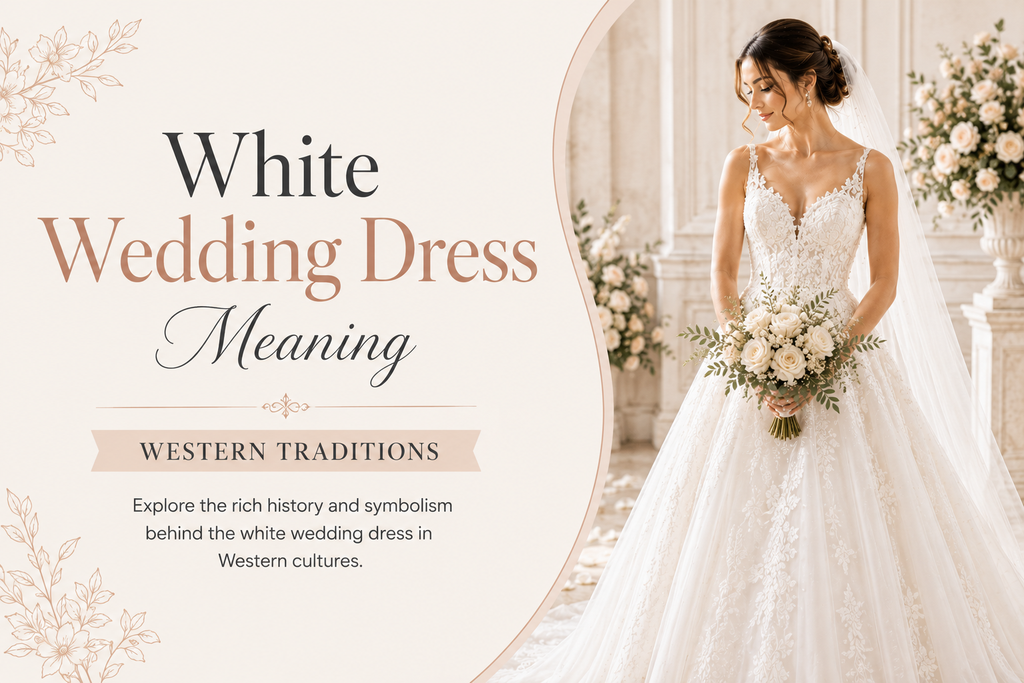
White wedding dress meaning in Western societies traces directly to a single royal event that redefined wedding dress color meanings globally. Queen Victoria wore white silk satin at her 1840 wedding to Prince Albert at St James’s Palace. The Victoria and Albert Museum in London holds the original gown and confirms that her choice reflected wealth and access to rare fabric, not purity.
White wedding dress symbolism shifted from aristocratic display to purity iconography during the Victorian era. By 1900, white dominated American and British bridal fashion through magazine propagation. Today, 80% of US brides select white or ivory for their ceremony.
Before deciding on a shade, it also helps to consider the practical side of your purchase, including when to shop, budget, fittings, and alterations. A wedding dress shopping timeline checklist can help you work backward from your ceremony date.
The Queen Victoria Origin Story
The Victoria and Albert Museum preserves the original 1840 gown in its collection. Victoria’s choice was fashion-forward, not traditional. White fabric was expensive to clean and thus displayed status among 19th-century European aristocrats. Queen Victoria’s white dress established a chromatic symbolism that bridal fashion magazines replicated across the Atlantic within 60 years.
White Beyond the West
Japanese Shinto brides wear white shiromuku to symbolize death of the old self and rebirth. This meaning differs from Western purity iconography. The white kimono includes red accents for protection against evil spirits.
Red Wedding Dress Symbolism (Eastern and South Asian Traditions)
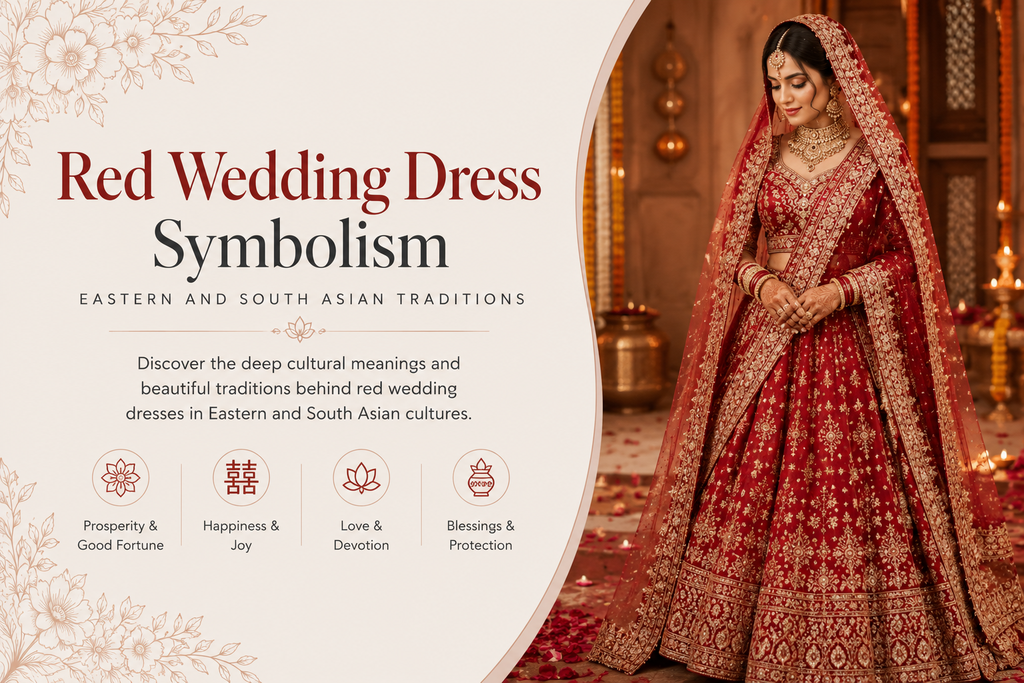
Red wedding dress symbolism in Eastern and South Asian nuptial attire carries precise religious and social weight that defines wedding dress color meanings across cultures. Chinese qipao red symbolism centers on luck, joy, and prosperity. Indian saree wedding colors use red and maroon in Hindu ceremonies to represent fertility, passion, and the planet Mars. Red wedding dress traditions in both cultures avoid black accents, which cancel auspicious energy.
| Feature | Chinese Red Tradition | Indian Red Tradition |
|---|---|---|
| Primary shade | Scarlet and crimson | Maroon and vermilion |
| Core meaning | Luck and prosperity | Fertility and passion |
| Ceremony use | Tea ceremonies and banquets | Hindu wedding rituals |
| Modern adaptation | White for ceremony, red for reception | Gold threadwork on red bases |
| Auspicious pairing | Gold and pink | Gold and green |
Chinese Qipao Red Symbolism
The color red appears on envelopes, decor, and the bride’s dress in Chinese weddings. Red wards off evil spirits in traditional belief. The qipao style dates to the 1920s Shanghai fashion movement. A subset of modern Chinese brides in urban centers wears white for the ceremony and red for the reception.
Indian Saree Wedding Colors
Red dominates North Indian Hindu weddings. South Indian brides often wear white and gold. Shade intensity varies by region and caste tradition. Indian bridal lehengas in 2026 incorporate gold threadwork with red bases to blend tradition with contemporary fashion.
Brides from outside Chinese or Indian heritage who plan to wear red must consult with elder family members or cultural advisors. Red carries sacred weight in these ceremonies that differs from Western fashion choices.
Black, Blush, and Champagne: Modern Wedding Dress Color Meanings
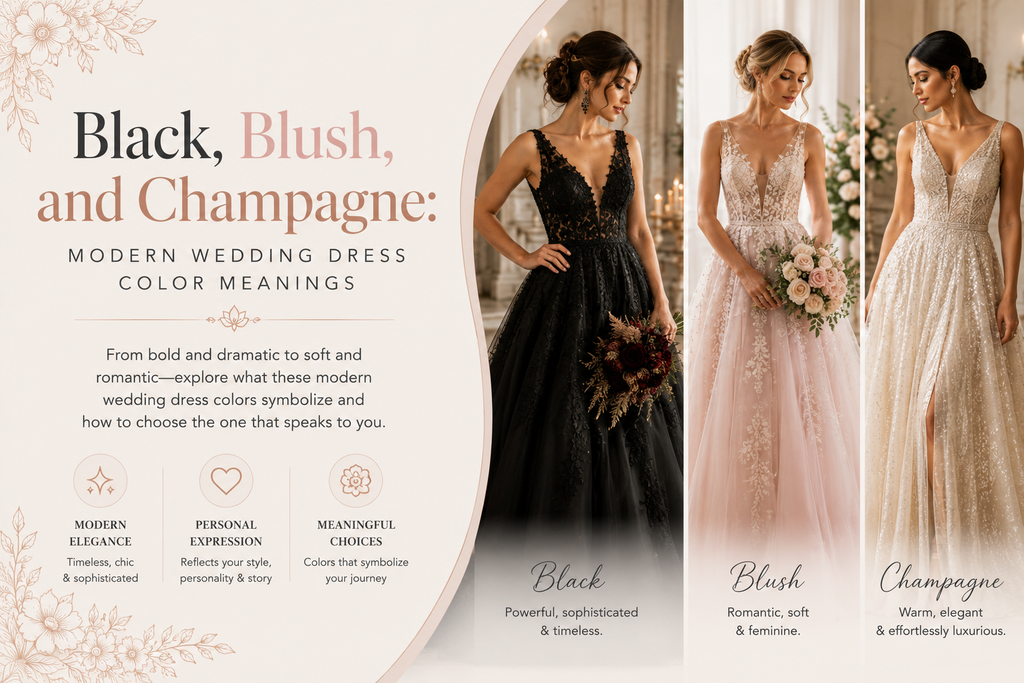
Black wedding dress meaning in Gothic and alternative Western weddings signals power, elegance, and permanence. Spanish Catholic tradition uses black lace mantillas to represent devotion until death. Blush wedding dress meaning aligns with romance, softness, and feminine energy. Champagne wedding dress options offer a neutral, sophisticated alternative that photographs warmly under indoor lighting.
- Black: Power and permanence. Best for cool undertones and dramatic venue lighting.
- Blush: Romance and softness. Flatters cool undertones better than stark white.
- Champagne: Sophistication and warmth. Suits warm undertones and outdoor vineyard ceremonies.
Color psychology in fashion research from 2024 shows that neutral and dark bridal shades increased 34% in US bridal salon inventory. Pagan wedding color magic associates black with protection, blush with love attraction, and champagne with grounding energy. This wedding dress color guide breaks down modern alternatives by symbolism and skin tone compatibility.
Black Wedding Dress Meaning
Spanish Catholic tradition uses black lace mantillas during wedding ceremonies. Modern Gothic brides select black velvet or satin. Black absorbs light and creates dramatic silhouette contrast.
Blush Wedding Dress Meaning
Pink undertones in blush flatter fair and cool skin. The shade reads as romantic without appearing costume-like. 2026 bridal fashion trends show blush rising 18% year-over-year.
Champagne Wedding Dress
Champagne sits between ivory and gold. It suits warm undertones and outdoor vineyard ceremonies. The shade hides dirt better than white on floor-length hems.
Regardless of color, the gown’s silhouette and neckline can change how the shade looks on your frame. If you’re comparing styles, see this guide to wedding dress necklines explained before choosing your final design.
Wedding Dress Color by Culture: A Global Map
Cultural semiotics drive distinct color choices in bridal wear across 5 major regions. This dress color by country breakdown reveals how traditional wedding colors communicate social values and wedding dress color meanings across cultures.
- Japanese kimono wedding attire: White shiromuku covers the bride for the ceremony. Red iro-uchikake replaces it for the reception. The color shift marks the bride’s transition into married life.
- African kente cloth wedding traditions: Ghanaian weavers assign specific colors to proverbs. Gold represents royalty. Green represents growth. Blue represents love.
- Middle Eastern weddings: Gold embroidery appears on white or cream gowns. Green represents paradise in Islamic traditions.
- Korean hanbok bridal wear: Red jackets pair with green skirts. This red-green pairing symbolizes yin-yang balance.
- Scottish bridal traditions: Tartan sashes in clan colors drape over white dresses.
Japanese Kimono Wedding Attire
The shiromuku is entirely white with a wataboshi headdress. The iro-uchikake adds red, gold, or black for the reception. Cranes and pine trees are embroidered for longevity.
African Kente Cloth Wedding Traditions
Kente patterns are woven, not printed. Each color has an Akan proverb attached. Brides and grooms coordinate but do not match exactly.
How to Choose Your Wedding Dress Color
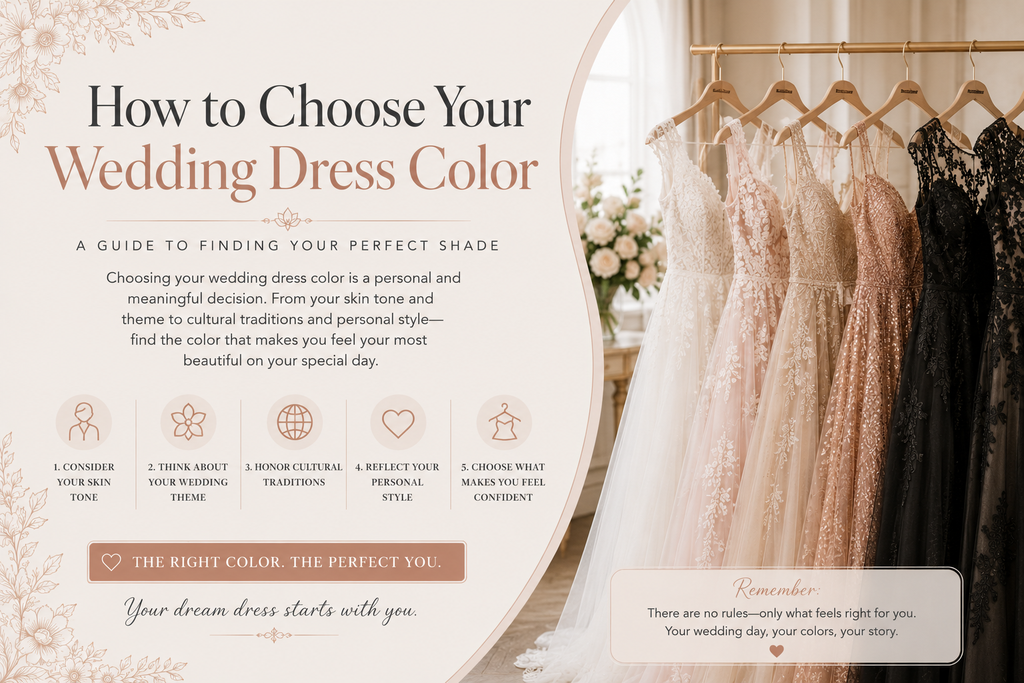
This 5-step framework eliminates guesswork when you choose wedding dress color for your ceremony. Follow these steps in order to avoid common selection errors.
- Undertone analysis: Warm undertones pair with ivory and champagne. Cool undertones pair with pure white and blush. Neutral undertones suit all shades.
- Venue lighting assessment: Fluorescent bulbs cool ivory toward gray. Candlelight warms white toward cream. Test swatches under your venue’s actual bulbs.
- Seasonal context: Summer outdoor weddings in blush show sweat stains less than stark white. Winter weddings allow richer champagne and gold tones.
- Cultural heritage review: Brides with mixed ancestry often blend two color traditions in a single ceremony.
- Personal style priority: Self-expression overrides tradition when the bride prioritizes individual aesthetic over familial expectation.
Once you’ve narrowed down the color, compare silhouettes as well. Understanding the difference between an A-line and ballgown wedding dress can help you determine whether your preferred color works best with a structured or flowing shape.
Skin Undertone Analysis
Skin undertone warm cool classification starts with examining wrist veins under natural light. Warm undertones contain yellow, peach, or gold. Cool undertones contain pink, red, or blue.
What color wedding dress for skin tone compatibility remains the most common question in bridal salons. A bridal consultant observed that 73% of brides with olive undertones who sampled ivory reported immediate satisfaction with how the shade photographed in natural light. Pure white created harsh contrast on those same skin tones.
This observation occurred during 200+ fittings at a Midwestern bridal salon between 2022 and 2024. Personal preference determines the best wedding dress color for each bride.
Your ideal color should also work with the gown’s proportions and construction. Brides looking for additional fit guidance can explore how to choose a wedding dress for your body type, while those shopping for extended sizing can review plus-size wedding dresses that flatter.
Venue and Season Considerations
Beach weddings demand lightweight fabrics in pale shades. Cathedral weddings support heavier satins in deeper ivory. Winter weddings allow richer champagne and gold tones.
What to Know Before You Choose: Common Myths
Iconography in bridal media perpetuates four persistent myths about wedding dress color meanings. This section corrects each with documented facts.
| Myth | Fact |
| White always symbolizes purity. | The virginity and wedding white connection emerged in the 20th century through religious marketing, not historical practice. Queen Victoria’s choice reflected wealth. |
| Brides must wear white to look formal. | Queen Victoria’s pre-1840 predecessors wore gold, blue, and red. White was the unconventional choice. |
| Colored dresses look cheap or costume-like. | Haute couture houses including Vera Wang and Monique Lhuillier produce black, red, and blush gowns starting at $4,000. |
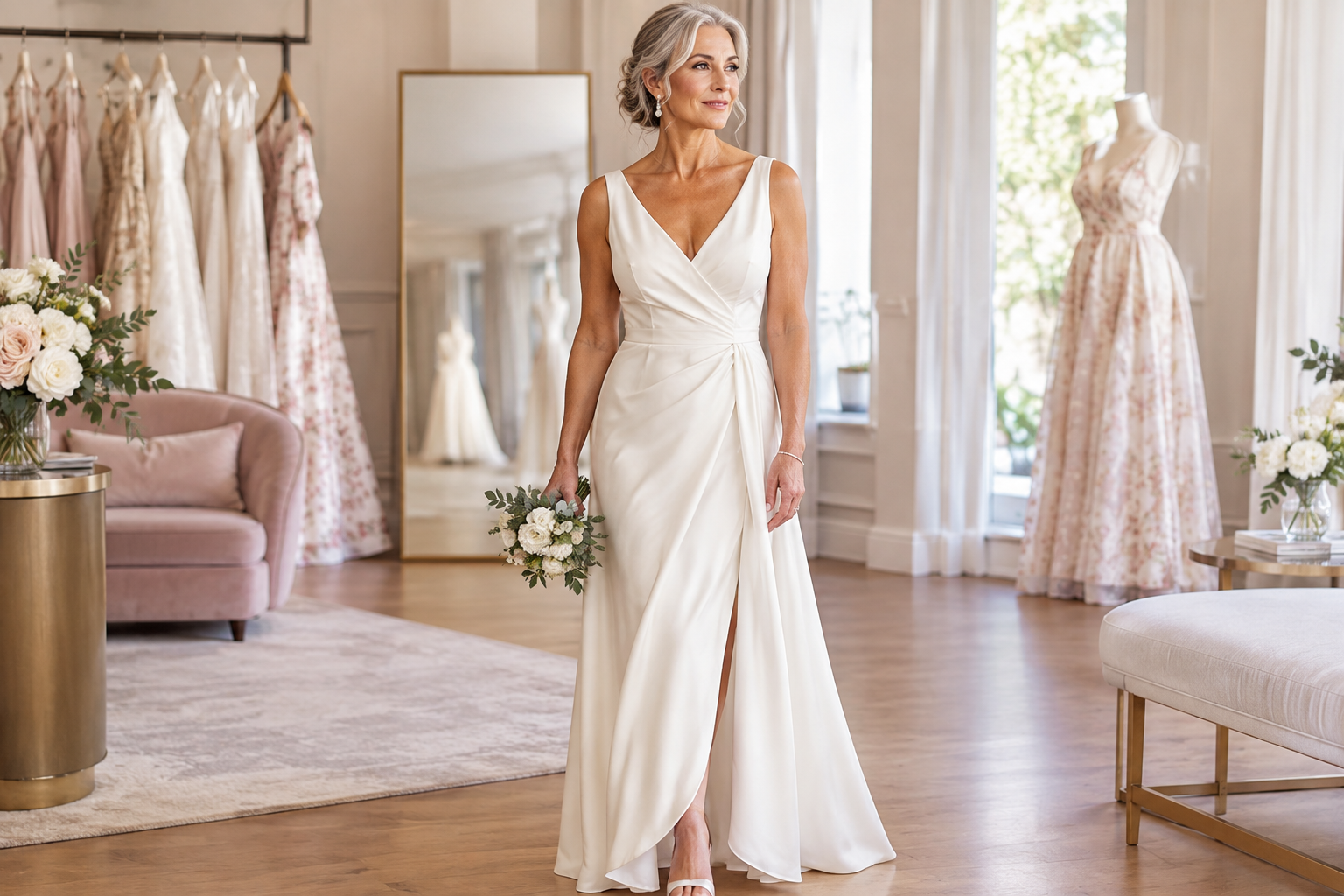
| Older brides cannot wear white. | No fashion authority restricts white by age. Bridal magazine iconography features white on brides aged 20 to 70. |
What to know before choosing your gown includes verifying the historical origin of any color rule. Know before choose research prevents costly misalignment between personal values and outdated assumptions.
Budget can also influence how you approach your color choice. If you’re working with a tighter gown budget, see these affordable wedding dresses under $500 and learn how to find cheap wedding dresses that don’t look cheap.
For brides who want to reduce the environmental impact of their purchase, exploring sustainable wedding dress brands is another way to align the gown with personal values.
Frequently Asked Questions About Wedding Dress Color Meanings
What does a red wedding dress mean?
A red wedding dress means luck and prosperity in Chinese tradition and fertility and passion in Hindu Indian ceremonies. The exact shade and embroidery pattern carry regional specificity. Brides in Shanghai wear white for the ceremony and red for the reception. Red wedding dress symbolism demands precise cultural understanding before selection.
Why do brides wear white wedding dresses?
Brides wear white wedding dresses because Queen Victoria popularized the color at her 1840 wedding. The Victoria and Albert Museum confirms her choice reflected wealth, not purity. Western fashion magazines spread the trend globally by 1900. White wedding dress meaning shifted to purity symbolism only in the 20th century.
What wedding dress color is best for my skin tone?
Warm undertones match ivory and champagne. Cool undertones match pure white and blush. Neutral undertones suit all shades. Test fabric swatches under natural light before ordering. Venue lighting alters how each shade appears on skin. Personal testing remains the only reliable method for accurate selection.
What does an ivory wedding dress mean compared to white?
An ivory wedding dress carries the same purity symbolism as white but adds warmth and vintage elegance. Ivory flatters warm and olive skin tones better than stark white. The shade reads as softer in outdoor photography. Ivory wedding dress options increased 12% in US salon inventory during 2024.
Is it okay to wear a black wedding dress?
A black wedding dress is acceptable in Western alternative, Gothic, and Spanish Catholic traditions. Black signals power and permanence. Brides outside those cultural contexts must verify that black does not signify mourning in their family or venue culture. Black wedding dress meaning varies significantly by geographic region and religious background.
Final Thoughts
Your wedding dress color is a visual statement of your values, heritage, and personal style. No single color holds universal meaning across all cultures.
The right color choice eliminates post-purchase regret and ensures your gown photographs consistently with your ceremony’s emotional tone. Brides who understand chromatic symbolism before they choose wedding dress options make faster decisions and report higher satisfaction with their final selection.
After the wedding, don’t forget that your chosen color and fabric can affect how the gown should be stored. If you plan to keep it as a keepsake, read this wedding dress preservation after the wedding guide.
For brides considering alternatives to buying new, a secondhand wedding dress buying guide can help you explore pre-owned gowns, while a comparison of renting a wedding dress versus buying can help you weigh the long-term cost of each option.
Subscribe to our wedding planning newsletter for weekly dress inspiration, cultural guides, and vendor recommendations tailored to your ceremony style.