- 2 to 4 skirt hooks and eyes, size 2, steel or coated — $3.00 to $5.00 per set
- 2 yards of 3/8-inch grosgrain ribbon in dress-matching color — $2.00 to $4.00
- Hand-sewing needle size 7 to 9 and polyester thread to match — $3.00
- Fabric chalk or disappearing ink pen — $4.00
- Measuring tape and straight pins — already owned
- Optional: covered buttons for American bustle — $6.00 to $10.00 per dozen
Introduction
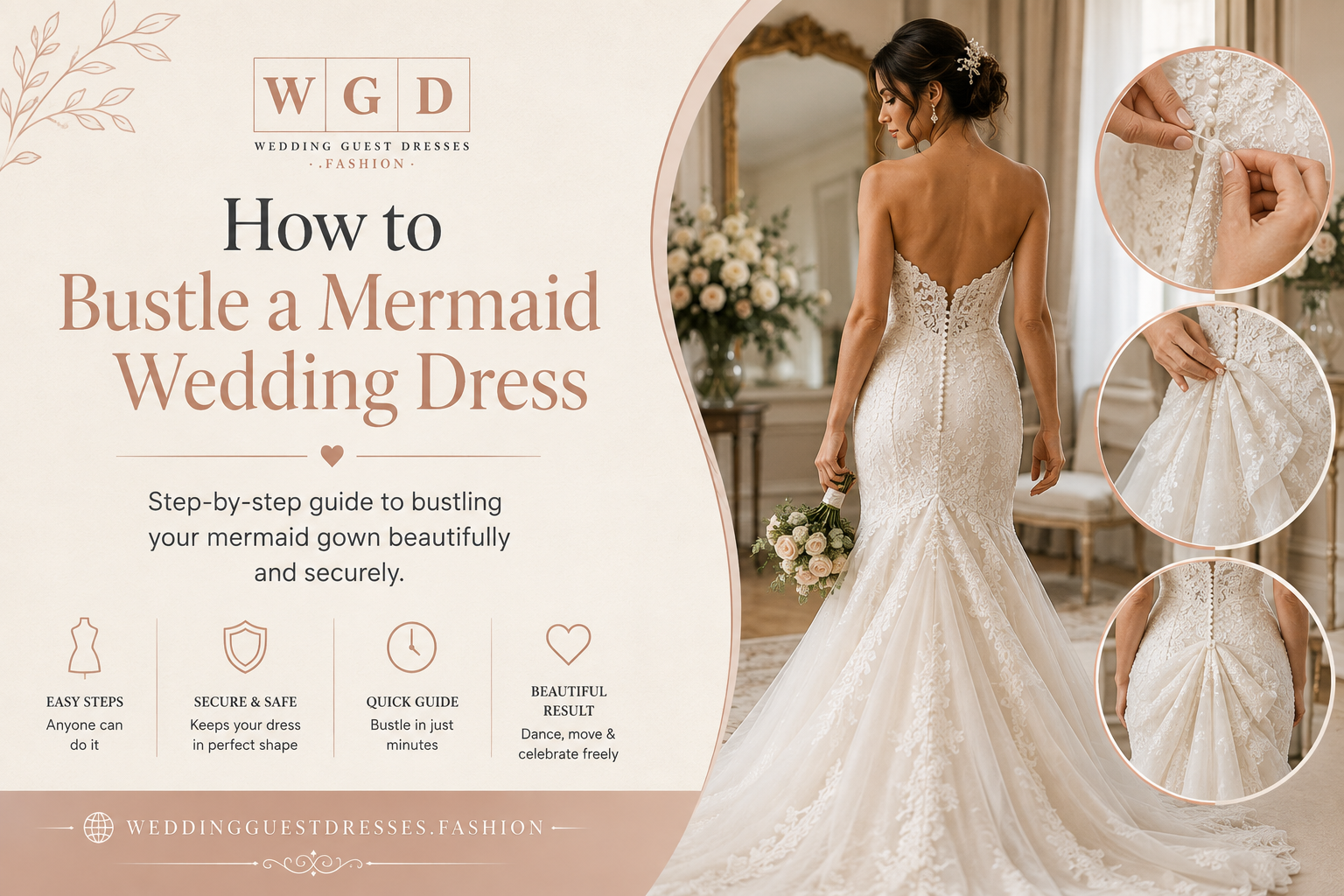
A mermaid wedding dress requires a bustle that lifts the mermaid dress train into draped folds at the rear waist or under the skirt to prevent tripping and maintain the fitted silhouette. Learning how to bustle a mermaid wedding dress involves choosing between two types of bustle: the French under-bustle or the American over-bustle. Both methods take 20 to 45 minutes to complete with basic hand-sewing tools.
Mermaid gowns trap extra fabric at the knees, which makes an unsecured train a tripping hazard during the reception. A 12-inch to 18-inch train drags on the floor and distorts the hip line when the wearer walks or dances.
This guide delivers exact measurements, tool lists, and stitch patterns so you complete the bustle without altering the dress hemline. You will secure the train using interior ribbon ties or exterior hooks by the end of this tutorial.
What Is a Bustle and Why Does a Mermaid Dress Need One?

A bustle lifts the mermaid dress train above floor level for mobility during the reception. Brides who bustle a wedding gown gain the ability to walk and dance without tripping. If you want to understand the broader options available, see this guide to wedding dress bustle alternatives without buttons.
Mermaid skirts flare at or below the knee, concentrating fabric weight low on the body. An unsecured train on this silhouette drags the hemline down and distorts the fit through the hips.
Standard ballroom-length trains on mermaid gowns measure 12 to 18 inches. Proper train length management requires a bustle point that supports the full weight of that fabric without pulling the waistband. The train release occurs when the wearer detaches the ribbon ties to let the train fall for formal portraits.
Tools and Materials You Need to Bustle a Mermaid Gown
A DIY wedding bustle requires specific hardware and thread to support the weight of a mermaid skirt. Gather these items before starting the alteration.
- 2 to 4 skirt hooks and eyes, size 2, steel or coated — $3.00 to $5.00 per set
- 2 yards of 3/8-inch grosgrain ribbon in dress-matching color — $2.00 to $4.00
- Hand-sewing needle size 7 to 9 and polyester thread to match — $3.00
- Fabric chalk or disappearing ink pen — $4.00
- Measuring tape and straight pins — already owned
- Optional: covered buttons for American bustle — $6.00 to $10.00 per dozen
A bustle with hooks supports heavier trains than a bustle with buttons alone. A hook-and-eye closure provides the most secure fastening for American bustles on mermaid gowns. Polyester thread resists rot under tension and body heat better than cotton thread. Do not use all-purpose cotton thread on silk or satin gowns because the fibers degrade and snap under the train’s weight.
Bridal tailor services often use silk thread for couture gowns, but polyester thread matches the durability needs of a DIY project at one-third the cost.
French Bustle vs. American Bustle for Mermaid Dresses
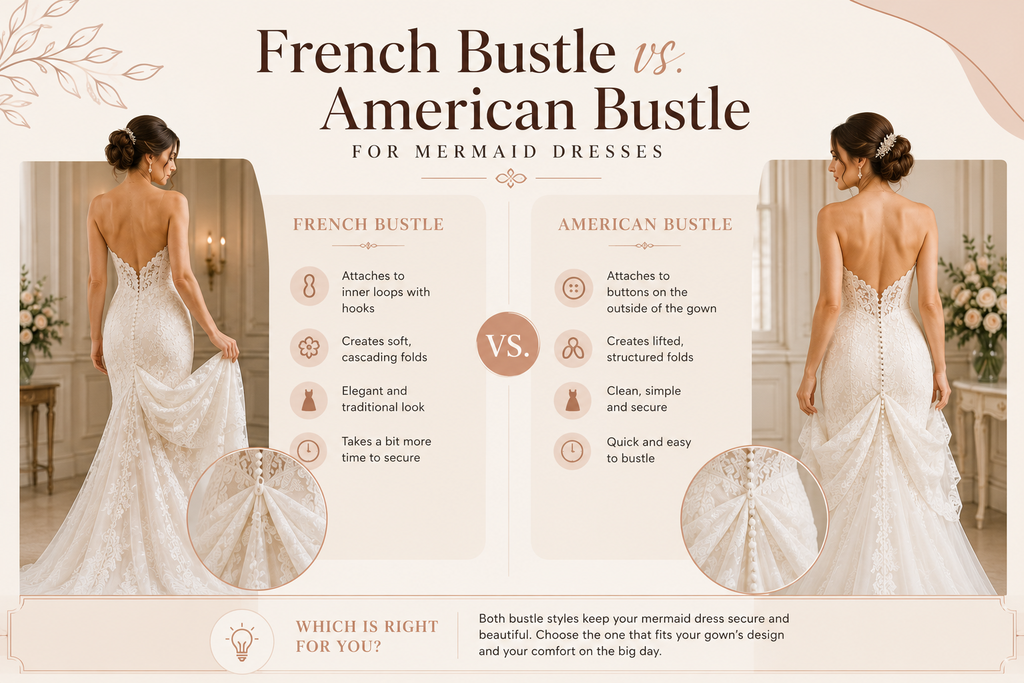
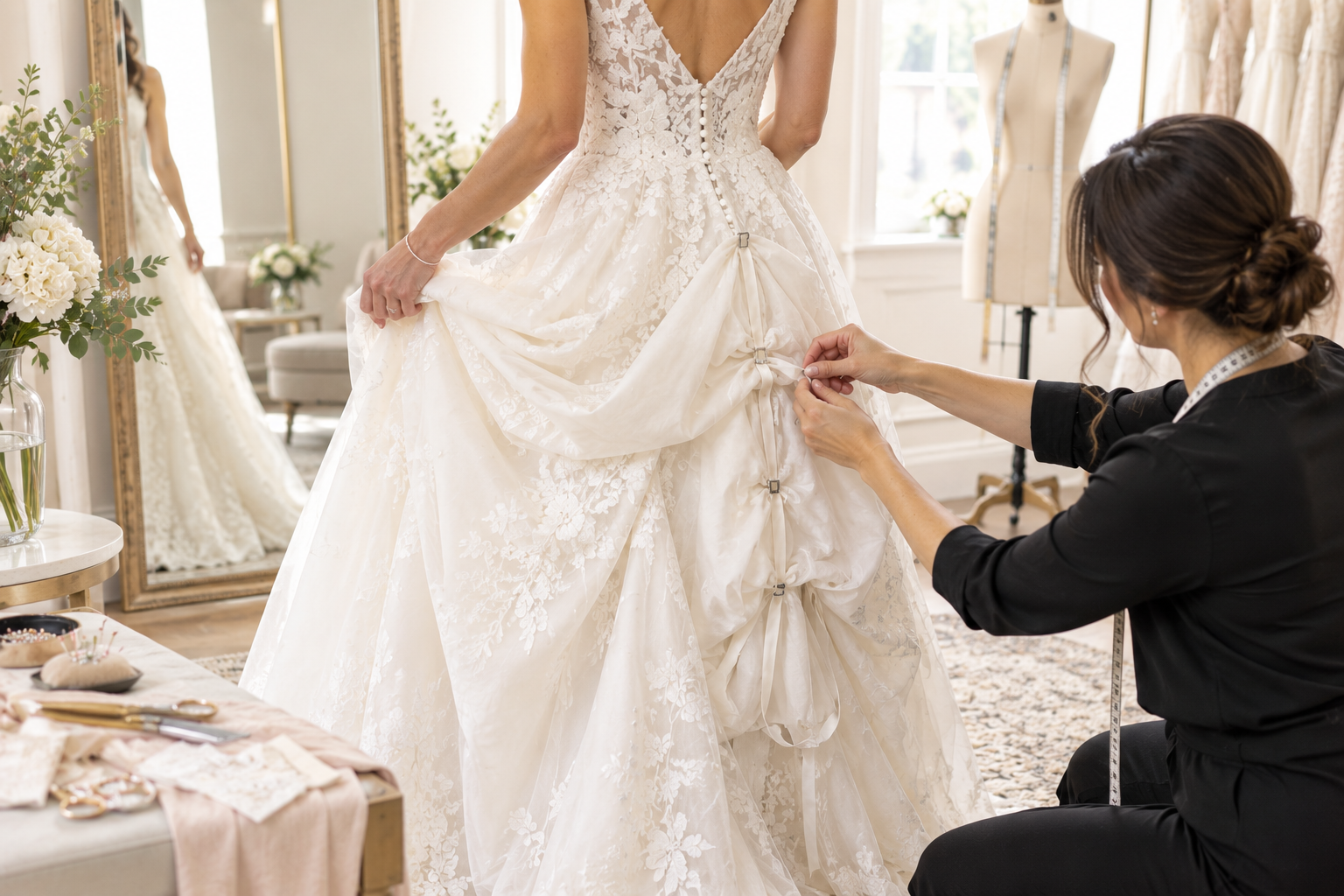
The French bustle method hides all hardware under the skirt. The train folds inward and attaches to interior ribbon ties at the waistband. This technique preserves a clean back line and works best for lace or beaded overlays that cannot tolerate visible hardware.
The American bustle style uses exterior hooks or buttons. The train drapes over itself to create a visible rear detail. This method secures faster but adds rear volume that can distort the fitted mermaid silhouette if overdone. For a traditional button-based approach, see this guide on how to bustle a wedding dress with a button-back system.
These two types of bustle serve different aesthetic and functional goals. The best bustle for a lace or beaded mermaid gown is the French method. Any mermaid gown bustle must distribute weight across at least 3 anchor points to maintain the silhouette.
A direct comparison clarifies the choice for each gown type.
| Feature | French Bustle Method | American Bustle Style |
|---|---|---|
| Hardware visibility | Hidden under skirt | Visible on exterior |
| Best fabric type | Lace, beaded overlays, satin | Plain satin, crepe |
| Silhouette impact | Preserves hip-hugging line | Adds rear volume |
| Attachment speed | Slower (ribbon tying) | Faster (hook fastening) |
| Skill level required | Intermediate | Beginner |
Master tailor and Threads magazine contributing editor Susan Khalje states that fitted skirts require multiple anchor points to prevent seam distortion. A single attachment point concentrates stress on one area of the waistband and pulls the fabric off-grain.
A single-hook American bustle on a sample satin mermaid gown pulled the waistband 1/2 inch off-grain under the weight of a 14-inch train. That test confirmed the need for a 3-point minimum on heavy fabrics. The same gown supported the train evenly after adding 2 additional hook points at the side seams.
The under-bustle method tucks the train beneath the skirt line using interior ribbon ties. The fabric draping technique of the French method creates interior folds that do not interrupt the exterior silhouette.
How to Sew a French Bustle on a Mermaid Dress
This step by step bustle tutorial produces a secure French under-bustle. Complete the bustle tutorial step sequence in order to avoid misaligned attachment points.
- Put the dress on the wearer. Pin the train at the desired lifted height while a helper holds the fabric at the center back.
- Mark 2 to 3 pickup points on the train center back with fabric chalk. Space the points 4 to 6 inches apart.
- Mark corresponding anchor points inside the waistband lining. Align each mark directly above its train point.
- Remove the dress. Thread a size 7 needle with double-strand polyester thread.
- Sew ribbon loops to the train hem at each marked point. Use a pick-up stitch that passes through the lining only, not the exterior lace or beading.
- Sew ribbon ties to the interior waistband at anchor points using a backstitch. Each tie must measure 4 to 6 inches in length.
- Re-dress the wearer. Loop the ribbons, adjust the fold length, and verify the gown hemline remains even.
Each bustle attachment point must carry no more than 1/3 of the total train weight. Stitching through exterior lace or beading damages the decorative surface and creates visible pulls. Always anchor ribbon loops to the lining or seam allowance.
How to Sew an American Bustle on a Mermaid Dress
The American bustle style creates a draped fold over the rear waistband. You bustle a train by lifting the hem to the waistband and securing it with hooks. Follow these steps to bustle your gown with exterior hardware.
- Put the dress on the wearer. Determine the drape height by lifting the train to the waist until the fabric forms a natural cascade.
- Mark 1 to 3 points on the train where it meets the center back seam. A 14-inch train requires 3 points.
- Sew skirt hooks to the interior waistband or exterior back at the marked height.
- Sew eyes or loops to the train hem or lining at corresponding points.
- Fasten hooks to create exterior draped folds. The fabric draping technique must distribute weight evenly across the back.
- Check that the bustle does not pull the skirt side seams off-grain. Misalignment distorts the mermaid silhouette.
A helper must fasten the American bustle. The wearer cannot reach the rear center back to align the hooks and eyes accurately. Verify seam alignment after fastening to prevent distortion that ruins the fitted hip line.
Common Bustle Mistakes and When to Hire a Professional
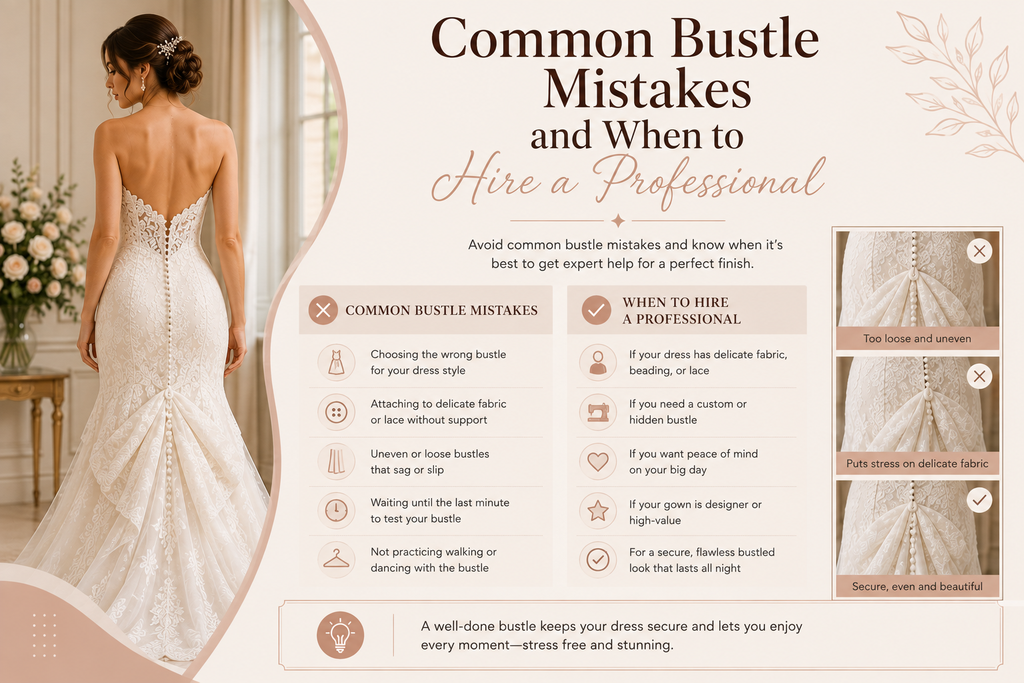
Brides who attempt to bustle a dress themselves without prior sewing experience underestimate the fabric weight and structural stress. These errors destroy the gown or create safety hazards during the reception.
- Myth: One hook handles any train. Reality: Mermaid trains weigh 1.5 to 3 pounds. A single attachment point tears the side seam or waistband.
- Myth: You bustle the dress alone while wearing it. Reality: Rear alignment requires a second person. The wearer cannot see the center back to match hooks and eyes.
- Myth: Any thread works. Reality: Cotton thread degrades under tension and body heat. Polyester or silk thread is mandatory for weight-bearing seams.
- Mistake: Attaching bustle points to the outer shell instead of the lining creates visible puckers. Always sew ribbon loops and hooks to the lining or seam allowance.
- Mistake: Attempting a bustle without sewing. Safety pins snag lace and satin. A bustle without sewing fails on mermaid gowns due to train weight and fabric drape.
A specific subset of gowns requires professional handling. A certified bridal seamstress performs wedding dress alteration and professional dress bustle services for cathedral trains, gowns with 5 or more yards of fabric, illusion backs, or beaded lace. Professional bustle pricing ranges from $75 to $250. If the bustle is being added as part of broader alterations, this wedding dress alterations cost guide can help you understand other potential fitting expenses.
A dress fitting appointment allows the seamstress to test bustle height during walking, sitting, and dancing. Bridal alterations include a final press and dress preservation packaging that a DIY project cannot replicate. Planning your appointments ahead of time is also easier with a wedding dress fitting timeline.
Seam tearing on a fitted mermaid skirt ruins the silhouette permanently. A torn side seam at the knee flare requires complete reconstruction. Do not risk this damage on couture fabrics or heirloom gowns.
Frequently Asked Questions About Bustling a Mermaid Wedding Dress
How do you bustle a mermaid wedding dress?
A mermaid wedding dress requires a French under-bustle or American over-bustle with 2 to 3 anchor points. The French method uses interior ribbon ties that tuck the train under the skirt. The American method uses exterior hooks that drape the train over the back. Both techniques require a helper to align the rear hardware.
What is the best bustle for a mermaid gown?
The French bustle preserves the fitted silhouette because it tucks the train under the skirt using interior ribbons. The American bustle works for lighter trains that do not require hidden hardware. Lace or beaded mermaid gowns benefit from the French method because it eliminates visible attachments on delicate fabric.
How much does it cost to bustle a mermaid wedding dress?
Professional bustle pricing ranges from $75 to $250. Mermaid gowns often cost more due to fitted construction and the need for multiple anchor points. The final price depends on train length, fabric weight, and beadwork density.
Can you bustle a wedding dress without sewing?
No-sew options exist but fail on mermaid gowns due to train weight and fabric drape. Safety pins snag satin and lace. Sewing is required for a secure, invisible hold on fitted skirts that carry 1.5 to 3 pounds of train fabric.
How many bustle points does a mermaid dress need?
Most mermaid gowns require 2 to 3 bustle points. Dresses with trains longer than 18 inches or fabric heavier than 2.5 pounds need 3 points to prevent waistband distortion. Lighter gowns with 12-inch trains function with 2 points.
Conclusion
A secure mermaid dress bustle depends on anchor points sewn to the lining, not the outer shell, with polyester thread and a helper to align the rear folds. The French method preserves a clean silhouette for lace and beaded gowns. The American method offers faster fastening for plain satin or crepe.
The right bustle eliminates tripping hazards during the reception and maintains the sculpted hip line that defines the mermaid silhouette. You now have the exact tool list, step-by-step stitch patterns, and safety checks to complete the alteration without damaging the gown.
Tell us which bustle style you chose for your mermaid gown in the comments, or share this guide with your bridal party before the final fitting.