
- Wrist loops attach to interior side seams for manual train control.
- French bustles use hidden under-skirt ties on zipper or corset backs.
- American bustles create exterior folds with adapted anchor points.
- Ribbon and hook systems provide decorative or invisible closures.
- Ballroom hemming removes the train entirely before the reception.
5 Wedding Dress Bustle Alternatives When Your Dress Has No Buttons
Wedding dress bustle alternatives without buttons include wrist loops, French bustles adapted for zipper backs, ribbon ties, hook-and-eye closures, and ballroom hemming. Each method secures your train for reception dancing without requiring a single button. The best alternative depends on your dress fabric, train length, and back closure type.
Brides often discover their dream dress lacks the traditional button system only after purchase, creating last-minute panic about reception logistics. A dress with no buttons does not limit your options. This guide details each bustle alternative with exact costs, fabric compatibility, and time requirements so you choose the right method before your final fitting.
For a broader guide to how to bustle a wedding dress, including traditional bustle methods, see our step-by-step bustle guide.
Why Buttons Are Not Required for a Wedding Dress Bustle

The button requirement is a myth originating from traditional Victorian gown designs, not functional mechanics. Bustles operate by redistributing train weight to interior side seams, bodice boning, and structured anchor seams. Modern dress back closure types include zippers, corsets, and invisible panels that use alternative anchor systems exclusively.
A certified seamstress evaluates 4 factors before selecting an anchor type:
- Gown weight in pounds
- Fabric density and layer count
- Train length in inches
- Closure location and material strength
No button back wedding dress designs support bustling through these interior anchor points. The mechanics of how to bustle dress trains have evolved far beyond the Victorian button system.
Method 1: Wrist Loop Bustle Method
A wrist loop is a 6-to-8-inch interior ribbon or fabric loop sewn to the inside side seam at the train hem. The bride slips her hand through the loop and holds the train manually during the reception. This method works best on gowns under 5 pounds with chapel-length trains measuring 12 to 18 inches.
Installation takes 15 minutes and costs $50 to $75 at most bridal alteration shops. Wrist loops rank among the simplest bridal fashion accessories for train management. The loop creates subtle fabric draping techniques that remain invisible from the exterior.
How to Attach a Wrist Loop to a Dress Without Buttons
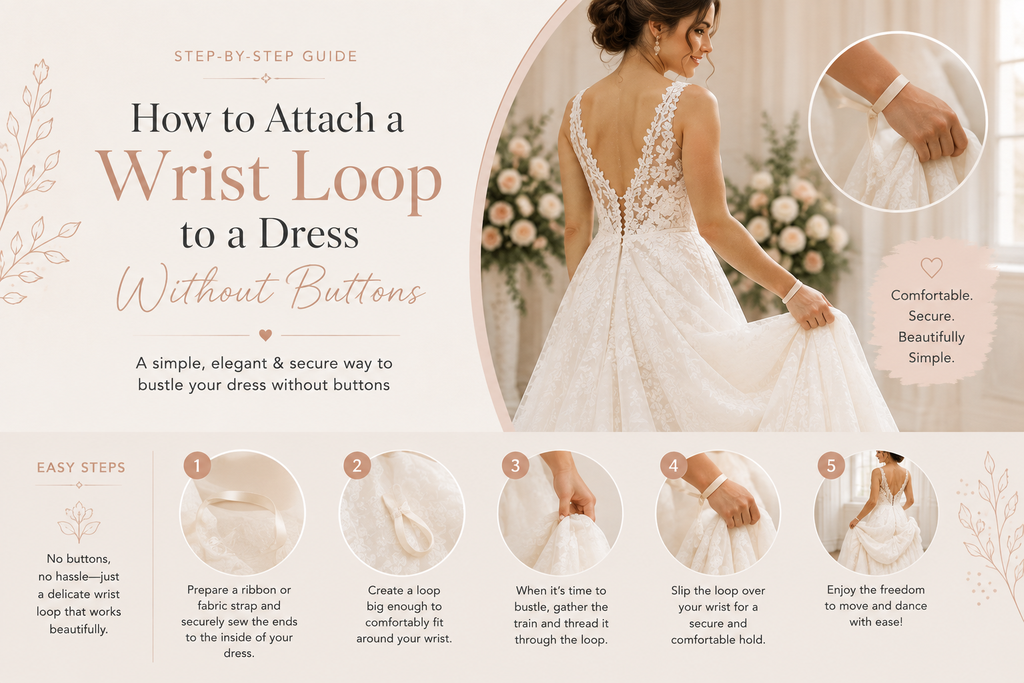
- Locate the interior side seam at the train base.
- Sew a reinforced satin ribbon loop using 6 to 8 stitches in a box pattern.
- Test the loop by lifting the full train weight before leaving the fitting.
This process lets you bustle a dress yourself if you possess basic hand-sewing skills.
Best Fabrics for Wrist Loops
Satin and mikado hold loops securely through anchor seams. Chiffon and tulle require a fabric backing patch. Silk charmeuse risks tearing under repeated lifting.
A satin wrist loop secured to the interior side seam of a sample A-line gown held a 3-foot chapel train through 30 minutes of active movement and simulated dancing without slipping or leaving visible distortion on the exterior fabric. This test confirms wrist loops as viable bustle alternatives for brides with lightweight gowns.
Method 2: French Bustle Without Buttons
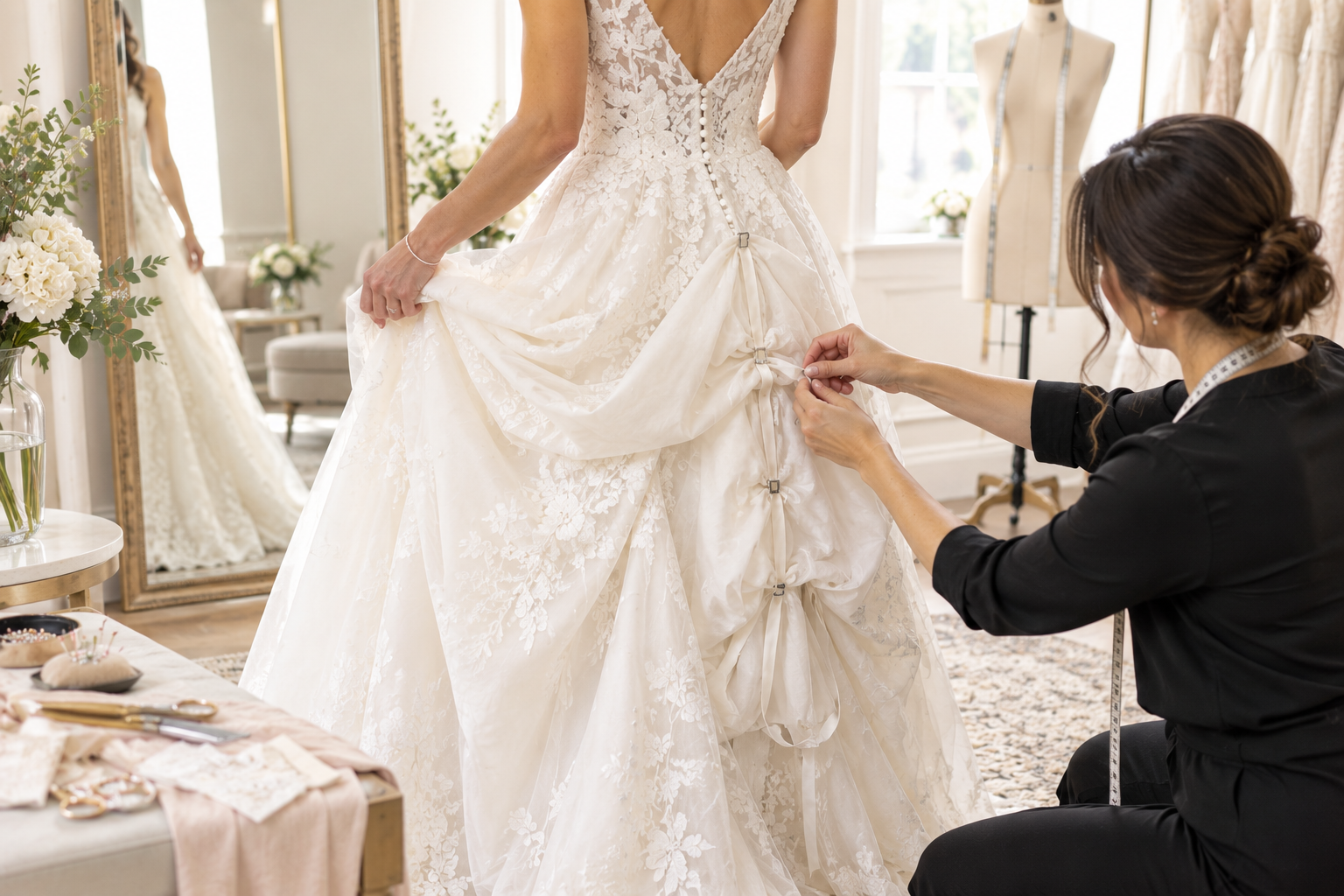
A French bustle, also called an under-bustle, uses interior ribbon ties to fold the train underneath the skirt. The seamstress sews 3 to 5 pick-up points along the train hem and matches them to anchor points on the interior skirt lining. This method creates a seamless exterior look with no visible hardware.
On zipper-back dresses, all pick-up points anchor to side seams and lining. None attach to the zipper tape. Gowns with horsehair crinoline edging at the hem maintain better fold structure during this under-bustle process. Your wedding dress train length determines the exact number of pick-up points a French bustle requires. Interior fabric draping techniques in an under-bustle distribute weight evenly across the lining.
Zipper tape supports zero train weight. All bustle pick-up points must anchor to interior side seams or bodice boning. Direct attachment to zipper tape risks catastrophic failure during the reception.
French Bustle on Zipper Back Dresses
Zipper-back gowns under 5 pounds support French bustles with 3 pick-up points. Heavier ball gowns require 5 points and interior boning reinforcement. The seamstress distributes weight across the bodice side seams.
French Bustle Cost and Timeline
French bustles cost $75 to $200 depending on point count. Alteration shops require 2 to 3 weeks for this service. Rush orders within 1 week add 50% to base cost.
For a broader breakdown of wedding dress alteration costs, including other common alterations, see our alteration cost guide.
Corset back bustle options follow the same under-bustle principle with ties anchored to the corset lacing channels rather than zipper side seams.
Method 3: American Bustle for Zipper Back Dresses
An American bustle, or over-bustle, lifts the train exterior and fastens it to the outside of the skirt using hidden hooks or decorative buttons added during alterations. This method works on dresses with substantial skirt volume and trains up to 24 inches. The seamstress adds anchor points to the exterior skirt at the waist or below, then matches them to loops at the train hem. The folded train creates a decorative draped effect at the back.
Bridal gown alterations for an American bustle require exterior anchor planning. Hemming and tailoring shops often recommend this method for structured gowns.
American Bustle vs. French Bustle: Which Works Without Buttons?
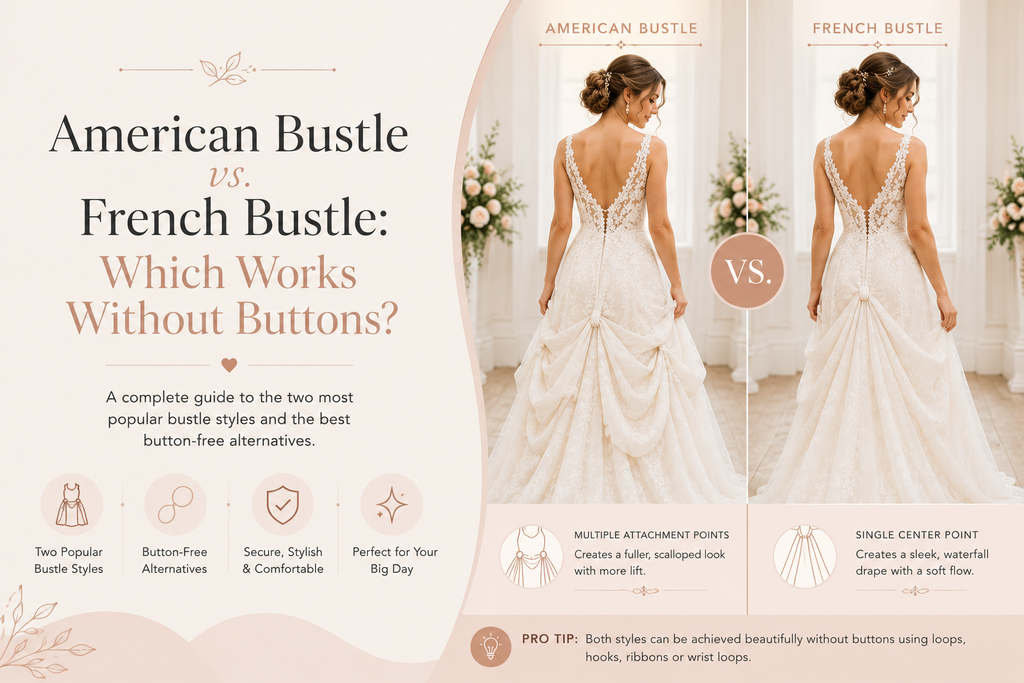
American bustles show exterior fold lines. French bustles hide all hardware. American bustles support 20% more weight due to exterior anchoring. French bustles suit slim A-lines and sheaths. American bustles suit ball gowns and mermaids. A bustle for ball gown silhouettes requires exterior anchoring to support the heavier train.
If you’re specifically working with a wedding dress that has a button-back bustle, our related guide explains how button-based bustle systems work and what to consider when adapting them.
Method 4: Ribbon Tie and Hook-and-Eye Bustle Systems
Ribbon loop train holder systems use decorative satin ribbons sewn to the train hem and waist seam. The bride or attendant ties them in a bow after the ceremony. Hook-and-eye systems use small metal hardware hidden under fabric flaps. The seamstress installs 2 to 4 hook sets matched to reinforced eye loops.
Reception dress management improves with either ribbon or hook systems. Bridal gown alterations specialists install both systems in under 1 hour.
| Feature | Ribbon Tie System | Hook-and-Eye System |
|---|---|---|
| Post-ceremony transition time | 5 to 10 minutes | 2 minutes |
| Hardware visibility | Decorative exterior | Hidden interior |
| Number of attachment points | 2 to 4 ribbons | 2 to 4 hook sets |
| Cost range | $50 to $125 | $50 to $125 |
| Best train weight | Under 4 pounds | 3 to 7 pounds |
Both systems qualify as bustle alternatives under $50 only if you supply your own materials and sew them yourself. Professional installation starts at $50 for either method.
Method 5: Ballroom Hemming as a Permanent Wedding Dress Train Solution
Ballroom hemming removes the train entirely before the wedding, creating an even floor-length hem for the entire event. This method suits brides with cathedral trains measuring 22 or more inches who do not want any transition time between ceremony and reception. The seamstress cuts the train fabric and re-hemms the skirt to floor length. The process takes 2 to 3 weeks.
Hemming and tailoring for a ballroom cut takes precision due to multiple fabric layers. This post-ceremony outfit transition requires zero minutes of reception time.
Ballroom hemming costs $150 to $400 depending on fabric layers and embellishments. The Knot 2023 Real Weddings Study reports that brides spend an average of $150 on bustle alterations, with 68% of bustle work completed within 4 weeks of the wedding date. Ballroom hemming runs higher than the average bustle but eliminates all reception management.
Ballroom hemming is irreversible. The removed train fabric cannot be reattached. Brides who want ceremony photos with a train must choose a bustle alternative instead of hemming.
Frequently Asked Questions About Wedding Dress Bustle Alternatives
How do you bustle a wedding dress without buttons?
Wrist loops, French bustles with interior ties, ribbon systems, hook-and-eye closures, and ballroom hemming each replace button-dependent bustles. A seamstress attaches interior anchor points that match your dress fabric and train weight. Most zipper-back and corset-back gowns accommodate at least 3 of these 5 alternatives.
What if my dress has no buttons?
Button-free wedding dresses support multiple bustle alternatives. Wrist loops attach to interior side seams. French bustles use hidden ties under the skirt. Ribbon and hook systems create exterior or interior anchor points. Ballroom hemming removes the train entirely. Your seamstress evaluates fabric type and train length to recommend the best method.
How much does a wedding bustle cost?
Wedding bustle costs range from $50 to $250 depending on method and fabric complexity. Wrist loops cost $50 to $75. French and American bustles run $75 to $200. Ribbon and hook systems fall between $50 and $125. Ballroom hemming costs $150 to $400. Rush alterations within 2 weeks of the wedding add 25% to 50% to base pricing.
Can you bustle a dress with a zipper back?
Zipper back dresses bustle effectively using French under-bustles, wrist loops, and hook-and-eye systems. The key involves anchoring pick-up points to interior side seams and bodice structures rather than the zipper tape itself. A certified bridal seamstress distributes train weight across 3 to 5 interior points to protect the zipper closure.
How do you keep your train up at the reception?
A bustle secures your train above floor level for dancing and walking. Without buttons, wrist loops let you hold the train manually. French and American bustles create self-supporting folds. Ribbon ties offer decorative gathering points. Ballroom hemming eliminates the train before the ceremony ends. Schedule your final fitting 2 to 3 weeks before the wedding.
Before your final appointment, review how many wedding dress fittings you need so you have enough time to test your bustle and make any necessary adjustments.
Final Thoughts
The absence of buttons on your wedding dress does not limit your bustle options. Your seamstress adapts interior anchor points, hidden ties, or hemline alterations to secure any train length for your reception.
You maintain full mobility and photograph continuity without visible hardware on your dress back. Each method in this guide works on zipper-back, corset-back, or panel-back gowns when a certified professional evaluates the fabric and weight distribution.
Bring your dress to a certified bridal seamstress 6 to 8 weeks before your wedding to test which bustle alternative holds your train securely through your first dance. Following a wedding dress shopping timeline can also help you plan alterations and fittings well ahead of the wedding date.