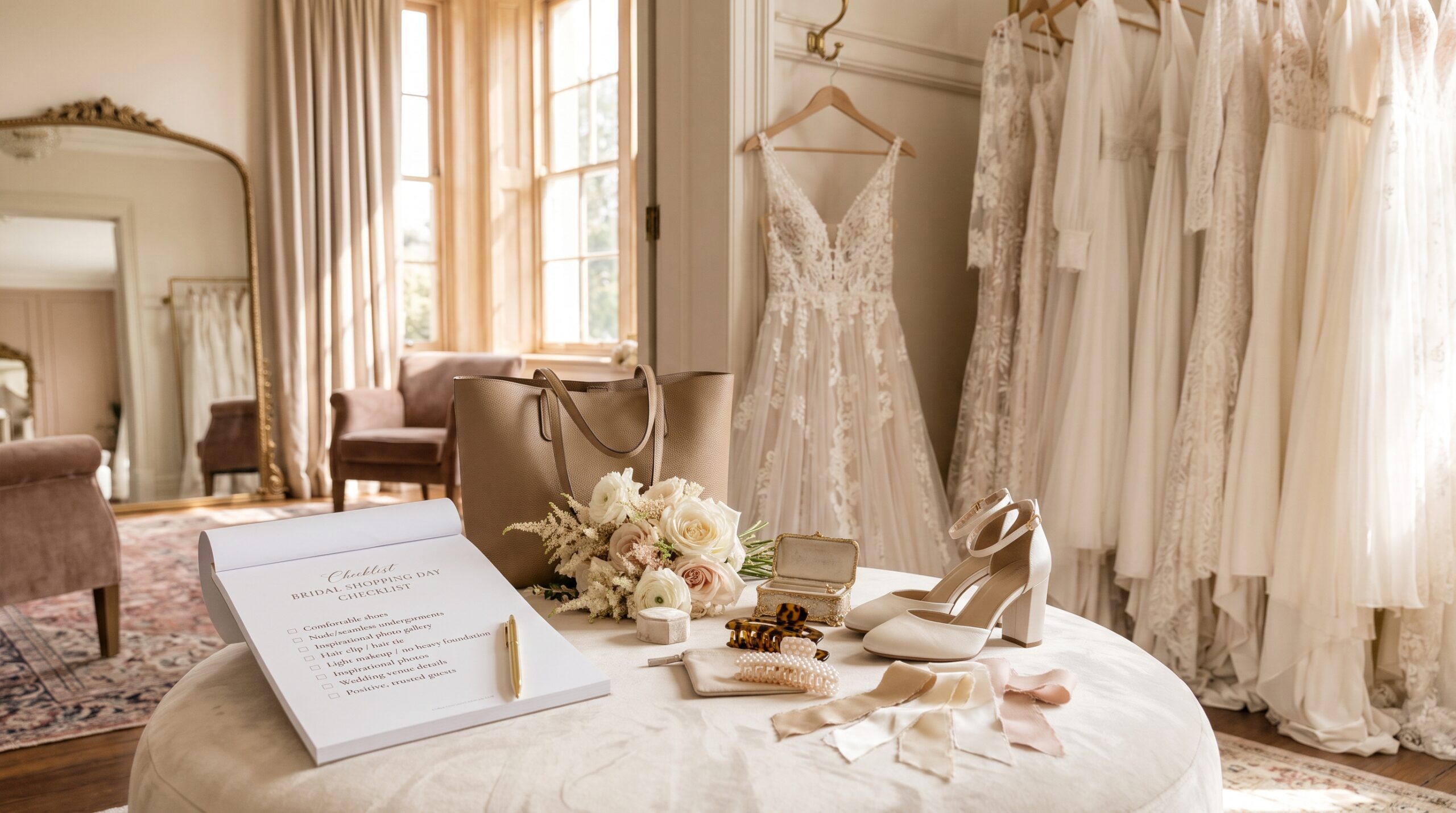
- Foundations: Laser-cut nude seamless underwear, strapless multi-way bra, light-compression shorts.
- Footwear: Target-height wedding shoes or heels matching the exact intended elevation.
- Grooming: No-snag hair elastics, claw clips, and natural makeup free of heavy bronzers.
- Logistics: Two trusted decision-makers, 5 to 8 digital reference photos, and payment for a 50% deposit.
- Financials: An allocated 15% buffer covering alterations, domestic freight, and local sales tax.
A complete final wedding dress shopping day checklist requires seamless nude underwear, target-height shoes, hair ties, clip-in bust cups, and a verified salon budget. Bringing these 5 core items ensures accurate gown drape and eliminates fit errors before placing a standard 50% non-refundable deposit. Unprepared brides face skewed silhouette profiles, delayed delivery schedules, and surprise alteration costs that add up to $1,000 above the retail sticker price. Knowing what to wear under a wedding dress and coming equipped with an organized wedding dress shopping timeline checklist provides the definitive structure needed to streamline boutique appointments, navigate sizing restrictions, and finalize gown orders with technical precision.
What to Wear: Proper Undergarments and Foundations
The foundational base layer dictates how fabric contours to the body across silk crepe, tulle, and satin samples. Seamless nude undergarments prevent visible panty lines and eliminate distracting fabric bunching under unlined showroom gowns. Salons lack fitting-suite shapewear inventories, requiring shoppers to arrive wearing exact base layers.
- Nude seamless underwear: Laser-cut, raw-edge thongs or low-rise briefs matching skin tones prevent ridge visibility beneath fitted mermaid and sheath gowns.
- Convertible strapless bra: Molded, unpadded cups allow objective assessment of plunge necklines, asymmetric straps, and halter cuts. For deep plunges or sculptural necklines, review our guide to wedding dress necklines explained to see which undergarment designs integrate best with each style.
- Light-compression thigh shorts: Friction-resistant shorts prevent chafing during 90-minute appointments involving 5 to 8 dress transitions.
- Adhesive silicone petals: Backless gowns and illusion bodices require discrete nipple coverage without perimeter bra bands distorting side-mesh panels.
Nude Seamless Underwear and Shapewear Selection
Corsetry and boning structure built into couture samples interact directly with underlying foundations. Heavy-compression shapewear featuring steel bones or high-rise silicone grips distorts the designer’s internal boning channels, flattening curves that gowns are tailored to support. Lightweight, single-ply polyamide-elastane blends preserve natural body lines while preventing textile friction.
Low-back silhouettes require low-rise waistband cuts resting 3 inches below the lumbar curve. Testing fitted silk samples while wearing black, white, or lace panties produces harsh visual breaks that corrupt mirror evaluations.
Essential Gear: What to Pack in Your Shopping Day Bag
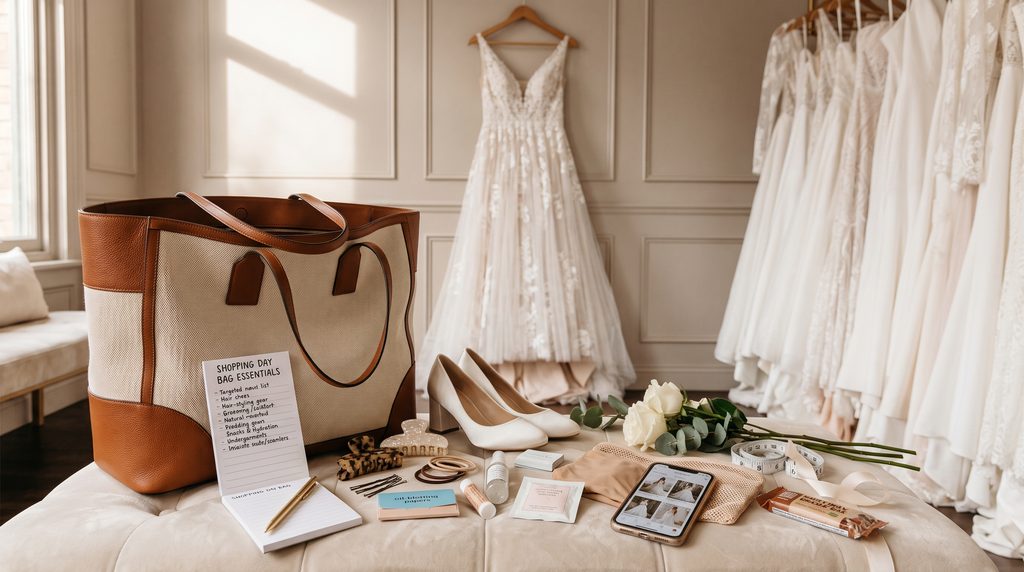
A prepared bridal appointment packing list contains mechanical tools, hydration, and grooming items that safeguard inventory while expediting styling transitions. Boutiques maintain strict preservation rules regarding customer cosmetics, banning dark lipsticks, body glitters, and spray tans that transfer pigment onto delicate chantilly lace.
- Target-height shoes: Heels or wedges matching the planned wedding-day height guarantee accurate visual proportions on the salon pedestal.
- Hair-styling hardware: Claw clips, non-snag silicone hair elastics, and metal bobby pins enable rapid transitions between low chignons and down-styles.
- Hydration and dry snacks: Bottled spring water, electrolyte packets, and non-crumbly energy bars maintain blood sugar across sequential appointments.
- Natural makeup application kit: Oil-blotting papers, non-tinted lip balm, and travel-size stain wipes refresh the face without risking chalky residue on gown bodices.
- Digital reference portfolio: A dedicated smartphone album containing 5 to 8 targeted gown silhouettes curated using tips on how to choose a wedding dress for your body type prevents stylist misdirection during initial intake.
Shoes, Wedding Height, and Hemline Projections
Bringing shoes with an exact target heel height establishes true hemline projections during sample assessment. Stylists repeatedly observe brides testing 60-inch factory-length gowns barefoot or in street sneakers; this practice causes 4 to 6 inches of excess silk to puddle on the floor, concealing skirt mobility and train balance.
Guessing shoe heights forces tailors to execute aggressive 4-inch hem reductions post-delivery, generating $400 to $650 in avoidable seamstress labor. A 2.5-inch block heel positions the front skirt precisely 0.5 inches above floor grade, revealing whether a silhouette requires factory hollow-to-hem custom cutting.
Who to Bring: Managing Your Bridal Entourage and Salon Rules
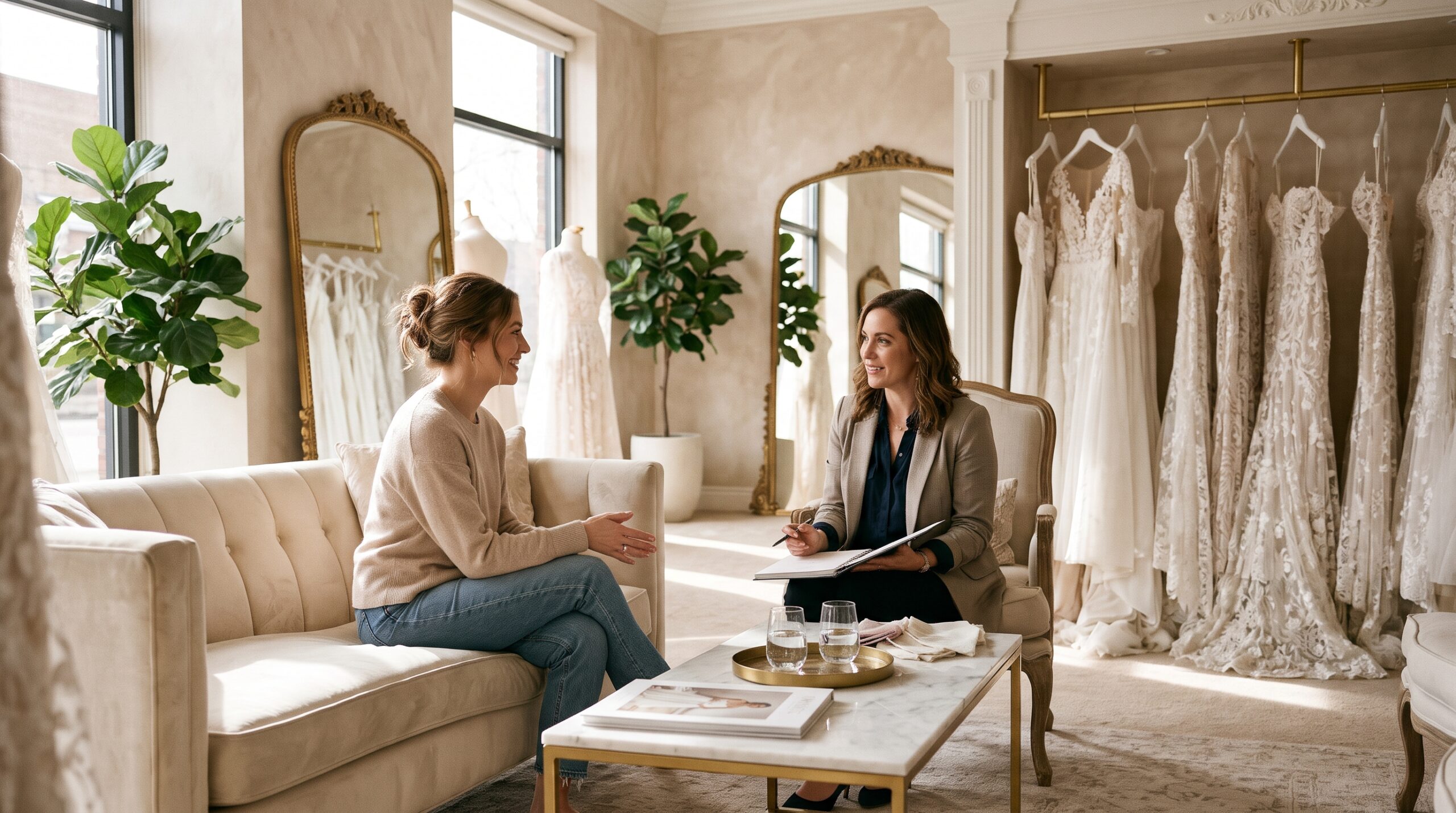
Boutique guest policy guidelines protect physical suite floor space and minimize stylistic confusion during the 90-minute window. Following proper wedding dress shopping etiquette with bridesmaids is key: flagship salons in New York and Chicago enforce a strict cap of 2 guests per bride, whereas suburban independent retailers allow up to 4 guests for weekday appointments. Managing family expectations early also helps prevent wedding dress shopping mom conflicts.
| Entourage Size | Appointment Efficiency Score | Psychological Impact | Focus Allocation |
| 1–2 Guests | 9.5 / 10 | High confidence; low interference | 90% bride preferences; 10% outside opinion |
| 3–4 Guests | 7.0 / 10 | Moderate alignment; occasional friction | 65% bride preferences; 35% entourage debate |
| 5+ Guests | 3.5 / 10 | Severe decision paralysis; sensory fatigue | 30% bride preferences; 70% conflicting feedback |
Large parties generate competing feedback that extends evaluation times beyond allocated appointment windows. Appointing a single trusted companion to photograph front, side, and bustle angles eliminates emotional bias, prevents appointment fatigue, and teaches you how to stop overthinking wedding dress shopping.
Critical Misconceptions: Sample Sizes and Clamping Mechanics
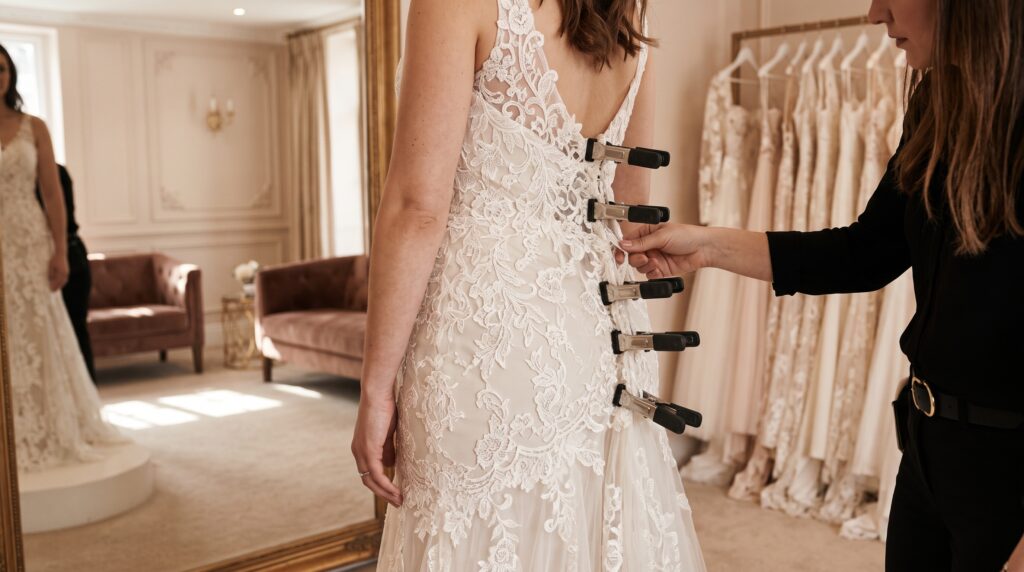
Showroom inventory creates a widespread sizing misconception among first-time shoppers. Salons stock single sample sizes, predominantly bridal size 10 to 12, fitting traditional US street sizes 6 to 8. Bridal apparel production sizing runs 1 to 2 sizes smaller than commercial ready-to-wear garments, meaning a street size 10 bride wears a bridal size 14.
Stylists deploy 3-inch rubberized metal spring clamps down the center-back zipper or side seams to tension oversized sample fabric against smaller frames. This sample size clipping practice compresses the bride’s natural waistline artificially while distorting lower-hip lace motifs.
When sample gowns are too small, stylists insert 4-inch elastic privacy panels into the back zip and secure the edges with clamps. Brides must visually project how an open, clamped back seam resolves into a closed, buttons-and-loops closure upon custom factory production.
Hidden Gown Costs and Alteration Mechanics
The designer sticker price represents only 65% to 75% of the total apparel expenditure, leaving many to overlook the hidden costs of buying a wedding dress. Tailoring made-to-order gowns requires specialized hand-sewing techniques to handle horsehair braids, multi-layer tulle underskirts, and beaded borders. Consult a realistic breakdown of how much a wedding dress costs on average alongside a specialized wedding dress alterations cost guide before committing to your purchase.
| Alteration Component | Standard Price Range ($) | Technical Variable |
| Side Seams and Bodice Taking-In | $150 – $350 | Number of boning channels and lace appliqué repositioning |
| Hem Shortening | $200 – $450 | Scalloped borders, horsehair braid, and multi-layer circle skirts |
| Bustle Engineering | $100 – $300 | Train weight; 3 to 15 French vs. American over-bustle points |
| Cup Insertion & Strap Adjustment | $50 – $120 | Illusion mesh reinforcement and chest cup density |
| Emergency Rush Production | $250 – $600 | Ordering within a 16-week window from the event date |
Understanding train mechanics and how to bustle a wedding dress while watching for common wedding dress bustle mistakes to avoid ensures your bustle holds throughout the reception. The American Bridal and Prom Industry Association (ABPIA) confirms designer made-to-order manufacturing cycles require 16 to 24 weeks standard production, excluding international freight transit. Ordering gowns within a 6-month window from the wedding date introduces mandatory rush fees ranging from 15% to 30% above retail.
Financial Disclaimer: Retail salon invoices exclude independent alteration costs, state sales tax, and post-wedding dress preservation packages. Establish a dedicated $800 to $1,200 emergency alteration reserve prior to executing any purchase contract.
Transaction Security: Placing the Deposit and Signing Gown Contracts
Finalizing a gown purchase initiates a legally binding, customized manufacturing order. Boutiques mandate a 50% to 60% non-refundable deposit before transmitting cut tickets to production houses. Contract and cancellation terms dictate that bridal orders represent final-sale commitments; cancellations, style alterations, or buyer’s remorse options remain strictly prohibited once fabric cut orders process.
- Record physical measurements: The stylist captures 3 anatomical metrics using a vinyl tape measure: full bust, narrow natural waist, and widest low hip point.
- Consult designer size matrix: Measurements are cross-referenced directly against the design house’s printed size chart. Knowing the right questions to ask your bridal consultant ensures you pick the safest size bracket.
- Select size by largest metric: The order size matches the largest individual anatomical measurement; standard tailoring later reduces oversized zones down to specific contours.
- Inspect dye lot variation clauses: Contract waivers protect retailers from minor color depth variances between showroom samples and fresh textile dye lots.
- Verify hollow-to-hem measurement: Gowns ordered with custom length reductions require exact vertical floor measurements taken from the suprasternal notch while standing in target shoes.
Never sign purchase documents without cross-referencing handwritten measurements against the designer’s printed size matrix in the stylist’s presence.
Frequently Asked Questions About Wedding Dress Shopping
What should I bring to my bridal appointment?
Pack seamless nude underwear, a strapless bra, shoes matching your intended wedding heel height, hair clips, and an approved budget. Bring water, non-staining mints, and a maximum of 3 trusted guests. Having these physical items ensures accurate gown drape and eliminates costly sizing errors.
What underwear should you wear wedding dress shopping?
Wear seamless, laser-cut nude underwear matching your exact skin tone. White, black, and bright underwear lines show through unlined silk, crepe, and chiffon samples. Pair this foundation with an unpadded, convertible strapless bra or stick-on silicone cups to test low-back and plunge designs accurately.
How many wedding dresses should you try on in one day?
Limit selections to 4 to 7 dresses per appointment, with a maximum of 2 salon appointments per day. Testing more than 10 gowns in a single day causes visual fatigue, emotional overwhelm, and blurred silhouette evaluation. Schedule a 2-hour resting break between salons.
When should you start shopping for a wedding gown?
Start shopping 9 to 12 months before your wedding date. Made-to-order designer wedding gowns require 16 to 24 weeks for manufacturing, plus shipping transit. Review how many wedding dress fittings you need and reserve an additional 8 to 12 weeks for 3 sequential alteration fittings to ensure a custom fit without incurring rush fees.
What are the hidden costs of buying a wedding dress?
Hidden costs include alteration fees ($450 to $1,100), boutique appointment fees ($25 to $100), state sales tax, and international freight. Veils, customized sleeves, specialty undergarments, and post-wedding gown preservation packages add an extra 20% to 35% above the manufacturer’s base retail sticker price.
Conclusion
Precise preparation dictates bridal shopping outcomes. Arriving equipped with seamless nude foundation wear, exact heel projections, an edited budget ceiling, and a disciplined guest list guarantees an accurate fitting and eliminates contract disputes. This disciplined approach transforms standard salon overwhelm into an orderly, decisive purchasing appointment backed by technical apparel metrics. Download the printable final wedding dress shopping day checklist PDF to track your undergarments, measurements, and salon appointments with complete confidence.